
About Jeffrey Boam
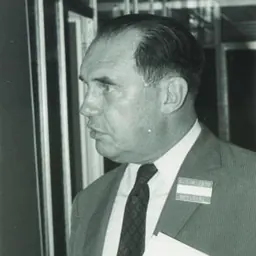
Lived 1946 – 2000 (aged 53). Jeffrey Boam was an American screenwriter and film producer.
Jeffrey David Boam (November 30, 1946 – January 26, 2000) was an American screenwriter and film producer. He is known for writing the screenplays for The Dead Zone, Indiana Jones and the Last Crusade, Innerspace, The Lost Boys, and Lethal Weapon 2 and 3. Boam's films had a cumulative gross of over US$1 billion. He was educated at Sacramento State College and UCLA. Boam died of heart failure on January 26, 2000, at age 53.
Early life and education Boam was born in Rochester, New York. He grew up in Fair Lawn, New Jersey, and his family moved to Sacramento, California, when he was 11. His father was an aeronautical engineer. He developed a taste for action films by watching World War II film on television as a child. As a teenager, he saw the film Tom Jones, which he said "made the greatest impression" on him, ultimately making him "want to be in movies." He attended Sacramento State College, earning a B.A. in art in 1969. He entered graduate school at UCLA film school, hoping to start a career in directing. At UCLA, he took classes under Richard Walter. Boam took an advanced screenwriting class taught by William Froug. He decided to "target" Froug, hoping to impress the writing teacher into accepting him to be a directed studies student. Boam was impressed by Froug's success, and wanted one-on-one help. He said, "I just knew that Bill could help me, but I needed more than the slightly impersonal, two-hour-a-week instruction of the class." He gave Froug two screenplays for review, but the writing teacher wasn't impressed with either of them. This didn't deter Boam, who persisted. Boam told Froug, "Well, I'll just have to write better." Froug relented and started mentoring him, and said that over the semesters Boam got "better and better, but ... was still struggling." The film, based on the novel No Beast So Fierce by Edward Bunker, is about a thief who is released from prison and tries to live a straight life. Boam was asked to rewrite the script, and he quit his job at Fox to work with Grosbard. He received writing credit for the film, along with Bunker and Alvin Sargent. Boam developed a script with director Stanley Donen, who left the project before the film reached production at Lorimar. De Laurentiis reportedly then rejected King's script as "involved and convoluted"; however, David Cronenberg, who ultimately directed the film, said that he was the one who decided not to use the script, finding it "needlessly brutal". including plot points about Johnny Smith having a brain tumor.
Writing for Warner Bros. Pleased with Boam's early work on Straight Time and a script called The Good Guys, Warner Bros. signed him to an exclusive contract as a staff writer. He was frequently asked to rewrite and polish scripts for "high concept" films with commercial potential. His contract with Warner Bros. was for $3 million, The screenplay for Space Case was developed by Boam and screenwriter Richard Outten, and written by Outten. Despite skepticism by Warner Bros. executives, Boam encouraged Outten to finish the screenplay. However, they were beaten to production by another film with a similar story, Men in Black, and Space Case was never made.
Innerspace When producer Peter Guber was developing Innerspace, a film about an explorer who is miniaturized and sent into another man's body, he hired a young writer named Chip Proser to write a script for the story. Director Joe Dante thought the story was too much like Fantastic Voyage, and did not want to direct it. Guber later took the story to Warner Bros. with executive Bruce Berman. Director John Carpenter was briefly attached to the project. Warner Bros. asked Boam to rewrite the script, but he initially refused. "I balked at it," Boam said, "I didn't even think the premise had much merit." Carpenter convinced Boam that there was a good story to tell, and Boam wrote a draft. He said, "I took the premise and basically invented everything else." Eventually Carpenter left the project to direct Big Trouble in Little China, and Dante joined as director. Boam was requested by director Joel Schumacher to rewrite the screenplay, hoping to "sex up the plot and up the ante on laughs and the violent disposal of vamps".
Funny Farm In 1986, actor Chevy Chase bought the rights to Jay Cronley's novel Funny Farm. The story is a comedy about a couple from New York City that move to a small New England town, and the quirky troubles and encounters they have. Chase and his business partner Bruce Bodner hired Boam to adapt the book for film. The three spent several weeks developing the script. The screenplay was originally episodic, mirroring the structure of the novel. When George Roy Hill was hired as director, he insisted a new script be written, with a more definitive plot. Boam, Chase, and Bodner then spent the remainder of the year rewriting the screenplay.
Lethal Weapon films Lethal Weapon was written by Shane Black, and was released in the spring of 1987. A buddy-cop story, it starred Mel Gibson as Martin Riggs, a suicidal detective who uses crazed antics to deal with criminals. He is paired with Roger Murtaugh (played by Danny Glover), a veteran detective with a traditional home life. Boam was hired to make some changes on the script, after the producers found parts of it too grim. Though he contributed some scenes, he is uncredited on the screenplay. For the sequel, Lethal Weapon 2, Black submitted a script, but it was rejected by the film's producers as "too dark and violent". In Black's original script, the Martin Riggs character dies. Boam was hired again, this time to completely rewrite the sequel. He gained widespread notice for writing the screenplays for Lethal Weapon 2 and later for Lethal Weapon 3. Boam was credited somewhat unusually for Lethal Weapon 3; He is credited twice in the 'screenplay by' credits. This is because he did one draft by himself (granting him the first credit) and a second draft collaborating with Robert Mark Kamen (granting him the second credit). In this rare scenario, Boam was hired to rewrite his own script with a second writer. After receiving the unusual writing credits, the advertising department assumed it was a misprint and produced posters with the credits "Story by Jeffrey Boam, Screenplay by Jeffrey Boam and Robert Mark Kamen". After a few of the posters had been sent out, the WGA contacted the department, telling them that the initial credits were the correct ones, and ordering the posters to be recalled and destroyed. A few still remain in circulation, however.
Indiana Jones and the Last Crusade Indiana Jones and the Last Crusade, the third film in the popular Indiana Jones series, went through a flimsy scripting process before Boam was hired to write a draft. As early as 1984, George Lucas was playing with the concept of having Jones encounter the fabled Holy Grail, the cup said to have been used by Jesus Christ during the Last Supper. Director Steven Spielberg rejected Lucas's script outlines, disliking the Grail idea. Lucas hired Chris Columbus to write a draft for the film, and he submitted Indiana Jones and the Lost City of Sun Wu Kung, a story with evil spirits, ghosts, and demons. Again, Spielberg rejected the story as not believable enough. Lucas convinced him to go back to the Holy Grail idea, and Menno Meyjes was hired to develop another screenplay. Although the script was not to the liking of Lucas and Spielberg, it had elements that eventually became part of the finished film: the Holy Grail, and the introduction of Indiana Jones's father, Henry Jones Sr. Boam incorporated this into the script, with Indiana's reaction to learning that he and his father slept with the same woman defused through humor. Boam said, "He's a bit humbled and surprised that his dad would be able to attract this young attractive woman ... but he isn't appalled by it."
Boam, who was raised Catholic, used many religious themes and metaphors in his script for the film. In preparing the story, he studied grail literature, but ultimately invented new mythology. He made the grail a symbol for faith. He said, "I guess the major given of faith is that it can't be proved otherwise you don't need faith. So that is why I created the idea that the grail can't be removed (from its hiding place). You can find the grail, but you can't really prove that you found it." When Indiana Jones finally discovers the grail hidden among decoys, its knight guardian tells him that he will die if he drinks from the wrong cup. Boam said that this scene is a metaphor for "the one true God vs. false gods". He worried that the film's religious themes would face criticism from the general audience, as well as religious scholars. He was relieved when the criticism did not appear, saying, "Nobody working on this movie was a religious scholar ... I was wondering if the numerous allusions to Christ in Indiana Jones were going to put people off. I was afraid the kids in the audience would think it was not a very hip subject matter."
Indiana Jones and the Last Crusade was a hit film, earning over $474 million worldwide.
Television Boam met writer Carlton Cuse through producer Bernard Schwartz. According to Cuse, Boam approached him after his work on the television series Crime Story and asked that the two form a writing partnership. The two had plans to write original films together, but they eventually developed the stories and scripts for Lethal Weapon 2, Lethal Weapon 3, and Indiana Jones and the Last Crusade. They formed a production company, Boam/Cuse Productions, and produced a television pilot based on The Witches of Eastwick. They also planned a comedy series called Cat Canyon. It was the only series Boam wrote that made it on to television. The episode's story involves an archeology professor who enlists the aid of a jock in his class to trick an unsuspecting female student into becoming a human sacrifice to a mummy. In the end, she turns the tables on them, and they become victims of the mummy instead. Boam told EON Magazine in 1996 that he did not enjoy the directing experience, finding the work days too long and labor-intensive. Boam's original script was intended to be a funny spoof of The Phantom. The studio restarted the film with Simon Wincer as director, who had Boam make changes to the original script, including a decision to keep the screenplay close in style and tone to the source material.
In a 1995 interview, Boam expressed an interest to rewrite and polish the Star Wars scripts George Lucas had written for the Star Wars prequel trilogy. Lucas ultimately wrote and directed all of those films himself.
Boam worked with George Lucas again in the fourth Indiana Jones film at some point before his death in 2000; Boam and Lucas came up with placing the title character in a nuke town only for him to survive the atomic blast inside a fridge during the middle of the story. Such a set-piece survived through the screenplay's various iterations that ultimately turned into Indiana Jones and the Kingdom of the Crystal Skull in 2008, written by David Koepp, albeit the scene was placed around the film's first act instead.
Writing style Boam's action film scripts are character-driven and mixed with humor. He told The New York Times that he had no problem writing a contrived plot in service of character interactions. "Plot tries to engage intellectually, but that's not how an audience responds," he said, adding, "I want emotional reaction, not intellectual engagement. An audience wants to be wound up because it enjoys the pop at the end when it's liberated." Writing in Scr(i)pt magazine, Ray Morton said that Boam's scripts "showed a strong feel for genre and story construction as well as a solid aptitude for creating robust, well-developed characters, and clever, witty dialogue."
He rarely outlined a script, preferring to finish a story in his head, and then write the draft. Boam said, "I don't have any kind of routine, where I do notes or outlines or character sketches. I just try and live with it in my head, until it's ready to be spat out."
William Froug wrote, "His agonizingly slow death at a young age touched everyone who ever knew or worked with this most remarkable young man. Jeffrey’s widow told me he was struggling with the vicissitudes of Hollywood and questioning his own talent during his final days."
Filmography Straight Time (with Edward Bunker) (1978) The Dead Zone (1983) Innerspace (with Chip Proser, 1987) The Lost Boys (with Janice Fischer and James Jeremias, 1987) Funny Farm (1988) Indiana Jones and the Last Crusade (1989) Lethal Weapon 2 (1989) Lethal Weapon 3 (with Robert Mark Kamen, 1992) The Witches of Eastwick (with Michael Cristofer and Carlton Cuse, 1992, TV) The Adventures of Brisco County, Jr. (also co-creator and executive producer, with Carlton Cuse, 1993, TV) Tales from the Crypt, episode No. 61, "Creep Course" (1993) (TV, also director) The Phantom (1996, also co-producer)
Don’t just read it —
keep it.
Full-length biographies made to live with: read them, listen on the way to work, watch them tonight.
- E-book
- Audio
- Video
Instant download · yours to keep · every purchase keeps this site free
Important facts
People in Jeffrey Boam's life
Named in this biography and alive at the same time

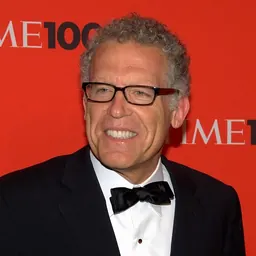
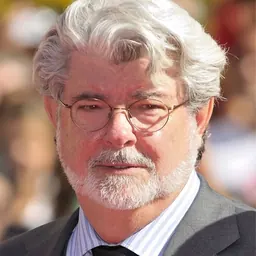




Related people
Same field, nearest in time



Contemporaries
People whose lives overlapped Jeffrey Boam's


Frequently asked questions
Who was Jeffrey Boam?
American screenwriter, film producer
When was Jeffrey Boam born?
Jeffrey Boam was born on 30 November 1946 in Rochester.
When did Jeffrey Boam die?
Jeffrey Boam died on 24 January 2000 in Los Angeles.
What was Jeffrey Boam's occupation?
Jeffrey Boam was a screenwriter and film producer.
What nationality was Jeffrey Boam?
Jeffrey Boam was American.
Sources & further reading
Cite this page
APA: Biography.guide. (2026). Jeffrey Boam. https://biography.guide/jeffrey-boam/
MLA: "Jeffrey Boam." Biography.guide, https://biography.guide/jeffrey-boam/.
Chicago: "Jeffrey Boam." Biography.guide. https://biography.guide/jeffrey-boam/.
Data last updated: 2026-09-22 · Spot an error? Report a correction.
Page generated 2026-09-27 05:05 UTC