
About Edward Bunker
Lived 1933 – 2005 (aged 71). Edward Bunker was an American actor, screenwriter, novelist, writer, film actor and drug trafficker.
Edward Heward Bunker (December 31, 1933 – July 19, 2005) was an American author of crime fiction, screenwriter, and actor. He wrote numerous books, some of which have been adapted into films. He wrote the scripts for—and acted in—Straight Time (adapted from his debut novel No Beast So Fierce), Runaway Train (1985), and Animal Factory (2000) (adapted from his sophomore novel of the same name). He also played a minor role in Reservoir Dogs (1992).
Bunker began running away from home when he was five years old, and developed a pattern of criminal behavior, earning his first conviction when he was fourteen, leading to a cycle of incarceration, parole, re-offending, and further jail time. He was convicted of bank robbery, drug dealing, extortion, armed robbery, and forgery. into a troubled family in Los Angeles. His mother, Sarah (née Johnston), was a chorus girl from Vancouver, British Columbia, Canada, and his father, Edward N. Bunker, a stage hand. His first clear memories were of his alcoholic parents screaming at each other, and police arriving to "keep the peace", a cycle that led to divorce.
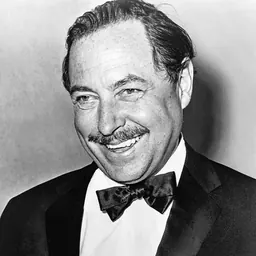
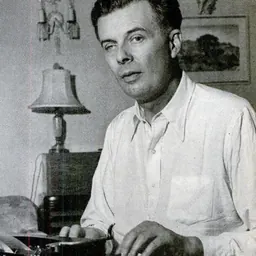
Consistently rebellious and defiant, young Bunker was subjected to a harsh regime of discipline. He attended a military school for a few months, where he began stealing, and eventually ran away again, ending up in a hobo camp. While Bunker eventually was apprehended by the authorities, this established a pattern he followed throughout his formative years. By age 11, Bunker was picked up by the police and placed in juvenile hall after he assaulted his father. Some sources cite that this incident, along with extreme experiences such as the severe beating he experienced in a state hospital called Pacific Colony (later called Lanterman Developmental Center), created in Bunker a life-long distrust for authority and institutions. A long string of escapes, problems with the law, and different institutions—including a mental hospital—followed. Through her he met Aldous Huxley, Tennessee Williams, and newspaper magnate William Randolph Hearst, whose guest he was at San Simeon.
During his time spent in solitary confinement, Bunker was near the cell of death row inmate Caryl Chessman, who was writing his memoir Cell 2455, Death Row. Chessman had sent Bunker an issue of Argosy magazine, in which the first chapter of his book was published; in 1955 the memoir was made into a movie by Fred F. Sears. Bunker—who had dropped out of school in seventh grade—said that Chessman, along with other prison writers including Dostoevsky and Cervantes, inspired him to become a writer himself.
Bunker ended up back in jail for 90 days on a misdemeanor charge. He was sent to a low-security state work farm but escaped almost immediately. After more than a year, he was arrested after a failed bank robbery and high-speed car chase. Pretending to be insane (faking a suicide attempt and claiming that the Catholic Church had inserted a radio into his head), he was declared criminally insane.
Career No Beast So Fierce and early success In prison, Bunker continued to write. While still incarcerated, he finally had his first novel No Beast So Fierce published in 1973, to which Dustin Hoffman purchased the film rights. Like most of the roles Bunker played, it was a small part, and he went on to appear in numerous movies, such as The Running Man, Tango & Cash and Reservoir Dogs, as well as the film version of Animal Factory, in 2000, for which he also wrote the screenplay. In 1985, he had written the screenplay for Runaway Train, in which he had a small part, as did Danny Trejo thanks to Bunker's help; the two had known each other when they were incarcerated together years before. The film helped launch Trejo's career. An obituary in the Los Angeles Times described Bunker's appearance onscreen:
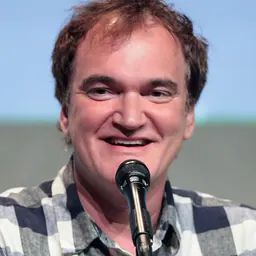
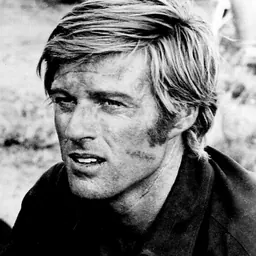
With his soft, raspy voice, a nose broken in innumerable fights and a scar from a 1953 knife wound that ran from his forehead to his lip, the compact and muscular ex-con was ideal for typecasting as a big-screen thug. The film's director, Quentin Tarantino, had studied Straight Time while attending Robert Redford's Sundance Institute.
Prior to his death, Bunker assisted in production of short films alongside Canadian director Sudz Sutherland such as "The Confessions of a Taxicab Man", "The Spooky House on Lundy's Lane", and "Angie's Bang". He also wrote and directed a Molson Canadian Cold Shot commercial.
Writing style Bunker's hard-boiled and unapologetic crime novels are informed by his personal experiences in a society of criminals in general and by his time in the penal system in particular. Little Boy Blue, in particular, draws heavily on Bunker's own life as a young man. He recounted in an interview, "It has always been as if I carry chaos with me the way others carry typhoid. My purpose in writing is to transcend my existence by illuminating it." A common theme in his fiction is that of men being sucked into a circle of crime at a very young age and growing up in a vicious world where authorities are at worst cruel and at best incompetent and ineffectual, and those stuck in the system can be either abusers or helpless victims, regardless of whether they are in jail or outside. Recounting Bunker's piece "The Inhuman Zoo" for West Magazine, Dennis McLellan wrote:
In Bunker's work, there is often an element of envy and disdain towards the normal people who live outside of this circle and hypocritically ensure that those caught in it have no way out. Most of Bunker's characters have no qualms about stealing or brutalizing others and, as a rule, they prefer a life of crime over an honest job, in great part because the only honest career options are badly paying and low-class jobs in retail or manual labor.
[Bunker] focuses with cold honesty on parts of town and types of people that many Southern Californians are oblivious to or ignore. His face, liberally etched by countless brawls in juvenile hall, reform school, jail and prison, matches the hard-edged places his books describe.
A diabetic, Bunker died on July 19, 2005, at Providence St. Joseph Medical Center in Burbank, California, following surgery to improve the circulation in his legs. He was 71.
Filmography 1978 Straight Time as Mickey (also co-screenwriter, based on his novel No Beast So Fierce) 1980 The Long Riders as Bill Chadwell 1985 Runaway Train as Jonah (also co-screenwriter) 1986 Slow Burn as George 1987 Shy People as Chuck 1987 The Running Man as Lenny 1988 Miracle Mile as The Nightwatchman 1988 Fear as Lenny 1989 Relentless as Cardoza 1989 Best of the Best as Stan 1989 Tango & Cash as Captain Holmes 1992 Reservoir Dogs as "Mr. Blue" 1993 Best of the Best 2 as Spotlight Operator 1993 Distant Cousins as Mr. Benson 1993 Love, Cheat & Steal as Old Con 1994 Somebody to Love as Jimmy 1996 Caméléone as Sid Dembo 1998 Shadrach as Joe Thorton 2000 Animal Factory as Buzzard (also co-screenwriter, based on his novel) 2001 Family Secrets as Douglas Marley 2002 13 Moons as Hoodlum #1 2005 The Longest Yard as "Skitchy" Rivers 2005 Nice Guys (AKA: High Hopes) as Joe "Big Joe" 2010 Venus & Vegas Micky, The Calc (filmed in 2004; released posthumously) (final film role)
Don’t just read it —
keep it.
Full-length biographies made to live with: read them, listen on the way to work, watch them tonight.
- E-book
- Audio
- Video
Instant download · yours to keep · every purchase keeps this site free
Important facts
People in Edward Bunker's life
Named in this biography and alive at the same time


Related people
Same field, nearest in time



Contemporaries
People whose lives overlapped Edward Bunker's




Frequently asked questions
Who was Edward Bunker?
Novelist, screenwriter, actor (1933-2005)
When was Edward Bunker born?
Edward Bunker was born on 31 December 1933 in Hollywood.
When did Edward Bunker die?
Edward Bunker died on 19 July 2005 in Burbank.
What was Edward Bunker's occupation?
Edward Bunker was an actor, screenwriter, novelist, writer, film actor and drug trafficker.
What nationality was Edward Bunker?
Edward Bunker was American.
Sources & further reading
Cite this page
APA: Biography.guide. (2026). Edward Bunker. https://biography.guide/edward-bunker-actor/
MLA: "Edward Bunker." Biography.guide, https://biography.guide/edward-bunker-actor/.
Chicago: "Edward Bunker." Biography.guide. https://biography.guide/edward-bunker-actor/.
Data last updated: 2026-09-20 · Spot an error? Report a correction.
Page generated 2026-09-27 05:19 UTC