
About Jean Shepard
Lived 1933 – 2016 (aged 82). Jean Shepard was an American singer-songwriter, singer, autobiographer, recording artist and musician.
Ollie Imogene "Jean" Shepard (November 21, 1933 – September 25, 2016), was an American country singer who was considered one of the genre's first significant female artists. Her commercial success ran from the 1950s to the 1970s while also being a member of the Grand Ole Opry for 60 years.
Shepard was born in Oklahoma and raised in California with her nine siblings. Having a musical upbringing, she formed an all-female country-music band, The Melody Ranch Girls. She was heard by country artist Hank Thompson, who helped her get her first recording contract at age 18 with Capitol Records. Her second single, "A Dear John Letter" with Ferlin Husky, topped the country charts in 1953. In 1955, she had her first solo single top-10 successes with "A Satisfied Mind", "I Thought of You", and "Beautiful Lies". During this period she was among the first female country performers to headline shows and be played consistently on country music radio.
In 1963, Shepard's husband Hawkshaw Hawkins was killed in a plane crash. She considered ending her career, then returned and in 1964 had her first top-10 single in nine years, "Second Fiddle (To an Old Guitar)". She had 15 more top-40 US country singles during the decade, including the top-10 recordings "If Teardrops Were Silver", "I'll Take the Dog", and "Then He Touched Me". With a dip in commercial success, Shepard became frustrated with Capitol's lack of promotion to her material and moved to United Artists Records. In 1973 at age 40 she had a comeback with the top-10 song "Slippin' Away". Four more of her singles reached the US country top 20 during the 1970s.
Shepard became part of the Association of Country Entertainers (ACE) in the 1970s, which advocated for traditional country music. Her criticism of the genre's country pop trends ultimately cost Shepard her recording contract from United Artists. Ultimately, the ACE disbanded and Shepard filed for bankruptcy. Shepard continued touring and became popular in Europe, especially in the UK. She continued sporadically recording as well, releasing her last studio album in 2000. She was inducted into the Country Music Hall of Fame and Museum in 2011 and continued performing through 2015. Her musical legacy influenced the future careers of Loretta Lynn, Dolly Parton and Tammy Wynette.
Early life Ollie Imogene Shepard was born in Pauls Valley, Oklahoma on November 21, 1933, born to Allie Mae Isaac Shepard and Hoit A. Shepard, sharecroppers who raised cotton, sugarcane and peanuts. Her father worked additional jobs, including sewing burlap sacks at the Paul's Valley Alfalfa Mill. When she was three, the family moved to Hugo, Oklahoma to be closer to her paternal grandparents. In Hugo, the Shepard family lived in a four-room house with little furniture while Hoit Shepard received a government loan to sharecrop with another farmer. Along with many Oklahoma farmers during the Dust Bowl, the Shepard family moved west. In 1943, the family settled in Visalia, California.
In Visalia, Shepard skipped the third grade at Lynnwood Elementary School. In high school, she attended an accredited country music course and participated in the school's glee club. She recalled being teased in her teen years for being an "Okie" who liked country music. In tenth grade, Shepard and some friends formed an all-female country music band named the Melody Ranch Girls. Shepard played the upright bass and sang lead vocals in the group. Her parents pawned their home's furniture to buy the instrument. She began playing alongside the Melody Ranch Girls every weekend during her high school years. Shepard recalled being so tired after gigs that her teachers would let her sleep during school hours. Shepard then graduated from high school at age 17.
The Melody Ranch Girls continued performing following high school, finding gigs in northern California, Oregon and Washington state. The group split after many of the band members got married. Prior to their disbandment, country performer Hank Thompson heard Shepard singing in the group. Thompson was impressed and told Shepard that he would secure her a recording contract. She heard back from Thompson several months later.
Hank Thompson brought an acetate recording of Shepard to Ken Nelson at Capitol Records. Female country artists were not yet in vogue, so Nelson was hesitant to sign her to a contract. He told Thompson, "There's just no place in country music for women. But every band needs a girl singer." Nelson then went to see Shepard perform live and was impressed. He offered her a contract, which had to be approved by a court judge because she was only 18 years old. Because the judge did not have background in the music industry, Shepard brought the contract to a radio executive who gave it his blessing. She officially signed with Capitol Records in 1952. The single was co-billed with steel guitar player Speedy West in belief that female country acts could not sell records alone. The single did not reach the charts. It also crossed over to the number four position on the US pop chart. The duo then cut a follow-up release "Forgive Me, John", Considered one of the first country music concept albums, By this point, Shepard began to work steadily at the Grand Ole Opry as the cast was expected to make 26 shows per year. At the Opry, Shepard developed a romantic relationship with Hawkshaw Hawkins and the two later married. The pair then started touring together with an ensemble that included horses and Native American performers.
Capitol continued to release new material by Shepard during mid-1950s while still recording in California. However, after realizing she was paying out of pocket for travel. Ken Nelson then began flying to Nashville, Tennessee to produce her beginning in 1957. Despite a regular output of new single releases, Shepard was unable to have commercial success for several years. This was partly due to the influx of rock and roll and the pop-influenced Nashville Sound that overshadowed Shepard's honky tonk sound. In 1960, she finished sessions on her third studio LP, Got You on My Mind, which Capitol issued in 1961. Her fourth album Heartaches and Tears was released in 1962. Critics noticed a slight incorporation of the Nashville Sound into these albums, along with her usual honky tonk.
1963–1972: Death of Hawkshaw Hawkins, comeback and leaving Capitol Records In 1963, Hawkshaw Hawkins died in a plane crash, which also took the lives of Patsy Cline, Cowboy Copas and the pilot Randy Hughes. "Two Little Boys" was the B-side to her 1964 single "Second Fiddle (To an Old Guitar)". The latter was considered her comeback recording
Under the production of Marvin Hughes, Shepard's next studio album was 1964's Lighthearted and Blue. The collection of cover tunes was her first to make the US Top Country Albums chart, rising to the number 17 position. Following her comeback, Shepard had a series of US charting country songs, including ten that reached the top 40 through 1968. In 1967, both "Heart, We Did All That We Could" and "Your Forevers (Don't Last Very Long)" reached the top 20.
In 1968, Shepard wed musician Benny Birchfield and started working with new record producers. This included Billy Graves (who recorded her 1968 LP Heart to Heart) and Kelso Herston (who produced "Your Forevers Don't Last Very Long"). Shepard disliked how Herston often came into scheduled sessions drinking and wanted a change in collaborators. She chose Larry Butler, a songwriter and aspiring record producer. Butler met with Herston and got permission to work with Shepard. Her first recordings with Butler were released on the 1969 album Seven Lonely Days. was nominated for a Grammy.
In the early 1970s, Shepard became frustrated with the increasing lack of attention Capitol Records was giving to her music. "I thought I was kinda lost in the shuffle," she later commented. None of her Capitol singles following 1971 rose into the country top 40. Songs like "Safe in These Lovin' Arms of Mine" and "Virginia" only rose into the US country top 70. and Just Like Walkin' in the Sunshine (1972) failed to make the US country albums survey. and was given a large amount of money upfront to sign with the label. Despite many Nashville executives believing she was past her prime, and made a brief appearance on the US Hot 100. "Slippin' Away" became Shepard's highest-charting country single in nine years. Such themes were noticed in her follow-up studio album I'll Do Anything It Takes (1974). It reached the top 50 of the US country chart. Known in the industry for promoting traditional country music, The Second Fiddles received equal billing on Shepard's 1975 live album On the Road. During this period, Shepard criticized crossover country on tour and at the Grand Ole Opry, which led disc jockeys to stop playing her songs. Her singles then reached progressively-lower positions. Songs "I'm a Believer (In a Whole Lot of Lovin')" and "Mercy" reached the US country top 50, while "I'm Giving You Denver" and "Hardly a Day Goes By" reached the top 90. which released her final charting single, "The Real Thing", in 1978.
1980–2015: Continued touring, sporadic recordings and the Grand Ole Opry Finished with commercial country radio, Shepard continued touring and performing over the next several decades. Her music grew particularly popular in Europe, specifically in the United Kingdom where she performed frequently. Other countries Shepard played included Ireland, Germany, Austria and Sweden.
In 1981, Shepard was among several Grand Ole Opry members to record a studio album under the title Stars of the Grand Ole Opry. Released by the First Generation label, Shepard's album consisted of re-recordings and some new material. Billboard critics found Shepard's performance on the album to be traditional compared to her earlier recordings. In 1985, she collaborated with Roy Drusky on the studio album Together at Last. Released on the Round Robin label, the project featured both duets and solo recordings by the pairing. During the second half of the 1980s, Shepard advocated and fundraised for Vietnam veterans. Shepard often raised veteran's funds by playing shows, which sometimes were shut down by the Veteran's Administration because she did not receive permission to sponsor soldiers.
In 1991, the Country Harvest label released Shepard's second studio album of re-recordings, titled Slippin' Away. Labels began reissuing Shepard's 1950s Capitol material, beginning with 1995's Honky Tonk Heroine: Classic Capitol Recordings. Released on compact disc by the Country Music Foundation, the compilation also featured a biography and more details about the recordings in the liner notes. Shepard started appearing in filmed performances titled Country's Family Reunion during the 1990s. In 2000, the Ernest Tubb Record Shop issued a new studio album by Shepard called The Tennessee Waltz. The album featured covers, along with new material. The Raney label then released Shepard's next album called Precious Memories (2003), a collection of gospel songs.
Along with Jan Howard, Jeanne Pruett, and Jeannie Seely, she was named one of the "Grand Ladies of the Grand Ole Opry" for her dedication to the venue. She served as a spokesperson for the Springer Mountain Farms chicken company in the 2000s. Shepard's autobiography, Down Through the Years was published in 2014, after fifteen years of planning. The book recounted the personal and professional memories of her life. On November 21, 2015, Shepard became the first woman to be a member of the Grand Ole Opry for 60 consecutive years—a feat that only one other person had achieved at the time (founding member Herman Crook of the Crook Brothers). She retired from the stage the same night.
Personal life Marriages
Shepard was briefly married in 1951, to someone she identified in her autobiography only as Freddie. She met him through Melody Ranch Girls member Dixie Gardener after Freddie was discharged from the Navy. The pair began dating, he proposed, and they wed shortly after she turned 18, though she had second thoughts about the marriage. According to Shepard, Freddie disliked the idea of his wife having her own career and attempted to end her first recording contract with Capitol Records. "He wanted to get me back to Tennessee where he was from and keep me barefoot and pregnant," she told liner-notes author Chris Skinker. Shepard also stated that Freddie had violent tendencies and had threatened her life on several occasions. After one altercation, she moved out of the couple's California apartment and returned to her parents' home. Shortly afterward, Shepard and her mother went before a court judge who granted her an annulment.
Shepard met Hawkshaw Hawkins after joining the Grand Ole Opry Cast in 1955. At 6:00 AM, Hawkins's plane was found near Camden, Tennessee. During her life, Shepard would criticize the way Patsy Cline's death in the crash overshadowed Hawkins' and others. "A lot of people think during this time that I've hated Patsy Cline, and that's not the story at all. I resented the way it was presented, like she was the only person on that airplane," she told The Tennessean in 2013.
Following Hawkins' death, Shepard's parents stayed with her to attend to domestic duties and look after her when she gave birth to Harold Franklin Hawkins II the next month. Shortly afterward, she sold his quarter horses. After one was stolen from her property, she called the police, and detective Archie Summers was sent to investigate the situation. Summers and Shepard began a romantic relationship shortly afterward and married in 1966. Shortly after marrying, she discovered that Summers was an alcoholic but tried to keep the marriage together so her children could have a father figure. When Summers appeared at one of her concerts drunk, Shepard decided to end their marriage, and they divorced in 1968.
Shepard's final marriage was to musician Benny Birchfield, and they remained together until her death in 2016 Orbison often spent time at the couple's home in Nashville, and he visited them several hours before his death in 1988.
Death In the 2010s, Shepard experienced trouble walking and became immobile, relying on a wheelchair. After going to several doctors, it was discovered she had a brain deficiency. By 2013, it was treated, and she resumed walking. She was later diagnosed with Parkinson's disease and became increasingly debilitated by the illness. Shepard entered hospice care in September 2016 and died on September 25 in Gallatin, Tennessee due from complications of Parkinson's and heart disease. A public funeral was held in Hendersonville, Tennessee on September 29. An investigation found that Hawkins's boyfriend had stabbed her to death and that Birchfield acted in self-defense, dismissing him from being charged with crimes.
Artistry Vocals
Shepard's vocals have been described by music writers as having a raw and assertive sound that paired well with honky tonk music. William Grimes of The New York Times said that she had a "female country voice with muscle and ambition".
Shepard's 1950s Capitol recordings were part of the Bakersfield Sound, a country sub-genre originating on the American west coast. Her 1950s California recording sessions featured session musicians like Jimmy Bryant, Roy Harte, Fuzzy Owen, Buck Owens, Cliffie Stone, Lewis Talley and Speedy West. Many of these musicians later had careers of their own and worked alongside other west country performers such as Merle Haggard.
When the Nashville Sound musical style ushered in pop-inspired trends, Shepard mostly kept her traditional sound Other songs discussed sexuality, such as 1974's "Poor Sweet Baby", which describes a woman and a man about to have intercourse, and 1975's "Another Neon Night", in which Shepard's character is involved in a one-night stand. Peter Cooper of the Country Music Hall of Fame and Museum wrote, "During the 1950s, few women managed to break through industry barriers to enjoy full-blown country careers, but Jean Shepard did just that." Reba McEntire, Jeannie Seely and Connie Smith. Some writers have said Shepard did not get the credit she deserved. Bobbie Jean Sawyer of the Wide Open Country wrote, "Jean Shepard has never gotten her due recognition for opening doors for women in country music. But it's not too late to change that."
In 2010, Shepard was inducted into the Oklahoma Music Hall of Fame, her home state. In 2011, Shepard was inducted into the Country Music Hall of Fame along with Bobby Braddock and Reba McEntire. Blake Farmer of NPR reported that many people believed her future membership into the Country Hall of Fame was "overdue". Seven Lonely Days (1969) Best by Request (1970) A Woman's Hand (1970) Here & Now (1971) Just as Soon as I Get Over Loving You (1971) Just Like Walkin' in the Sunshine (1972) Slippin' Away (1973) I'll Do Anything It Takes (1974) Poor Sweet Baby...And Ten More Bill Anderson Songs (1975) I'm a Believer (1975) Mercy, Ain't Love Good (1976) Stars of the Grand Ole Opry (1981) Together at Last (1985) Most Promising New Country and Western Vocalist of 1953
Best Female Country Vocalist of 1955
Best Country Record of 1955 – "A Satisfied Mind"
Best Female Vocalist
Best Country Record – "Beautiful Lies" 1957 Best Female Vocalist
1958 Billboard Favorite Female Artists of C&W Disc Jockeys
1959 Cash Box Best Country Female Vocalist of 1959
Cash Box Best Female Vocalist
1963 Billboard Favorite Female Country Artist
1964 Cash Box Best Female Vocalist
1965 8th Annual Grammy Awards Best Country Vocal Performance, Female – "Second Fiddle (To an Old Guitar)"
Top Female Vocalist – Singles
Top Female Vocalist
1968
1970
13th Annual Grammy Awards Best Country Vocal Performance, Female – "Then He Touched Me"
Female Artist Resurgence of the Year
1975
1976
2010 Oklahoma Music Hall of Fame Induction
2011 Country Music Hall of Fame Induction
Don’t just read it —
keep it.
Full-length biographies made to live with: read them, listen on the way to work, watch them tonight.
- E-book
- Audio
- Video
Instant download · yours to keep · every purchase keeps this site free
Important facts
People in Jean Shepard's life
Named in this biography and alive at the same time



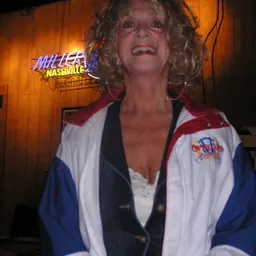
Related people
Same field, nearest in time
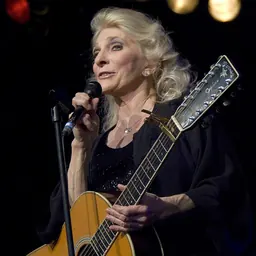



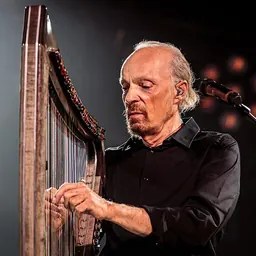

Contemporaries
People whose lives overlapped Jean Shepard's
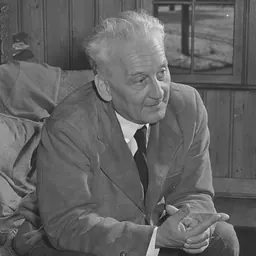



Frequently asked questions
Who was Jean Shepard?
American singer (1933–2016)
When was Jean Shepard born?
Jean Shepard was born on 21 November 1933 in Pauls Valley.
When did Jean Shepard die?
Jean Shepard died on 25 September 2016 in Hendersonville.
What was Jean Shepard's occupation?
Jean Shepard was a singer-songwriter, singer, autobiographer, recording artist and musician.
What nationality was Jean Shepard?
Jean Shepard was American.
Sources & further reading
Cite this page
APA: Biography.guide. (2026). Jean Shepard. https://biography.guide/jean-shepard/
MLA: "Jean Shepard." Biography.guide, https://biography.guide/jean-shepard/.
Chicago: "Jean Shepard." Biography.guide. https://biography.guide/jean-shepard/.
Data last updated: 2026-09-20 · Spot an error? Report a correction.
Page generated 2026-09-27 05:27 UTC