
About Jean-Pierre Melville
Lived 1917 – 1973 (aged 55). Jean-Pierre Melville was a French actor, film director, screenwriter, film producer, director and film actor.
Jean-Pierre Grumbach (20 October 1917 – 2 August 1973), known professionally as Jean-Pierre Melville , was a French filmmaker. Considered a spiritual godfather of the French New Wave, he was one of the first fully-independent French filmmakers to achieve commercial and critical success. His works include the crime dramas Bob le flambeur, Le Doulos (1962), Le Samouraï (1967), and Le Cercle Rouge (1970), and the war films Le Silence de la mer (1949) and Army of Shadows (1969).
Melville's subject matter and approach to film making was influenced by his service in the French Resistance during World War II, during which he adopted the nom de guerre (pseudonym) 'Melville' as a tribute to his favorite American author Herman Melville. He kept it as his stage name once the war was over.
His sparse, existentialist but stylish approach to film noir and later neo-noir films, many of them crime dramas, have been highly influential to future generations of filmmakers.
Biography Early years Jean-Pierre Grumbach was born in 1917 in Paris, the son of Alsatian Jewish parents Berthe and Jules Grumbach. His father was a rag merchant; the family lived in the ninth arrondissement of Paris. His eldest brother Jacques wrote for the Socialist Party weekly Le Populaire.
Grumbach left school at 17 working as a courier and then a wedding photographer. In 1937, he joined the Communist Party, but left in 1939 over the Molotov-Ribbentrop Pact. He adopted the nom de guerre 'Melville' after the American author Herman Melville, a favourite of his. On 29 June 1967, the studio and Melville's apartment burnt down. His personal archive of photographs and scripts was destroyed.
He became well known for his minimalist film noir, such as Le Doulos (1962), Le Samouraï (1967) and Le Cercle rouge (1970), starring major actors such as Alain Delon (probably the definitive "Melvillian" actor), Jean-Paul Belmondo and Lino Ventura. Influenced by American cinema, especially gangster films of the 1930s and 1940s, he used accessories such as weapons, clothes (trench coats), and fedora hats, to shape a characteristic look in his movies. He also displayed an interest in Eastern philosophies and martial traditions, as demonstrated in Le Samouraï and Le Cercle rouge. He self-described his style to André S. Labarthe as "nostalgic", while many commentators have noted its existentialist overtones.
Melville ultimately became so identified with the style that The New Yorkers Anthony Lane wrote the following about a 2017 retrospective of his films:
For several years, he sat on the executive board of the French film classification board, the Commission de classification des œuvres cinématographiques, of the Centre national du cinéma et de l'image animée (CNC).
Personal life Melville was married to his wife, Florence, from 1952 until his death. She worked as a producer on Two Men in Manhattan.
Although a friend of left-wing icons such as Jean-Luc Godard and Yves Montand, Melville referred to his politics as "right-wing anarchist" and "extreme individualist".
Melville was noted for wearing a trench coat, Ray-Ban sunglasses, and a Stetson hat, loving cats, and eating candy bars.
Death
Melville died on 2 August 1973 while dining with writer Philippe Labro at the Hôtel PLM Saint-Jacques restaurant in Paris; the cause of death has been variously given as a heart attack or a ruptured aneurysm. He was 55 years old and was writing his next film, Contre-enquête, a spy thriller for producer Jacques-Éric Strauss with Yves Montand in the lead. Melville apparently wrote the first 200 shots for the film. After Melville's death, Labro took over the project, hoping to finish writing and direct it but he eventually dropped it to film Le hasard et la violence (1974), also starring Montand and for producer Strauss.
Influence and legacy
Melville's independence and "reporting" style of film-making (he was one of the first French directors to use real locations regularly) were a major influence on the French New Wave film movement. Jean-Luc Godard used him as a minor character in his seminal New Wave film Breathless. When Godard was having difficulty editing the film, Melville suggested that he just cut directly to the best parts of a shot. Godard was inspired and the film's innovative use of jump cuts have become part of its fame.
Melville's approach to the crime film genre emphasized "habit and rules and codes and the consequences of breaking them". He influenced the work of directors Michael Mann and John Woo. Woo called Le Cercle rouge one of his favorite films, and called Melville "a god".
Other directors influenced by Melville include Martin Scorsese, Quentin Tarantino, Walter Hill, Johnnie To, Takeshi Kitano, John Frankenheimer, John Milius, Nicolas Winding Refn, Kim Jee-woon, Hossein Amini, Jim Jarmusch, and Aki Kaurismäki. The John Wick film series contains several nods to Melville's Le Cercle rouge.
Code Name Melville Produced in 2008, the 76-minute-long feature documentary Code Name Melville (original French title: Sous le nom de Melville) reveals the importance of Jean-Pierre Melville's experience in the French Resistance during World War II to his approach to film making.
Filmography
Feature films
Acting roles
Don’t just read it —
keep it.
Full-length biographies made to live with: read them, listen on the way to work, watch them tonight.
- E-book
- Audio
- Video
Instant download · yours to keep · every purchase keeps this site free
Important facts
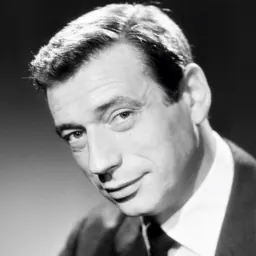
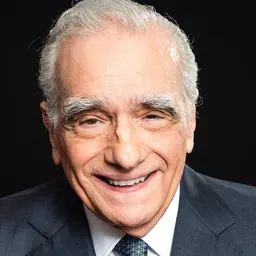
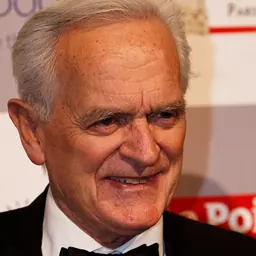
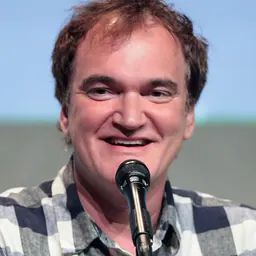
People in Jean-Pierre Melville's life
Named in this biography and alive at the same time



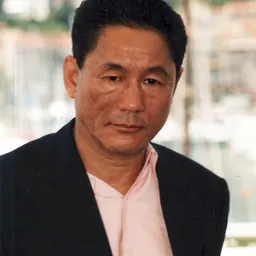
Related people
Same field, nearest in time



Contemporaries
People whose lives overlapped Jean-Pierre Melville's

Frequently asked questions
Who was Jean-Pierre Melville?
French filmmaker and actor (1917–1973)
When was Jean-Pierre Melville born?
Jean-Pierre Melville was born on 20 October 1917 in 9th arrondissement of Paris.
When did Jean-Pierre Melville die?
Jean-Pierre Melville died on 2 August 1973 in 13th arrondissement of Paris.
What was Jean-Pierre Melville's occupation?
Jean-Pierre Melville was an actor, film director, screenwriter, film producer, director and film actor.
What nationality was Jean-Pierre Melville?
Jean-Pierre Melville was French.
Sources & further reading
· Wikipedia: Jean-Pierre Melville
· DBpedia: Jean-Pierre Melville
Cite this page
APA: Biography.guide. (2026). Jean-Pierre Melville. https://biography.guide/jean-pierre-melville/
MLA: "Jean-Pierre Melville." Biography.guide, https://biography.guide/jean-pierre-melville/.
Chicago: "Jean-Pierre Melville." Biography.guide. https://biography.guide/jean-pierre-melville/.
Data last updated: 2026-09-20 · Spot an error? Report a correction.
Page generated 2026-09-27 05:28 UTC