
About Jean Pârvulescu
Lived 1928 – 2010 (aged 82). Jean Pârvulescu was a French and Romanian journalist and writer.
Jean Parvulesco (born Ion Pârvulescu, September 29, 1929 – November 21, 2010) was a Romanian-French far-right philosopher, writer and journalist. An heir to Traditionalist thought in the perennialist lineage of René Guénon, but above all that of Julius Evola, a sympathizer of the Nouvelle Droite and an atypical Catholic close to a form of telluric pantheism, he is best known for his numerous novels and for a new, poetic style of writing infused with intuitions and “mystical” enigmas. He had an important influence on several far-right figures in Europe.
Biography Born in Pitești, Romania in 1929, having attended a cadet school, Ion Pârvulescu fled the newly established communist regime of Romania in July 1948 by swimming across the Danube into Yugoslavia. Arrested by the Yugoslav authorities and sent to a political forced-labor camp near Tuzla, he escaped and clandestinely reached Austria in August 1949. He arrived in Paris in 1950 and attended philosophy and literature courses at the Sorbonne, though without serious commitment, preferring instead to frequent literary, artistic, and cinematic circles. He also served as secretary-general of the “Union Center of Democratic Romanian Journalists and Publicists in Exile,” founded in 1950 and comprising about thirty members. He was later naturalized as a French citizen. He also had ties to the Iron Guard exiles in France.
The author of a diverse body of work (novels, essays, and poetry), Jean Parvulesco began publishing from the 1980s onward. He became close to the Groupement de recherche et d'études pour la civilisation européenne (GRECE), then to its splinter group European Synergies, as well as to Raymond Abellio, Jacques Bergier, Arno Breker, Jean Daniélou, Guy Dupré, Mircea Eliade, Vintila Horia, Henry Montaigu, Louis Pauwels, Dominique de Roux, and in the world of cinema to Jean-Luc Godard and actresses such as Carole Bouquet, Aurora Cornu, Ava Gardner, and Bulle Ogier.
He maintained relations with authors as diverse as Pierre Boutang, Alain de Benoist, Marguerite Duras, Julius Evola, Martin Heidegger, Michel Marmin, Ezra Pound, Michel d’Urance, among others. In 1973, he met Michel Mourlet, then editor of the magazine Matulu, where he published a long article on Le Cercle rouge by Jean-Pierre Melville. He also published three major studies on Mourlet: Renaissance of Tragedy (postface to La Sanglière, Loris Talmart, 1987) What Lies Behind the Song of Maguelonne (La Revue littéraire, Éditions Leo Scheer, no. 16, July 2005) History of a Malefice (Five Secret Paths in the Night, DVX, 2008)
From the late 1950s onward, he frequented nationalist-revolutionary circles alongside figures such as Jean Dides. He admired the Organisation de l'armée secrète (OAS) and belonged to the Nationalist Revolutionary Movement. He also appears in films by Éric Rohmer (The Tree, the Mayor and the Mediatheque), Barbet Schroeder (Maîtresse), among others.
From June to August 1960, he published a series of seven articles in the Spanish Falangist magazine Primer Plano, strongly favorable to the Nouvelle Vague, attempting to demonstrate that it was imbued with far-right ideas. The academic Hélène Liogier notes that he “seems particularly well informed about Nouvelle Vague films and directors,” even claiming personal acquaintance with them.
In 2015, the Romanian branch of RussiaToday organised a conference dedicated to Jean Parvulesco at the National Library of Romania, among the attendees being Alexander Dugin and his daughter, Daria Dugina.
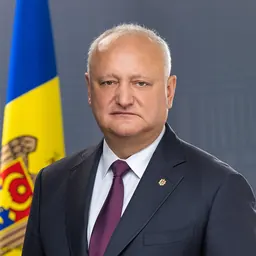
In 2017, an international conference devoted to his work was held in Moldova, which was attended by the then President of Moldova Igor Dodon. Other attendees included Iurie Roșca and Presidential advisor Ion Ceban. In the volume At the water of Babylon, Monica Lovinescu reminds of “Jean Parvulescu as so amateur of apocalypses and who as his “fascist” available rendered impeccably the agonical days and nights of camp”. He was the grandfather of Stanislas Parvulesco, one of the claimants to the “throne” of Araucanía and Patagonia.
Political and geopolitical theses Analyzing his articles in Primer Plano on the Nouvelle Vague, the academic Hélène Liogier states that he “defends the virtues of order dictated by the papacy and monarchy,” is “in favor of a nationalism with European borders,” “praises the action of violence,” stigmatizes Enlightenment philosophers and Jean-Paul Sartre, condemns the “decadence of the capitalist and liberal bourgeoisie,” shows “exacerbated anti-communism and a trace of antisemitism,” and is “convinced of the existence of a conspiracy orchestrated by subversive forces”.
He defended the construction of Eurasia as a “site of dialectical confrontation between the United States and the Soviet Union,” leading to the “final assumption of the whole toward a new unity of civilization [within] a single community of civilization, being, and destiny.” Historian Nicolas Lebourg interprets this as “a geopolitical-esoteric reformulation of nationalist-European theses on the white world, and a prefiguration of end-of-century theses on the new Eurasian-American entente known as the ‘Septentrion’”. In opposition to American imperialism, he asserted that the USSR would save the white race.
After the dissolution of the USSR, he advocated a “great Eurasian pan-European empire” uniting “Western Europe and Eastern Europe, Russia and Greater Siberia, India and Japan”, against the United Kingdom and the United States. He described Vladimir Putin as “a terrestrial representation of Christ Pantocrator,” preparing the advent of the “Eurasian Empire of the End”. Nicolas Lebourg emphasizes that “while the French far-right continued to think through the filter of the Cold War, Parvulesco revived the theme of the Paris–Berlin–Moscow axis, a subject of reflection in French diplomacy for over a century”.
According to Lebourg, Jean Parvulesco “was undoubtedly one of the first authors to introduce Mackinder into the French nationalist milieu, in a journal he edited with Yves Bataille”. He was the translator of the first texts of Francis Parker Yockey and one of the openly acknowledged inspirations of the Russian ideologue Alexander Dugin. Through Dugin, who was his friend and disciple, Jean Parvulesco influenced the political life in Russia, contributing to the establishment of the youth movement Nashi.
Lebourg concludes that “Parvulesco was an international transmitter of marginal ideas; his legacy is that of a name turned into a password—highly specific, but contributing to a transnational political imagination”.
Don’t just read it —
keep it.
Full-length biographies made to live with: read them, listen on the way to work, watch them tonight.
- E-book
- Audio
- Video
Instant download · yours to keep · every purchase keeps this site free
Important facts
People in Jean Pârvulescu's life
Named in this biography and alive at the same time




Related people
Same field, nearest in time


Contemporaries
People whose lives overlapped Jean Pârvulescu's


Frequently asked questions
Who was Jean Pârvulescu?
Romanian-born French writer and journalist (1928-2010)
When was Jean Pârvulescu born?
Jean Pârvulescu was born on 30 September 1928 in Pitești.
When did Jean Pârvulescu die?
Jean Pârvulescu died on 21 November 2010 in Boulogne-Billancourt.
What was Jean Pârvulescu's occupation?
Jean Pârvulescu was a journalist and writer.
What nationality was Jean Pârvulescu?
Jean Pârvulescu was French and Romanian.
Sources & further reading
Cite this page
APA: Biography.guide. (2026). Jean Pârvulescu. https://biography.guide/jean-parvulescu/
MLA: "Jean Pârvulescu." Biography.guide, https://biography.guide/jean-parvulescu/.
Chicago: "Jean Pârvulescu." Biography.guide. https://biography.guide/jean-parvulescu/.
Data last updated: 2026-09-26 · Spot an error? Report a correction.
Page generated 2026-09-27 05:15 UTC