
Jean Marie Rodolph Eickemayer
French military engineer
About Jean Marie Rodolph Eickemayer
Lived 1753 – 1825 (aged 72). Jean Marie Rodolph Eickemayer was a German and French politician, philosopher, university teacher, mathematician, writer and military personnel.
Jean Marie Rodolphe Eickemeyer (11 March 1753 - 9 September 1825), also called Heinrich Maria Johann Rudolf Eickemeyer, was an engineer, mathematician, and general of the French Revolutionary Wars. Eickemeyer was born in Mainz, and died in Gau-Algesheim, a town in the Mainz-Bingen district of present-day Rhineland-Palatinate.
Originally in the service of the Elector of Mainz, after the fall of Mainz in 1792, he served in the French Republican Army, attaining the rank of general of brigade, and commanded a division at the Siege of Kehl (1796–97). He left French service in 1799 and retired to Mainz, but found no employment there. He moved to his hometown, where he served two terms as mayor, and was elected as a deputy to the Chamber of the Grand Duchy of Hesse.
Family and education Eickemeyer's father came from Eichsfeld, and had studied mathematics in Göttingen and then at the ducal college in Mainz, and led him through his earliest studies, giving him a solid grounding in the sciences. In 1770, he entered the school of Artillery in the position of an officer. Before taking a position of professor of mathematics at the university, he went at the end of January 1775 to Paris, to study for a half year, and then visited the Netherlands and England. In particular, he study the workings of water and its relationship to military architecture. After his return to Mainz, he began to lecture, but was also in the military service and civil administration, gradually acquiring more responsibility and authority as he became a lieutenant colonel and director of hydraulics.
Military career By 1779, he was the chief engineering officer and had responsibility for the reinforcement and expansion of the Mainz fortifications, which were sadly depleted. However, the Elector of Mainz were adamantly against the investment in the strengthening of the Mainz fortifications, and not until after the outbreak of the French Revolution was there any interest in military affairs. The 1790 campaign against the insurgents of Liege was made; Eickemeyer also commanded the Elector's army, but by then it required so little of his time that he was able to resolve an engineering problem for the Munich Academy.
The Elector of Mainz seemed unfazed by the military violence in France, but he eventually realized that the problems in France would spill into the Rhineland, especially when the Louis XVI's brothers and cousins were agitating for their restoration and using Mainz as a basis for counter-revolutionary action. Eickemeyer was charged with developing a plan for Mainz's defenses. Based on his proposal, the gates were reinstalled and the trenches repaired. In addition, palisades in the outer works improved Mainz's defensive capabilities. Work proceeded slowly, despite the launching of the campaign by the Holy Roman Emperor and the King of Prussia against the French Republic. When news arrived of the capture of Speyer by Custine, work elevated to a frenzy, as local leadership tried to catch up with great zeal on what they had not done in the previous ten weeks, and even ten years. Regardless of the pending panic, though, the Archbishop insisted that his own timbers be purchased to reinforce the walls, further lining his own pockets.
Siege of Mainz 1792 As the French approached, the important defensive points were occupied and ready. In Mainz, though, there was panic: the regiments of the Duke of Nassau evacuated the fortress on October 5. The Elector, the gentry, the bishops, the aristocrats and their servants quickly left the city. It is estimated that between a quarter and a third of the 25,000 inhabitants fled. The rest of the population declared themselves ready to defend the decrepit fortifications. The French troops, now called Army of the Vosges by decision of the convention, began the encirclement and siege of the city on October 18. On that night, the vanguard of General Jean Nicolas Houchard reached Weisenau.
Custine had already been informed by the republicans among Mainz's inhabitants that the French had only to appear before the city to become its master.
French service
In French service, Eickemeyer was employed first in the Taunus region, where his local knowledge was useful in the maneuvers along the Nahe. After the defeats suffered there by the French, he retreated behind the Queich tributary with the rest of the French Army. He transferred to the Upper Rhine, promoted to brigadier general, and spent a short time in the previously Swiss territories. In the Fall 1793, he went to the French town of Belfort, where he evaluated the defenses and trained troops. In 1795, he was assigned to the besieging army at Mainz, and there he used his free time to write a short history on the capture of the fortress of Mainz by the French troops in 1792, which was printed two years later. In 1796, he belonged to the Army of the Rhine and Moselle, under Jean Victor Marie Moreau's command, and in the retreat across Germany he commanded the rear guard, which had several serious clashes with the Austrians. For most of 1796, he fought in the first division of Louis Desaix's Center, under the command of Delmas.
He was wounded in 1796 at the Siege of Kehl; after the surrender of Kehl, in 1797, he commanded a unit in the French interior for the next few years, first in the Jura, where he helped to put down a royalist insurgency, and then in the departments of Loire and Puy-de-Dôme. In 1799, though, he was removed from his post; he subsequently returned to Mainz, but found little work there.
Military service Officer of artillery: 1770 Officer of engineering and artillery, Mainz: 1789 Adjudant-colonel: 30 October 1792 Général of brigade: 15 May 1793
Don’t just read it —
keep it.
Full-length biographies made to live with: read them, listen on the way to work, watch them tonight.
- E-book
- Audio
- Video
Instant download · yours to keep · every purchase keeps this site free
Important facts
People in Jean Marie Rodolph Eickemayer's life
Named in this biography and alive at the same time

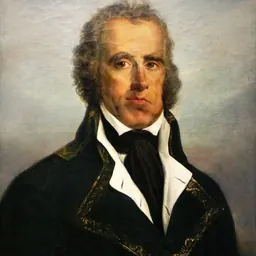

Related people
Same field, nearest in time
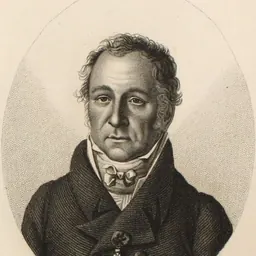



Contemporaries
People whose lives overlapped Jean Marie Rodolph Eickemayer's




Frequently asked questions
Who was Jean Marie Rodolph Eickemayer?
French military engineer (1753-1825)
When was Jean Marie Rodolph Eickemayer born?
Jean Marie Rodolph Eickemayer was born on 11 March 1753 in Mainz.
When did Jean Marie Rodolph Eickemayer die?
Jean Marie Rodolph Eickemayer died on 9 September 1825 in Gau-Algesheim.
What was Jean Marie Rodolph Eickemayer's occupation?
Jean Marie Rodolph Eickemayer was a politician, philosopher, university teacher, mathematician, writer and military personnel.
What nationality was Jean Marie Rodolph Eickemayer?
Jean Marie Rodolph Eickemayer was German and French.
Sources & further reading
· Wikipedia: Jean Marie Rodolph Eickemayer
Cite this page
APA: Biography.guide. (2026). Jean Marie Rodolph Eickemayer. https://biography.guide/jean-marie-rodolph-eickemayer/
MLA: "Jean Marie Rodolph Eickemayer." Biography.guide, https://biography.guide/jean-marie-rodolph-eickemayer/.
Chicago: "Jean Marie Rodolph Eickemayer." Biography.guide. https://biography.guide/jean-marie-rodolph-eickemayer/.
Data last updated: 2026-09-20 · Spot an error? Report a correction.
Page generated 2026-09-27 05:19 UTC