
About Jean-Louis Comolli
Lived 1941 – 2022 (aged 80). Jean-Louis Comolli was a French film director, film critic, screenwriter, non-fiction writer, music critic and musicologist.
Jean-Louis Comolli (30 July 1941 – 19 May 2022) was a French writer, editor, and film director.
Career Comolli was editor in chief of Cahiers du cinéma from 1966 to 1978, having been passed the editorial baton by Jacques Rivette — who always saw his own position on the journal as a transitional one — when Comolli was still in his early twenties. In October 1969, Comolli and co-editor Jean Narboni published the editorial "Cinéma/idéologie/critique" ("Cinema/Ideology/Criticism"), which proclaimed that "all films are political" and announced Cahiers''' Marxist turn. The editorial was incendiary enough that the journal's then-owner, media tycoon Daniel Filipacchi, attempted to shut down Cahiers and replace its editorial board; financial assistance from former contributors allowed the journal to be bought out, and after a four-month break it resumed publication in March 1970.
During the same period, Comolli wrote the influential essays "Machines of the Visible" (1971) and "Technique and Ideology: Camera, Perspective, Depth of Field" (1971–72), which appeared in six installments between May 1971 and September 1972. As Fairfax notes, "Technique and Ideology" represents "one of the most rigorous efforts to apply Althusserian Marxist theory to a historical analysis of the development of the cinema," engaging in debates with theoretical trends as diverse as André Bazin's notion of ontological realism, the traditional film historiography of Georges Sadoul and Jean Mitry, the technicist positions of Jean-Patrick Lebel, and the Marxism of Cinéthique. Both essays have been translated in English anthologies of film and media studies, though prior to the Fairfax translation, "Technique and Ideology" had never received an integral English-language publication, having previously circulated only piecemeal across a number of different anthologies. This work was important in the discussion on apparatus theory, an attempt to rethink cinema as a site for the production and maintenance of dominant state ideology in the wake of May 1968.
Comolli and Narboni distanced themselves from the Cahiers editorial board in 1973, with Serge Daney and Serge Toubiana taking over and leading the journal gradually back toward the mainstream. After his tenure at Cahiers, Comolli continued his work as a director. For a time, filmmaking supplanted theorizing about cinema in his practice, but his reticence began to change in the late 1980s, when he was led back to a preoccupation with film theory after a period of writing on jazz — always his second great passion. His subsequent writings on film theory and documentary practice were collected in two major volumes, Voir et pouvoir (2004) and Corps et cadre (2012). He taught film theory at the Universities of Paris VIII, Barcelona, Strasburg and Genève.
In 2009, Comolli returned to his earlier texts, maintaining that the questions addressed in "Technique and Ideology" "are still active today, 37 years later," and producing a theoretical reconsideration of its central arguments in light of the sweeping changes to cinema and the world in the era of neo-liberal capitalism and media globalization. The resulting book, Cinéma, contre spectacle (Éditions Verdier, 2009), was translated into English by Daniel Fairfax as Cinema against Spectacle: Technique and Ideology Revisited (Amsterdam University Press, 2015), which presents, for the first time in English, Comolli's entire six-part essay in a fresh annotated translation, alongside the "Cinema/Ideology/Criticism" editorial (Appendix I) and "Machines of the Visible" (Appendix II).
Select filmography 1968: Les deux Marseillaises (co-director: André S. Labarthe) 1969: Comme je te veux 1975: La Cecilia 1981: L'Ombre rouge 1983: Balles perdues 1986: Le Bal d'Irène (TV) 1987: Pétition (TV) 1989: Marseille de père en fils - Coup de mistral 1989: Marseille de père en fils - Ombres sur la ville 1992: La Campagne de Provence 1993: Marseille en mars 1994: Jeune fille au livre 1995: Georges Delerue (TV) 1996: Marseille contre Marseille 1997: Nos deux Marseillaises 1997: La Question des alliances 2000: Durruti, portrait d'un anarchiste 2003: Rêves de France à Marseille 2004: Les Esprits du Koniambo (TV) 2005: Le Peintre, le poète et l'historien (TV) 2006: La dernière utopie: La télévision selon Rossellini (documentary) 2008: Entretiens du Louvre (TV) 2009: Face aux fantômes (documentary) 2011: À voir absolument: 1963-1973 Dix années aux Cahiers du Cinéma (documentary) 2013: A Fellini, romance d'un spectateur amoureux (documentary) 2014: Cinéma documentaire, Fragments d'une histoire (documentary) 2016: Richard Dindo, Pages Choisies (documentary) 2016: Marseille entre deux tours (documentary) 2018: Les Fantômes de Mai 68 (documentary) 2019: Nicolas Philibert, hasard et nécessité (documentary)
Select bibliography Comolli, Jean-Louis, and Jean Narboni. "Cinema/Ideology/Criticism." Screen 12, no. 1 (1971). Reprinted as Appendix I in Cinema against Spectacle, ed. Fairfax (2015). Voir et pouvoir: L'innocence perdue: cinéma, télévision, fiction, documentaire. Verdier, 2004. Corps et cadre: cinéma, éthique, politique. Verdier, 2012. Cinéma, contre spectacle. Éditions Verdier, 2009. Trans. by Daniel Fairfax as Cinema against Spectacle: Technique and Ideology Revisited''. Amsterdam University Press, 2015. .
Don’t just read it —
keep it.
Full-length biographies made to live with: read them, listen on the way to work, watch them tonight.
- E-book
- Audio
- Video
Instant download · yours to keep · every purchase keeps this site free
Important facts
People in Jean-Louis Comolli's life
Named in this biography and alive at the same time






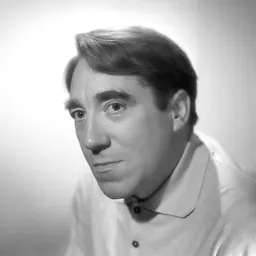
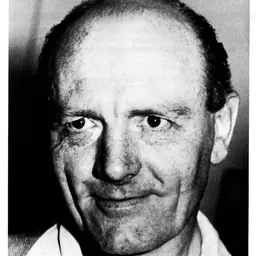
Related people
Same field, nearest in time
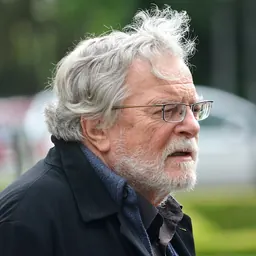

Contemporaries
People whose lives overlapped Jean-Louis Comolli's
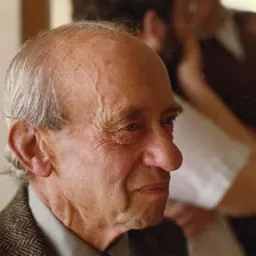

Frequently asked questions
Who was Jean-Louis Comolli?
French film director (1941–2022)
When was Jean-Louis Comolli born?
Jean-Louis Comolli was born on 30 July 1941 in Philippeville.
When did Jean-Louis Comolli die?
Jean-Louis Comolli died on 19 May 2022 in 15th arrondissement of Paris, Paris.
What was Jean-Louis Comolli's occupation?
Jean-Louis Comolli was a film director, film critic, screenwriter, non-fiction writer, music critic and musicologist.
What nationality was Jean-Louis Comolli?
Jean-Louis Comolli was French.
Sources & further reading
· Wikipedia: Jean-Louis Comolli
Cite this page
APA: Biography.guide. (2026). Jean-Louis Comolli. https://biography.guide/jean-louis-comolli/
MLA: "Jean-Louis Comolli." Biography.guide, https://biography.guide/jean-louis-comolli/.
Chicago: "Jean-Louis Comolli." Biography.guide. https://biography.guide/jean-louis-comolli/.
Data last updated: 2026-09-20 · Spot an error? Report a correction.
Page generated 2026-09-27 05:26 UTC