
About Jean-Louis Chrétien
Lived 1952 – 2019 (aged 66). Jean-Louis Chrétien was a French philosopher, poet, university teacher and writer.
Jean-Louis Chrétien (; 24 July 1952 – 28 June 2019) was a French philosopher in the tradition of phenomenology as well as a poet and religious thinker. Author of over thirty books, he was the 2012 winner of the Cardinal Lustiger Prize for his life’s work in philosophy. He was professor emeritus of philosophy at the Sorbonne at the end of his career. The study of Chrétien increased widely after his death, a posthumous recognition that contrasts with his modest and solitary attitude.
Biography Born in Paris to Henri and Anna Chrétien, Chrétien was raised in an agnostic household. His father was a communist activist and doctor in the International Brigades in Spain, and had spent time in the Natzweiler-Struthof and Dachau concentration camps. As a young man in his mid-twenties, Chrétien went against his father’s wishes, converted to Catholicism, and was baptized on Pentecost Sunday. Henceforth, his faith would play a fundamental role in the development not only of his life, but his unique brand of philosophy. Chrétien studied at the Lycée Charlemagne in the late 1960s, and graduated with a first from the École Normale Supérieure (1971), as well as a first in the Agrégation de philosophie (1974). After teaching in secondary schools for a few years, he earned a doctorate from the Sorbonne in 1983. Early encounters with the philosopher Henri Maldiney played a significant role in guiding the pursuit of his philosophical vocation. His friendship with the philosopher Vladimir Jankélévitch was another factor, as well as a foundational encounter with the writings of Martin Heidegger. He wrote a dissertation under Pierre Aubenque on “The Hermeneutic of Obliquity in Neo-Platonism and Ancient Christianity.” After teaching for some years at the University of Créteil, Chrétien was invited to teach at the Sorbonne, where he obtained a chair in the history of philosophy of Late Antiquity and High Middle Ages. He taught courses there until 2017, when he retired to focus on writing. In 2012, he was awarded the Cardinal Lustiger Prize of the Académie Française, in recognition of the philosophical work of his lifetime.
Philosophy Chrétien was a phenomenologist, but one who consciously practiced within a tradition: not only the phenomenological tradition of Husserl, Heidegger, and Merleau-Ponty, but the Christian-Platonic tradition of Augustine. Throughout his works, he pursued deep engagements with philosophers and theologians in these traditions, as well as poets and novelists who could help him address the human questions in which he was interested. A chief research project of Chrétien’s through multiple publications was the experience of transcendence, what he called the “excess of the encounter with things, other, world, and God . . . this encounter requires, most imperatively, our response, and yet seems at the same time to prohibit it.” Many of his books trace different aspects of this basic picture, working out phenomenologies of personal encounter, response to the call of being (The Call and the Response), prayer (“The Wounded Word”), and art (Hand to Hand). Perhaps most centrally, his phenomenology finds its center in the experience of speech (The Ark of Speech), in which we are always trying to make the impossible response to the fundamental excess of reality. Thus, in a 2013 interview, Chrétien declared that "the guiding theme of all of my writings has been a phenomenology of speech as the place where all meaning comes to light and is received."
Personal life Chrétien remain unmarried throughout his life. He avoided modern technology, writing all of his books and articles by hand rather than using computers, and preferring personal communication wherever possible. This did not preclude his many deep friendships, and decades of mentoring relationships with students. He was known for his sense of humor, as well as his profound personal diffidence and avoidance of the limelight.
Works
Books in French (and other languages): Lueur du secret, Paris, L'Herne, 1985. L'Effroi du beau, Paris, Cerf, 1987. L'Antiphonaire de la nuit, Paris, L'Herne, 1989. Traversées de l'imminence, Paris, L’Herne, 1989. La Voix nue : phénoménologie de la promesse, Paris, Minuit, 1990. Loin des premiers fleuves, Paris, La Différence, 1990. L'inoubliable et l'inespéré, Paris, Desclée de Brouwer, 1991. L'Appel et la Réponse, Paris, Minuit, 1992. Parmi les eaux violentes, Paris, Mercure de France, 1993. Effractions brèves, Sens, Obsidiane, 1995. De la fatigue, Paris, Minuit, 1996. Corps à corps : à l'écoute de l’œuvre d'art, Paris, Minuit, 1997. Entre flèche et cri, Sens, Obsidiane, 1998. L'Arche de la parole, Paris, PUF, « coll. Epiméthée » 1998. Le regard de l'Amour, Paris, Desclée de Brouwer, 2000. Joies escarpées, Sens, Obsidiane, 2001. Marthe et Marie, Paris, Desclée de Brouwer, 2002 (with Étienne Jollet and Guy Lafon). Saint Augustin et les actes de parole, Paris, PUF, « coll. Epiméthée », 2002. L'intelligence du feu: réponses humaines à une parole de Jésus, Paris, Bayard, 2003. Promesses furtives, Paris, Minuit, 2004. Symbolique du corps: la tradition chrétienne du Cantique des Cantiques, Paris, PUF, « coll. Epiméthée », 2005. La Joie spacieuse: essai sur la dilatation, Paris, Minuit, 2007. Répondre : figures de la réponse et de la responsabilité, Paris, PUF, « Chaire Étienne Gilson », 2007. Sous le regard de la Bible, Paris, Bayard-Centurion, coll. « Bible et philosophie », 2008. Conscience et roman. I, La conscience au grand jour, Paris, Minuit, « coll. Paradoxe », 2009. Pour reprendre et perdre haleine : dix brèves méditations, Paris, Bayard, 2009. Reconnaissances philosophiques, Paris, Le Cerf, 2010. Conscience et roman. II, La conscience à mi-voix, Paris, Minuit, « coll. Paradoxe », 2011. L’Espace intérieur, Paris, Minuit, « coll. Paradoxe », 2014. Fragilité, Minuit, coll. « Paradoxe », 2017.
Books in English Translation: The Unforgettable and the Unhoped For. Translated by Jeffrey Bloechl. New York: Fordham University Press, 2002. The Ark of Speech. Translated by Andrew Brown. New York: Routledge, 2003. Hand to Hand: Listening to the Work of Art. Translated by Stephen E. Lewis. New York: Fordham University Press, 2003. The Call and the Response. Translated by Anne Davenport. New York: Fordham University Press, 2004. Under the Gaze of the Bible. Translated by John Marson Dunaway. New York: Fordham University Press, 2014. Spacious Joy: An Essay in Phenomenology and Literature. Translated by Anne Davenport. Lanham, MD: Rowman & Littlefield, 2019. Ten Meditations for Catching and Losing One’s Breath. Translated by Steven DeLay. Eugene, OR: Wipf & Stock, 2024.
Essays and Book Chapters in English Translation: "The Wounded Word: A Phenomenology of Prayer." In Phenomenology and the Theological Turn: The French Debate. Edited by Dominique Janicaud, 147-175. New York: Fordham University Press, 2000. "From the Limbs of the Heart to the Soul's Organs." In Carnal Hermeneutics. Edited by Richard Kearney & Brian Treanor, 92-114. New York: Fordham University Press, 2015. "Attempting to Think Beyond Subjectivity." (An Interview with Camille Riquier and Marc Cerisuelo.) In Quiet Powers of the Possible: Interviews in Contemporary French Phenomenology. Translated by Tarek Dika and W. Chris Hackett, 228-238. New York: Fordham University Press, 2016. "Split Interpretations of a Split I: Romans 7:7-25." In Phenomenologies of Scripture. Edited by Adam Y. Wells. Translated by Reuben Glick-Shank. New York: Fordham University Press, 2017. "Martha and Mary: The Double Hospitality." Translated by Abigail Leali. Communio 47, No. 3 (Fall 2020): 471-502. "Prayer According to Kierkegaard." Translated by Filippo Pietrogrande. Journal for Continental Philosophy of Religion. 3, No. 2 (October 2021): 188–202.
Don’t just read it —
keep it.
Full-length biographies made to live with: read them, listen on the way to work, watch them tonight.
- E-book
- Audio
- Video
Instant download · yours to keep · every purchase keeps this site free
Important facts
People in Jean-Louis Chrétien's life
Named in this biography and alive at the same time








Related people
Same field, nearest in time
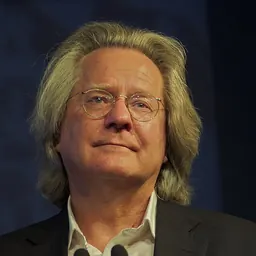

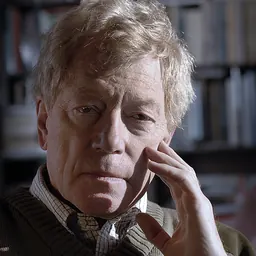
Contemporaries
People whose lives overlapped Jean-Louis Chrétien's
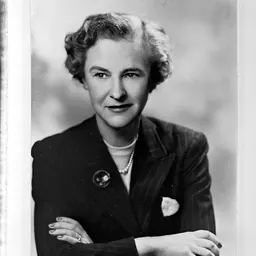

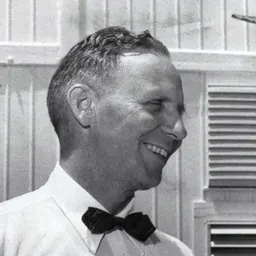
Frequently asked questions
Who was Jean-Louis Chrétien?
French philosopher and poet (1952–2019)
When was Jean-Louis Chrétien born?
Jean-Louis Chrétien was born on 24 July 1952 in 11th arrondissement of Paris.
When did Jean-Louis Chrétien die?
Jean-Louis Chrétien died on 28 June 2019 in 15th arrondissement of Paris.
What was Jean-Louis Chrétien's occupation?
Jean-Louis Chrétien was a philosopher, poet, university teacher and writer.
What nationality was Jean-Louis Chrétien?
Jean-Louis Chrétien was French.
Sources & further reading
· Wikipedia: Jean-Louis Chrétien
· DBpedia: Jean-Louis Chrétien
Cite this page
APA: Biography.guide. (2026). Jean-Louis Chrétien. https://biography.guide/jean-louis-chretien/
MLA: "Jean-Louis Chrétien." Biography.guide, https://biography.guide/jean-louis-chretien/.
Chicago: "Jean-Louis Chrétien." Biography.guide. https://biography.guide/jean-louis-chretien/.
Data last updated: 2026-09-24 · Spot an error? Report a correction.
Page generated 2026-09-27 05:01 UTC