
About Jean Lemaire de Belges
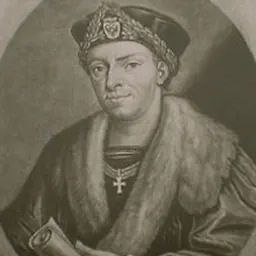
Lived 1473 – 1524 (aged 50–51). Jean Lemaire de Belges was a French poet, writer, essayist and historian.
Jean Lemaire de Belges (c. 1473c. 1525) was a Walloon poet, historian, and pamphleteer who, writing in French, was the last and one of the best of the school of poetic 'rhétoriqueurs' (“rhetoricians”) and the chief forerunner, both in style and thought, of the Renaissance humanists in France and Flanders.
Biography
Jean was born in Hainaut (Hainault), the godson and possibly a nephew of Jean Molinet, and spent some time with him at Valenciennes, where the elder writer held a kind of academy of poetry. In his first poems, Lemaire calls himself a disciple of Molinet. In certain aspects he does belong to the school of the grands rhétoriqueurs ("rhetoricians"), but his great merit as a poet is that he emancipated himself from the affectations of his masters. He perhaps owed this independence from the Flemish school in part to his studies at the University of Paris and to the study of the Italian poets at Lyon, a centre of the French Renaissance. In 1504 he was attached to the court of Margaret of Austria, Duchess of Savoy, and afterwards Regent of the Netherlands. For Margaret he undertook more than one mission to Rome, where he came into contact with the culture of the Italian Renaissance; he became her librarian and a canon of Valenciennes.
Jean's most original poems were addressed to Margaret: the burlesque , of 1505 (see 1505 in poetry). The (green lover) of the title is a green parrot belonging to his patroness. This latter piece was subsequently utilised in the sublimely melancholic (Within this tomb) by Pierre de la Rue. It is an intense elegiac farewell to Margaret's 'green lover'.
Lemaire gradually became more French in his sympathies, eventually entering the service of Anne of Brittany, wife of Louis XII, and supporting Louis's ambitions to create a church relatively independent of the Pope. His prose (1510–1514), largely adapted from Benoît de Sainte-Maure, is a novel-like history that connects the House of Burgundy with Hector.
Lemaire probably died before 1525. Étienne Pasquier, Pierre de Ronsard and Joachim du Bellay all acknowledged their indebtedness to him. In his love for antiquity, his sense of rhythm, and even the peculiarities of his vocabulary he anticipated the humanist movement led by Du Bellay and Ronsard, the .
Works A 4-volume edition of his works, edited by Jean Stecher, was published in Leuven in 1882-1891.
Prose 1510–1514:
Poetry 1504 or 1505: , on the death of Philibert II, Duke of Savoy, the second husband of Archduchess Margaret of Austria
Don’t just read it —
keep it.
Full-length biographies made to live with: read them, listen on the way to work, watch them tonight.
- E-book
- Audio
- Video
Instant download · yours to keep · every purchase keeps this site free
Important facts
People in Jean Lemaire de Belges's life
Named in this biography and alive at the same time
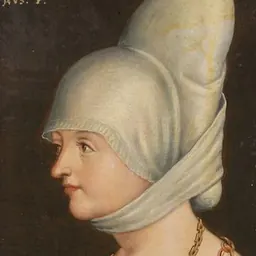
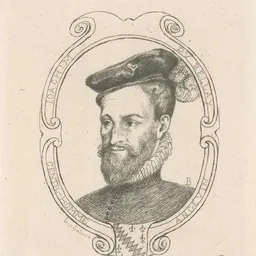


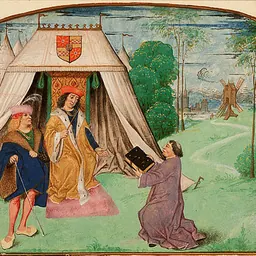
Related people
Same field, nearest in time
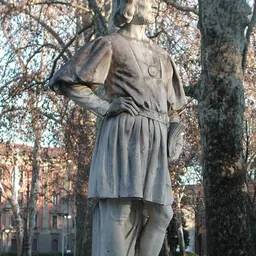


Contemporaries
People whose lives overlapped Jean Lemaire de Belges's




Frequently asked questions
Who was Jean Lemaire de Belges?
Walloon poet and historian who lived primarily in France
When was Jean Lemaire de Belges born?
Jean Lemaire de Belges was born in 1473 in Bavay.
When did Jean Lemaire de Belges die?
Jean Lemaire de Belges died in 1524 in Paris.
What was Jean Lemaire de Belges's occupation?
Jean Lemaire de Belges was a poet, writer, essayist and historian.
What nationality was Jean Lemaire de Belges?
Jean Lemaire de Belges was French.
Sources & further reading
· Wikipedia: Jean Lemaire de Belges
· DBpedia: Jean Lemaire de Belges
Cite this page
APA: Biography.guide. (2026). Jean Lemaire de Belges. https://biography.guide/jean-lemaire-de-belges/
MLA: "Jean Lemaire de Belges." Biography.guide, https://biography.guide/jean-lemaire-de-belges/.
Chicago: "Jean Lemaire de Belges." Biography.guide. https://biography.guide/jean-lemaire-de-belges/.
Data last updated: 2026-09-20 · Spot an error? Report a correction.
Page generated 2026-09-27 05:02 UTC