
Jean Jacques Régis de Cambacérès
French lawyer and statesman during the French Revolution and the First Empire, best remembered as the author of the Napoleonic Code
About Jean Jacques Régis de Cambacérès
Lived 1753 – 1824 (aged 70). Jean Jacques Régis de Cambacérès was a French jurist and politician.
Jean-Jacques-Régis de Cambacérès, Duke of Parma (; 18 October 17538 March 1824), was a French lawyer and statesman active during the French Revolution and the First French Empire. He is best remembered as one of the authors of the Napoleonic Code, which still forms the basis of French civil law and French-inspired civil law in many countries.
Early life Cambacérès was born in Montpellier, into a family of the legal nobility. Although his childhood was relatively poor, his brother Étienne Hubert de Cambacérès later became a cardinal, and his father later became mayor of Montpellier.
In 1774, Cambacérès graduated in law from the college d'Aix and succeeded his father as Councillor in the court of accounts and finances in Toulouse. He was a supporter of the French Revolution of 1789, and was elected as an extra deputy to represent the nobility of Montpellier, in case the government doubled the nobility's delegation at the meeting of the Estates-General at Versailles. However, as the delegation was not increased, he never took his seat. In 1792, he represented the department of Hérault at the National Convention which assembled and proclaimed the First French Republic in September 1792.
National Convention In revolutionary terms, Cambacérès was a moderate republican and sat left of center during the National Convention. During the trial of Louis XVI he protested that the Convention did not have the power to sit as a court and demanded that the king should have due facilities for his defence. Nevertheless, when the trial proceeded, Cambacérès voted with the majority that declared Louis to be guilty, but recommended that the penalty should be postponed until it could be ratified by a legislative body. His legal expertise made him useful to all parties; he was a friend to all and an enemy to none. The Code was promulgated by Bonaparte (as Emperor Napoleon) in 1804. In the end, the Napoleonic Code was the work of Cambacérès and a commission of four lawyers.
The Code was a minor revised form of Roman law, with minor modifications drawn from the laws of the Franks still current in northern France (Coutume de Paris). The Code was later extended by Napoleon's occupations to Poland, Italy, the Netherlands, Belgium, and Western Germany. Cambacérès' work has thus been influential in European legal history. However, versions of the Code are only still in force in Quebec (which was never under Napoleon' control) and Louisiana, which was only briefly under Napoleon's control.
The Napoleonic Code dealt with Civil Law; other codes ensued for Penal Law, criminal procedure, and civil procedure.
Life with Napoleon (1804–1815) Cambacérès coat of arms as dignitary and nobleman of the French Empire. Cambacérès disapproved of Bonaparte's accumulation of power into his own hands (culminating in the proclamation of the First French Empire on 18 May 1804) but retained high office under Napoleon: Arch-Chancellor of the Empire and President of the House of Peers from 2 June, to 7 July 1815. He also became a prince of the Empire and in 1808 was made Duke of Parma (French: duc de Parme). After the restoration of the monarchy, he was in danger of arrest for his revolutionary activities, and he was exiled from France in 1816. The fact that he had opposed the execution of Louis XVI counted in his favor, and in May 1818 his civil rights as a citizen of France were restored. From 1815 and on, Cambacérès used the title of Duke of Cambacérès (on the fall of the Empire, the Duchy of Parma passed to former Empress Marie Louise). He was a member of the Académie Française and lived quietly in Paris until his death in 1824.
Private life The common belief that Cambacérès is responsible for decriminalizing homosexuality in France is in error. Before the French Revolution, sodomy had been a capital crime under royal legislation. The penalty was burning at the stake. Very few men, however, were ever actually prosecuted and executed for consensual sodomy (no more than five in the entire eighteenth century). Sodomites arrested by the police were more usually released with a warning or held in prison for, at most, a few weeks or months. The National Constituent Assembly revised French criminal law in 1791 and got rid of a variety of offenses inspired by religion, including blasphemy. Sodomy was not specifically mentioned but was covered under the umbrella of 'religious crimes'. Since there was no public debate, its motives remain unknown (a similar state of affairs occurred during the early years of the Russian Revolution).
Cambacérès' homosexual orientation was well-known, and he does not seem to have made any effort to conceal it. He remained unmarried, and kept to the company of other bachelors. Napoleon is recorded as making a number of jokes on the subject. Upon hearing that Cambacérès had recruited a woman for a mission, Napoleon responded with, "my compliments, so you have come closer to women?". Robert Badinter once mentioned in a speech to the French National Assembly, during debates on reforming the homosexual age of consent, that Cambacérès was known in the gardens of the Palais-Royal as "Tante Urlurette".
While Cambacérès was not responsible for ending the legal prosecution of homosexuals, he did play a key role in drafting the Code Napoléon, but this was a civil law code. He had nothing to do with the Penal Code of 1810, which covered sexual crimes.
In addition to jesting about his homosexuality, Cambacérès' colleagues did not fail to poke fun at his gluttony. When he met with the council while Napoleon was away, everyone knew that the meeting would be over before lunch.
Free-Masonry
Cambaceres was admitted to the lodge of "Les Amis Fidèles" in Montpellier in 1775. During Napoleon's reign, he was charged by the Emperor to monitor Free-Masonry in France and the French Rite. From 1805 to 1815, he was the assistant of Joseph Bonaparte, Grand Master of Grand Orient de France, and managed the post-revolutionary rebirth of French freemasonry. During his term, more than 1200 lodges were created.
Don’t just read it —
keep it.
Full-length biographies made to live with: read them, listen on the way to work, watch them tonight.
- E-book
- Audio
- Video
Instant download · yours to keep · every purchase keeps this site free
Important facts
People in Jean Jacques Régis de Cambacérès's life
Named in this biography and alive at the same time
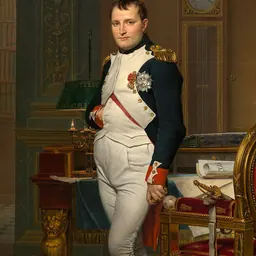

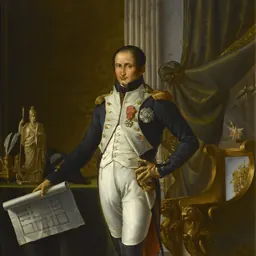
Related people
Same field, nearest in time


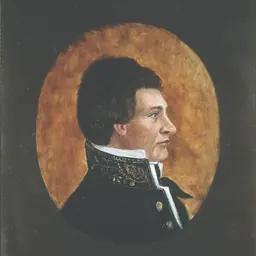

Contemporaries
People whose lives overlapped Jean Jacques Régis de Cambacérès's





Frequently asked questions
Who was Jean Jacques Régis de Cambacérès?
French lawyer and statesman during the French Revolution and the First Empire, best remembered as the author of the Napoleonic Code (1753-1824)
When was Jean Jacques Régis de Cambacérès born?
Jean Jacques Régis de Cambacérès was born on 18 October 1753 in Montpellier.
When did Jean Jacques Régis de Cambacérès die?
Jean Jacques Régis de Cambacérès died on 8 March 1824 in Paris.
What was Jean Jacques Régis de Cambacérès's occupation?
Jean Jacques Régis de Cambacérès was a jurist and politician.
What nationality was Jean Jacques Régis de Cambacérès?
Jean Jacques Régis de Cambacérès was French.
Sources & further reading
· Wikipedia: Jean Jacques Régis de Cambacérès
· DBpedia: Jean-Jacques-Régis de Cambacérès
Cite this page
APA: Biography.guide. (2026). Jean Jacques Régis de Cambacérès. https://biography.guide/jean-jacques-regis-de-cambaceres/
MLA: "Jean Jacques Régis de Cambacérès." Biography.guide, https://biography.guide/jean-jacques-regis-de-cambaceres/.
Chicago: "Jean Jacques Régis de Cambacérès." Biography.guide. https://biography.guide/jean-jacques-regis-de-cambaceres/.
Data last updated: 2026-09-20 · Spot an error? Report a correction.
Page generated 2026-09-27 05:30 UTC