
About Jean Jacques Rambonnet
Lived 1864 – 1943 (aged 79). Jean Jacques Rambonnet was a Dutch politician and naval officer.
Jean Jacques Rambonnet (8 March 1864 – 3 August 1943) was a Dutch naval officer and politician. Reaching the rank of vice admiral, he served as Minister of the Navy, Acting Minister of Colonies, and Acting Minister of War. He was also a member of the Council of State and, among other things, a knight in the Military Order of William. He also played an important role in Scouting in the Netherlands and served as the only Chief Scout of the Netherlands prior to 2021.
Family
Rambonnet's great-great-great-grandfather Frédéric Louis Rambonnet (1684–1755) was a member of the Geheimrat of the King of Prussia, stadtholder of Maastricht and the County of Groedenhove, and envoy of the King of Prussia to the Bishop of Liège. His great-great-grandfather, also named Jean Jacques Rambonnet (1713–1768) and the son of Frédéric Louis Rambonnet, was a Walloon minister. Rambonnet's great-grandfather, F. L. Rambonnet (1751–1811), was a member of the legislative body for the Overijssel department.
Rambonnet's paternal grandfather, also named Jean Jacques Rambonnet (1793–1873), was a Dutch Reformed Church minister. His maternal grandfather was Jonkheer Simon Pierre François Meijer, Royal Netherlands Army officer and a knight of the Military Order of William.
Rambonnet's father, Frédéric Louis Rambonnet (1827–1900), was mayor of Wijhe. His mother was Jonkvrouw Sara Maria Cornelia Meijer (1837–1921).
Rambonnet's brother, also named Frédéric Louis Rambonnet (1867–1949), was a vice admiral, and another brother, Henri Gerard Rambonnet (1873–1961), was a major general of artillery. Rambonnet's brother-in-law Henri Marchant (1869–1956) was a minister.
Rambonnet married Marie Jeanne Arnoldine Antoinette Uhlenbeck (1873–1940), daughter of Vice Admiral Christian Elisa Uhlenbeck (1840–1897), and Anna Christina ten Bosch (1843–1921) — sister of, among others, Vice-Admiral and member of the Council of State Pieter ten Bosch (1836–1922) — with whom he had three children. One of those children was Frédéric Louis Rambonnet (1899–1945), who during World War II was active in the service of the Reichskommissariat Niederlande during the German occupation of the Netherlands as commander of the Spoorwacht and district commander of the Landwacht in Overijssel.
The Rambonnet family has been included in the Nederland's Patriciaat since 1939.
Naval career 1883–1903 Rambonnet was educated at the Royal Naval Institute in Willemsoord in Den Helder, and in September 1883 began his Royal Netherlands Navy career as a midshipman first class with an assignment to the first-class screw steamer under the command of Captain-commandant Hendrik Dyserinck. The ship was ordered to steam to the Netherlands East Indies via the Cape of Good Hope and departed the Texel roadstead on 22 October 1883. He then was assigned to the steam frigate . He temporarily left active Royal Netherlands Navy service in September 1884 to await reassignment, and in November 1884 he, together with eight other midshipmen, left the Netherlands for the Netherlands East Indies on private travel, departing Amsterdam aboard the Dutch steamship Conrad and arriving at Batavia, Java, on 26 January 1885. There he resumed active naval service, assigned first to the armed paddle steamer and then to the ram turret ship . By royal decree of 16 September 1885, he was promoted to luitenant ter zee second class, effective 16 October 1885.
In October 1886, Rambonnet was transferred to the ram turret ship . In 1887 he was reassigned first to the steam screw gunvessel and then to a second stint aboard Koning der Nederlanden. He later transferred to the ram monitor . On 1 July 1889 In 1892 he was posted first to the second-class screw steamer and then to the receiving ship . He was promoted to luitenant ter zee first class and became commanding officer of the ironclad gunboat , then relinquished command of her on 16 October 1896 to begin a military hydrography assignment at The Hague.
On 1 September 1897, Rambonnet was appointed officer-instructor at the Royal Naval Institute at Willemsoord. On 11 October 1902 he departed Genoa, Italy, aboard the steamship bound for Batavia. After his arrival in the Netherlands East Indies, he served aboard the protected cruiser . He transferred to the protected cruiser in July 1903, then became commanding officer of the gunboat .
Expedition to Flores and Adonara
Rambonnet was the commanding officer of the flotilla vessel in 1904 when a Dutch punitive expedition to Flores took place. The protected cruiser and Mataram received orders to steam to the south coast of Flores. Mataram left first, bound for Laboean Hadji on the east coast of Lombok to show the flag and make a show of force, and she briefly sent a 30-man landing detachment ashore. Subsequently, Rambonnet placed himself and his ship under the orders of the commander of Gelderland, Kapitein ter zee Jonkheer J. F. Coertzen de Kock, and the two ships steamed together to Ende on the south coast of Flores to restore order there in consultation with the resident of Timor and dependencies.
At Ende, Mataram landing detachment went ashore, as did a 120-man landing detachment from Gelderland, with both detachments under Rambonnet's overall command. As the expedition marched toward Adonara, it came under heavy fire, including dozens of shots from lelas. The ships also came under fire, and aboard them one sailor was killed and three others wounded. With 10 men needed to cover and transport casualties, only 15 men remained available for combat, but they stormed the upper kampong and forced the enemy to flee. Rambonnet was appointed Knight in the Military William Order by Royal Decree No. 13 of 17 March 1905 for his performance at Flores and Adonara. He lectured on the expedition and about the burning of kampongs at Flores by the native troops at a meeting of the members of the Naval Association on 8 November 1906, and his lecture later was incorporated into the Association's records. He was temporarily inactivated there on 24 October 1905 while awaiting his next assignment. He returned to active duty in 1906 when he was seconded to the Department of the Navy in the Netherlands East Indies. He departed the Netherlands as a passenger aboard the steamship Koning Willem III and took up his new duties in the Netherlands East Indies on 16 July 1906, working in the Second Department (the materiel department). He became the chief of the department in October 1906, and by royal decree was promoted to Kapitein-luitenant ter zee on 16 November 1906.
In July 1910, Rambonnet returned to the Netherlands via private travel, and was inactivated there pending a new assignment. In August 1910 he was promoted to Officer in the Order of Orange-Nassau. Returning to active duty, he took command of the coastal defense ship in 1911. Under his command, Evertsen departed Nieuwediep on 17 July 1911 for a training cruise in the North Sea. She arrived in Aberdeen, Scotland, on 29 July 1911. During another cruise, Evertsen called at Bergen, Norway, on 3 June 1912 and reached Ulvik, Norway, on 30 June 1912 before returning to Nieuwediep.
Meanwhile, a debate had begun over the construction of Dutch capital ships. The Minister of the Navy, Vice Admiral Jan Wentholt, favored a design called Pantsership 1912 , a 7,600-ton vessel built to a predreadnought battleship design with a maximum speed of and armed with four guns in two twin turrets, ten guns in single turrets, and three torpedo tubes. After a review of the design which found it to be too poorly armed and armored, Wentholt agreed to modify it by increasing its displacement to around 8,600 tons, mounting guns behind thicker armor, and adding a fourth torpedo tube, but the modified design still was criticized as too weak, and the proposed ships' increased size meant that they would be too large to build in Dutch shipyards. The issue became a matter of national debate, and repeated rejections of his Pantsership 1912 proposal finally led Wenholt to leave office in May 1912. Minister of War Hendrikus Colijn, who became acting Minister of the Navy upon Wentholt's departure, was a proponent of expansion of the Royal Netherlands Navy, and in June 1912 he established a State Committee of naval experts charged with studying various issues concerning Dutch naval policy, especially the defense of the Netherlands East Indies against Japan. He appointed Rambonnet to the committee, which by July 1912 reached the conclusion — based on erroneous reporting that Japan soon would have a fleet of nine dreadnought battleships and battlecruisers — that the Netherlands needed a fleet of nine dreadnought battleships for the defense of the Netherlands East Indies, the vessels to displace 27,000 tons, mount eight guns, and have a maximum speed of . As the minister of the navy in the cabinet of the Independent Liberal Prime Minister Pieter Cort van der Linden, Rambonnet visited the Rijkswerf and the institutions belonging to the management of Amsterdam in November 1913. A steam launch brought him to the dockyard, where its director and commander, Vice Admiral G. F. Tydeman, received him.
Concerned by the potential threat the Imperial Japanese Navy posed to Dutch interests in East Asia, Rambonnet advocated that the Royal Netherlands Navy adopt a version of the "risk theory" developed by Admiral Alfred von Tirpitz for the Imperial German Navy. At its initial meeting, the committee proposed 22,000-ton ships armed with eight guns, With this idea, he was able to unite his fellow advocates of "risk theory" and the acquisition of superdreadnoughts with Dutch naval thinkers who preferred that the Royal Netherlands Navy instead pursue a Jeune École strategy with less emphasis on capital ships. He also was able to take advantage of a favorable overall Dutch political disposition toward naval expansion to secure the approval of further naval construction despite the Dutch inability to acquire superdreadnoughts, and his proposal to focus on cruiser and submarine construction until circumstances allowed the acquisition of superdreadnoughts met with widespread approval. He chose the Japanese protected cruisers as the standard that the new Dutch cruisers had to surpass.
When the Royal Netherlands Navy budget was discussed in the Dutch Senate in February 1915, Deputy Jan Dirk Baron van Wassenaer van Rosande questioned whether the appointment of flag officers could be carried out in accordance with established rules. Rambonnet responded by calling mistrust in the integrity of the naval authorities unjustified and defending the navy against, among other things, the claims of retired Vice Admiral Frederik Jan Stokhuyzen about the way in which Vice Admiral Gustaaf Paul van Hecking Colenbrander had been treated.
While serving as Minister of the Navy, Rambonnet took on additional duties as acting Minister of the Colonies from 8 December 1915 to 17 January 1916 — between the departure of Thomas Bastiaan Pleyte from the ministry and his return to it — and as acting Minister of War from 15 May to 15 June 1917 as the temporary successor to Minister of War Major General Nicolaas Bosboom until Bonifacius Cornelis de Jonge took up duties as minister of war. As Minister of the Navy during World War I, in which the Netherlands was neutral, he had to deal with attacks on Dutch ships and demands from belligerents with regard to shipping traffic. Minister of Foreign Affairs Dr. Jonkheer John Loudon allowed a British search of a Dutch merchant convoy bound for the Netherlands East Indies, prompting a conflict between Rambonnet — who considered this to be contrary to international law regarding neutral countries — and his colleagues over the extent to which the Netherlands should comply with such demands. The dispute led Rambonnet to resign on 26 June 1918. Queen Wilhelmina emphatically demonstrated her support for him by appointing him as chamberlain in extraordinary service two days after his resignation. He had meanwhile been promoted to rear admiral.
Rambonnet received a lifetime appointment as a member of the Council of State on 13 January 1920 (replacing Vice Admiral Pieter ten Bosch, who had resigned his position) and was sworn in as a Minister of State during the same meeting as another new member, Jan A. Loff.
Scouting Group picture of the Wood Badge training of RambonnetRambonnet was an important figure in Scouting in the Netherlands in the years before World War II broke out in 1939. His scouting career started in 1920, when the Royal Commissioner, Prince Hendrik, asked Rambonnet to succeed him as chairman of De Nederlandsche Padvinders (NPV, "The Dutch Pathfinders") which was the Scouting organization of the Netherlands. In 1928, the NPV adopted more rules from the United Kingdom, after which Rambonnet was appointed the first Chief Scout of the Netherlands. He continued to hold this position until just after the 5th World Scout Jamboree in 1937. No one served as Chief Scout in the Netherlands again until 24 September 2021, when Freek Vonk was appointed Chief Scout of Scouting Nederland.
Rambonnet received the Silver Wolf Award for his work in Scouting. The Rambonnethuis ("Rambonnet House"), a model for an ideal group house which stood at Gilwell Ada's Hoeve, the Dutch national Scouting campsite in Ommen, from 28 August 1948 to 19 March 1993, was named after Rambonnet. Several scout groups were later named after him, as is Scouting's first mothership for Sea Scouts, the Dutch vessel MS Rambonnet.
Other work Rambonnet was Vice President of the Royal National Association for Rescue and First Aid in Accidents and received the Grand Cross of Merit of the Netherlands Red Cross for his work. He also was a member of the Honorary Committee for the Naval Monument in 1920.
Death Rambonnet died on 3 August 1943 and was buried in the General Cemetery in The Hague.
Honors and awards
Silver Wolf Award (The Scout Association)
Don’t just read it —
keep it.
Full-length biographies made to live with: read them, listen on the way to work, watch them tonight.
- E-book
- Audio
- Video
Instant download · yours to keep · every purchase keeps this site free
Important facts
People in Jean Jacques Rambonnet's life
Named in this biography and alive at the same time





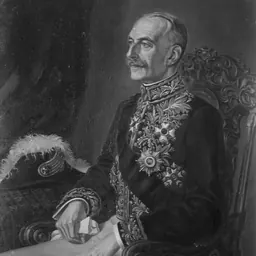

Related people
Same field, nearest in time

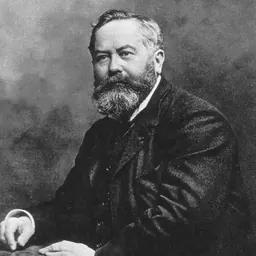

Contemporaries
People whose lives overlapped Jean Jacques Rambonnet's

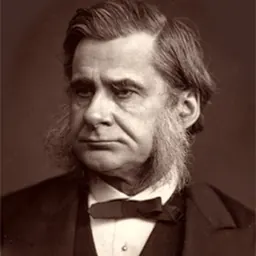
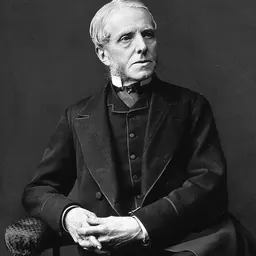


Frequently asked questions
Who was Jean Jacques Rambonnet?
Dutch politician (1864–1943)
When was Jean Jacques Rambonnet born?
Jean Jacques Rambonnet was born on 8 March 1864 in Wijhe.
When did Jean Jacques Rambonnet die?
Jean Jacques Rambonnet died on 3 August 1943 in Rotterdam.
What was Jean Jacques Rambonnet's occupation?
Jean Jacques Rambonnet was a politician and naval officer.
What nationality was Jean Jacques Rambonnet?
Jean Jacques Rambonnet was Dutch.
Sources & further reading
· Wikipedia: Jean Jacques Rambonnet
· DBpedia: Jean Jacques Rambonnet
Cite this page
APA: Biography.guide. (2026). Jean Jacques Rambonnet. https://biography.guide/jean-jacques-rambonnet/
MLA: "Jean Jacques Rambonnet." Biography.guide, https://biography.guide/jean-jacques-rambonnet/.
Chicago: "Jean Jacques Rambonnet." Biography.guide. https://biography.guide/jean-jacques-rambonnet/.
Data last updated: 2026-09-26 · Spot an error? Report a correction.
Page generated 2026-09-27 05:14 UTC