
About Henri Marchant
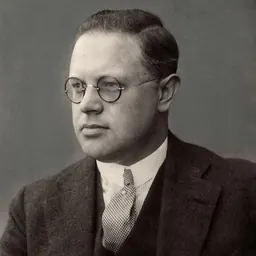
Lived 1869 – 1956 (aged 87). Henri Marchant was a Dutch lawyer and politician.
Hendrik Pieter "Henri" Marchant (12 February 1869 – 12 May 1956) was a Dutch politician who served as a member of parliament from 1900 until 1933, and as education minister from 1933 until 1935.
First elected to the House of Representatives in 1900, he was a co-founder of the Free-thinking Democratic League (VDB) the next year, and became the party's parliamentary leader in 1916. He was a sharp debater and a feared opponent, and left a deep imprint on his party. In parliament, he led the charge for women's suffrage, which was achieved in 1919. He opposed the confessional Coalition cabinets of the early interwar period, but joined a government of national unity in 1933 as Minister of Education, Arts, and Sciences. After a brief and largely unsuccessful ministership, he resigned in 1935 following controversy regarding his conversion to Catholicism.
Early life and education Hendrik Pieter Marchant was born in Deventer on 12 February 1869 to Carel Anthonij Marchant, a public prosecutor in that city, and Apollonia Jacoba van der Horst. The later artist Mien Marchant was his sister. Marchant went to study law at Leiden University in 1888, and received his doctorate there with a dissertation entitled Begrip en gevolg van belediging in het burgerlijk recht ("Concept and consequences of defamation in civil law") in 1894. In the same year, he moved back to his place of birth to set up practice as a solicitor and barrister. In 1897, he was elected to the municipal council of Deventer, and in 1899 he became alderman responsible for the city's finances, social welfare and hospital.
Tenure in Parliament, 1900–1933 Early tenure
As a candidate for the Radical League, Marchant contested a 1900 parliamentary by-election in the district of Deventer triggered by the death of incumbent member Willem Hendrik de Beaufort. He defeated the Free Liberal candidate Samuel van Houten, and was installed as a member of the House of Representatives on 8 June of that year. In the House, he joined the Free-thinking Democratic parliamentary group, comprising progressive liberals favouring the expansion of suffrage, and in 1901, he was one of the founding members of the corresponding political party, the Free-thinking Democratic League.
The 1918 election led to the formation of a confessional Coalition cabinet which was unlikely to make use of this opportunity, so Marchant took it upon himself to introduce a private member's bill. In the wake of the November Revolution in Germany and the Red Week the Netherlands, prime minister Charles Ruijs de Beerenbrouck declared that the cabinet would not oppose Marchant's effort for women's suffrage. This declaration, intended to address the calls for reform, was made against the wishes of the majority of his cabinet, but his colleagues went along with it. Marchant defended the bill in parliament, and it was approved in the House of Representatives on 9 May 1919 by 64 votes to 10, and in the Senate on 10 July of that year by 34 votes to 5. Opposition came only from among the ranks of the Protestant parties, most notably the Anti-Revolutionary Party (ARP).
Later life
Marchant's baptism became publicly known only after his resignation, and led to much controversy. Marchant retired from politics, though he frequently commented on politics in writings and speeches. He acted as a defender of the Catholic faith and repeatedly pointed out the dangers of Nazism. In Een staatkundige epidemie: Het ziektebeeld van het Dietse nationaal-socialisme ("A political epidemic: The clinical picture of Dutch national socialism", 1936) and De zelfmoord der kiezers ("The suicide of the voters", 1937), he attacked the National Socialist Movement in his familiar, unsparing manner.
After World War II he was counted among the hard-right Catholics, and he sympathised with the Catholic National Party. He often criticised government policy in the Catholic paper De Maasbode. He also came into conflict with the Schermerhorn–Drees cabinet. Marchant had been co-founder and subsequently became chairman of the foundation De Hooge Veluwe in 1935, but the foundation's statutes were amended by the German occupation authorities in 1942 to exclude him from the chairmanship. After the War, the cabinet sought to maintain the statutes in their amended form. Marchant disputed this decision and the Raad voor het Rechtsherstel ruled in his favour, allowing him to resume his chairmanship from 1 January 1951.
Marchant died in The Hague on 12 May 1956, at the age of 87.
Private life Henri Marchant was married to Sara Maria Magdalena Rambonnet on 10 August 1901. The couple remained childless.
Don’t just read it —
keep it.
Full-length biographies made to live with: read them, listen on the way to work, watch them tonight.
- E-book
- Audio
- Video
Instant download · yours to keep · every purchase keeps this site free
Important facts
People in Henri Marchant's life
Named in this biography and alive at the same time


Related people
Same field, nearest in time

Contemporaries
People whose lives overlapped Henri Marchant's





Frequently asked questions
Who was Henri Marchant?
Dutch lawyer and politician (1869-1956)
When was Henri Marchant born?
Henri Marchant was born on 12 February 1869 in Deventer, The Netherlands.
When did Henri Marchant die?
Henri Marchant died on 12 May 1956 in The Hague, The Netherlands.
What was Henri Marchant's occupation?
Henri Marchant was a lawyer and politician.
What nationality was Henri Marchant?
Henri Marchant was Dutch.
Sources & further reading
Cite this page
APA: Biography.guide. (2026). Henri Marchant. https://biography.guide/henri-marchant/
MLA: "Henri Marchant." Biography.guide, https://biography.guide/henri-marchant/.
Chicago: "Henri Marchant." Biography.guide. https://biography.guide/henri-marchant/.
Data last updated: 2026-09-20 · Spot an error? Report a correction.
Page generated 2026-09-27 05:22 UTC