
Jean Jacques Dortous de Mayran
French geophysicist, astronomer and most notably, chronobiologist
About Jean Jacques Dortous de Mayran
Lived 1678 – 1771 (aged 92). Jean Jacques Dortous de Mayran was a French entomologist, astronomer, mathematician, geophysicist, physicist and naturalist.
Jean-Jacques d'Ortous de Mairan (26 November 1678 – 20 February 1771) was a French natural philosopher (physicist), born in the town of Béziers on 26 November 1678. Over the course of his life, de Mairan was elected into numerous scientific societies and made key discoveries in a variety of fields, including ancient texts and astronomy. His observations and experiments also inspired the beginning of what is now known as the study of biological circadian rhythms. At the age of 92, de Mairan died of pneumonia in Paris on 20 February 1771.
Biography De Mairan attended college in Toulouse from 1694–1697 with a focus on ancient Greek. In 1729, de Mairan constructed an experiment showing the existence of a circadian rhythm in plants, presumably originating from an endogenous clock (See 'Experiment on circadian rhythms in plants' below). In 1731, he also observed a nebulosity around a star near the Orion Nebula. This was later designated M43 by Charles Messier. In 1731, he published "Traite Physique et Historique De l'Aurore Boreale" (a summary appeared in the Philosophical Transactions ) in which he put up a novel hypothesis that the Northern Lights are caused by the Sun, as the interaction of the atmosphere with the zodiacal light. At the time, the aurorae were thought to be 'flames' caused by sulfurous effluvia emanating from the Earth.
Experiment on circadian rhythms in plants In 1729, de Mairan performed an experiment that demonstrated the existence of circadian rhythms in plants, specifically the travel wave. He was intrigued by the daily opening and closing of the heliotrope plant and performed a simple experiment where he exposed the plants to constant darkness and recorded the behaviour.
These results may have gone unnoticed had his colleague, Jean Marchant, not published them for de Mairan. It was quite common at the time, when travel was slow, for one scientist to present the work of another.
When describing his work with eclosion rhythms in his Drosophila models or the rhythmic running activity of mice, the founder of modern chronobiology, Colin Pittendrigh, recognised the work of Jean-Jacques d'Ortous de Mairan.
A video showing circadian rhythms in a cucumber plant in constant conditions, similar to what de Mairan observed, can be seen .
De Mairan's experimental legacy Despite Marchant's publication of de Mairan's work, which might have suggested the existence of endogenous biological clocks, rhythms in plant movements were for a long time thought to be extrinsically controlled by light and dark cycles, or magnetic and temperature oscillations, or even a mysterious, yet-to-be identified X-factor.
In 1823, almost a century after de Mairan's work, the Swiss botanist Augustin Pyramus de Candolle expanded on it by measuring the free-running period of Mimosa pudica leaf movements in constant conditions, finding them to be 22–23 hours long. This was probably the first hint of what is now called the circadian (from Latin circa, about, and dies) nature of such endogenous rhythms, found in practically all living organisms, including some bacteria.
Scientific societies and recognition In 1718, de Mairan was inducted into the Académie Royale des Sciences. With Jean Bouillet and Antoine Portalon, he founded his own scientific society in his hometown of Béziers, named the , around 1723. Dissertation sur les variations du barometre (Bordeaux, 1715) (Essays on barometric variations) Dissertation sur la glace (Bordeaux 1716) (Essay on the ice) Dissertation sur la cause de la lumiere des phosphores et des noctiluques (Bordeaux, 1717) (Dissertation on the cause of light phosphates and noctilucence or nightly light) Dissertation sur l'estimation et la mesure des forces motrices des corps1728)Essay on the estimation of the measures of acting forces on the body Lettre de M. de Mairan à Madame. Sur la question des forces vives (1741) (Letter to Mme Chatelet on the Question of Living Forces), one side of a public debate with Émilie du Châtelet on forces vives. He also published mathematical works. Traité physique et historique de l'aurore boréale, (1733) (Physical and historical Traits of the aurora borealis)
Don’t just read it —
keep it.
Full-length biographies made to live with: read them, listen on the way to work, watch them tonight.
- E-book
- Audio
- Video
Instant download · yours to keep · every purchase keeps this site free
Important facts
People in Jean Jacques Dortous de Mayran's life
Named in this biography and alive at the same time
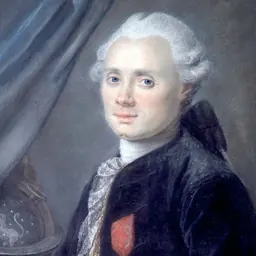
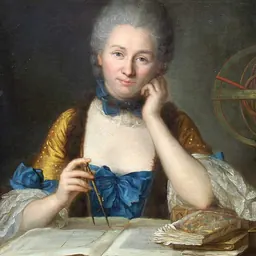

Related people
Same field, nearest in time


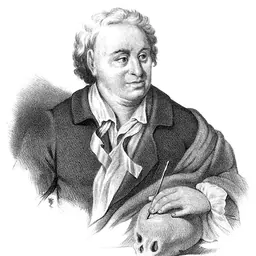
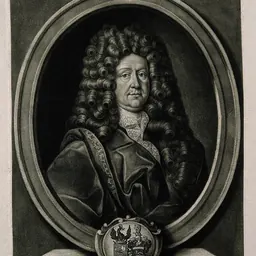

Contemporaries
People whose lives overlapped Jean Jacques Dortous de Mayran's



Frequently asked questions
Who was Jean Jacques Dortous de Mayran?
French geophysicist, astronomer and most notably, chronobiologist
When was Jean Jacques Dortous de Mayran born?
Jean Jacques Dortous de Mayran was born on 26 November 1678 in Béziers.
When did Jean Jacques Dortous de Mayran die?
Jean Jacques Dortous de Mayran died on 20 February 1771 in Paris.
What was Jean Jacques Dortous de Mayran's occupation?
Jean Jacques Dortous de Mayran was an entomologist, astronomer, mathematician, geophysicist, physicist and naturalist.
What nationality was Jean Jacques Dortous de Mayran?
Jean Jacques Dortous de Mayran was French.
Sources & further reading
· Wikipedia: Jean Jacques Dortous de Mayran
· DBpedia: Jean-Jacques d'Ortous de Mairan
Cite this page
APA: Biography.guide. (2026). Jean Jacques Dortous de Mayran. https://biography.guide/jean-jacques-dortous-de-mayran/
MLA: "Jean Jacques Dortous de Mayran." Biography.guide, https://biography.guide/jean-jacques-dortous-de-mayran/.
Chicago: "Jean Jacques Dortous de Mayran." Biography.guide. https://biography.guide/jean-jacques-dortous-de-mayran/.
Data last updated: 2026-09-26 · Spot an error? Report a correction.
Page generated 2026-09-27 05:13 UTC