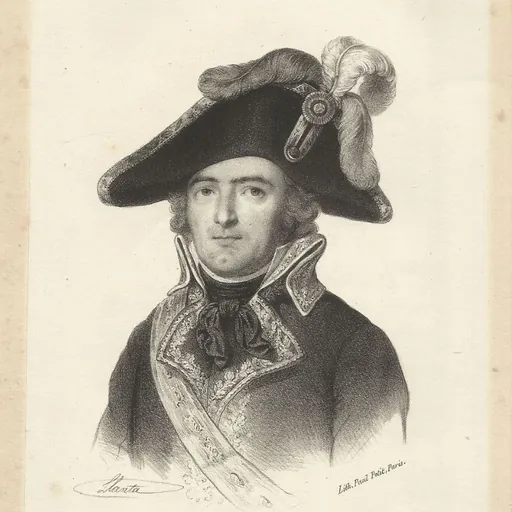
About Jean-Jacques Ambert
Lived 1765 – 1851 (aged 86). Jean-Jacques Ambert was a French military personnel and baron of the Empire.
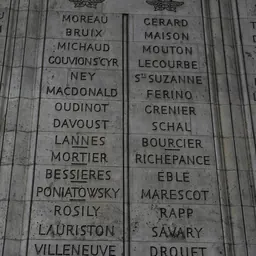
Jean-Jacques Ambert (30 September 1765 – 20 November 1851) commanded a French division in several engagements during the French Revolutionary Wars. He embarked on a French ship of the line during the American Revolutionary War and saw several actions. At the start of the French Revolutionary Wars, he commanded a battalion and thereafter enjoyed a fast promotion. He led a division in action at Kaiserslautern in 1793, Kaiserslautern in 1794, Luxembourg, Handschusheim, and Mannheim in 1795, and Kehl in 1796. His career later suffered an eclipse because of his association with two French army commanders suspected of treason. He spent much of the Napoleonic Wars commanding a Caribbean island, clearing his name, and filling interior posts. His surname is one of the names inscribed under the Arc de Triomphe.
Early career Ambert was born on 30 September 1765 at Saint-Céré in what later became the department of Lot. His parents were Jacques Ambert and Marianne Rouchon. In 1780 he shipped as a volunteer aboard the Pluton (74) during the American Revolutionary War. During that conflict, he participated in the Battle of Martinique during the attempted recapture of Saint Lucia in 1780 and in the successful Invasion of Tobago in May and June 1781. Ambert returned to France in 1783. Over time, Ambert became friends with several influential generals, including Hoche, Jean Baptiste Kléber, Louis Desaix, Jean-Charles Pichegru, and Jean Victor Marie Moreau. On 21 November 1794, the Army of the Moselle led by Jean René Moreaux began the Siege of Luxembourg. Under Moreaux's command were three divisions under Ambert, Jean-Baptiste Debrun, and Guillaume Péduchelle, a total of 19,800 soldiers. Since the Army of Moselle was discontinued, the force was called the Army before Luxembourg. By 12 December, the three divisions involved in the blockade were led by Ambert, Debrun, and Alexandre Camille Taponier. The Austrian garrison numbered approximately 12,000. On 10 February 1795, Moreaux died of a fever at Thionville and Ambert was directed to assume command of the Army before Luxembourg. At the end of March, three divisions of the Army of Sambre-et-Meuse under Jacques Maurice Hatry replaced the blockading force. At this time Ambert returned to the command of his division in the Army of the Rhine and Moselle.
His 6th Division of Pichegru's Army of the Rhine and Moselle fought at the Battle of Handschuhsheim on 24 September 1795. One of his brigade commanders was Louis-Nicolas Davout. Pichegru sent two divisions to seize the Austrian base at Heidelberg, but they advanced on opposite banks of the Neckar River. During the action, Austrian commander Peter Vitus von Quosdanovich concentrated against and crushed Georges Joseph Dufour's 7th Division on the north bank. A number of Dufour's survivors escaped across a forest to join the 6th Division on the south bank. Ambert saw action on 18 October 1795 at the Battle of Mannheim. The French forces were driven from their camp into the city with losses of 2,000 men and three guns. The Austrians sustained only 709 casualties in the affair.
Ambert married Amable Sophie de Maurès de Malartic (d. 1855) on 18 June 1796. which lasted from 10 November 1796 to 9 January 1797 and ended in an Austrian victory. Ambert's division consisted of two brigades under Davout and Charles Mathieu Isidore Decaen. Davout led the 3rd, 10th, and 31st Line Infantry Demi Brigades while Decaen commanded the 44th and 62nd Line Infantry Demi Brigades. Each demi-brigade comprised three battalions.
Empire alt=Photo shows a large tombstone with the name Jean Jacques Ambert.
His association with disgraced generals Pichegru and Moreau caused the decline of Ambert's career. He was shipped off to Guadeloupe to be its military governor. In 1808 he was summarily removed from this post when the island was engulfed in civil disorder. He was blamed for standing by and doing nothing to stop the troubles. He made his way back to France and demanded a trial. Cleared of wrongdoing in 1812 by a court martial, he was appointed commander of the 17th Military Division in Holland in 1813.
Don’t just read it —
keep it.
Full-length biographies made to live with: read them, listen on the way to work, watch them tonight.
- E-book
- Audio
- Video
Instant download · yours to keep · every purchase keeps this site free
Important facts
People in Jean-Jacques Ambert's life
Named in this biography and alive at the same time



Related people
Same field, nearest in time
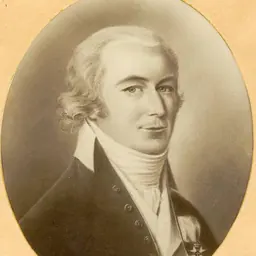
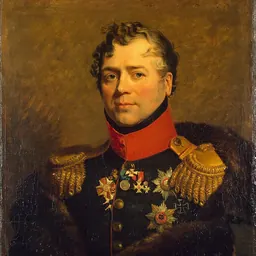

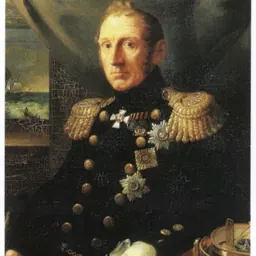

Contemporaries
People whose lives overlapped Jean-Jacques Ambert's



Frequently asked questions
Who was Jean-Jacques Ambert?
French general (1765–1851)
When was Jean-Jacques Ambert born?
Jean-Jacques Ambert was born on 30 September 1765 in Saint-Céré.
When did Jean-Jacques Ambert die?
Jean-Jacques Ambert died on 20 November 1851 in Saint-Claude.
What was Jean-Jacques Ambert's occupation?
Jean-Jacques Ambert was a military personnel and baron of the Empire.
What nationality was Jean-Jacques Ambert?
Jean-Jacques Ambert was French.
Sources & further reading
· Wikipedia: Jean-Jacques Ambert
· DBpedia: Jean-Jacques Ambert
Cite this page
APA: Biography.guide. (2026). Jean-Jacques Ambert. https://biography.guide/jean-jacques-ambert/
MLA: "Jean-Jacques Ambert." Biography.guide, https://biography.guide/jean-jacques-ambert/.
Chicago: "Jean-Jacques Ambert." Biography.guide. https://biography.guide/jean-jacques-ambert/.
Data last updated: 2026-09-22 · Spot an error? Report a correction.
Portrait: Wikimedia Commons · author & licence
Page generated 2026-09-27 05:02 UTC