
About Jean Giono
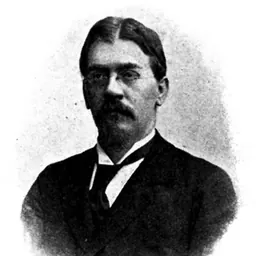
Lived 1895 – 1970 (aged 75). Jean Giono was a French writer, screenwriter, novelist, poet, translator and film director.
Jean Giono (30 March 1895 – 8 October 1970) was a French writer who wrote works of fiction mostly set in the Provence region of France.
First period Jean Giono was born to a family of modest means. His father a cobbler of Piedmontese descent and his mother a laundry woman. He spent the majority of his life in Manosque, Alpes-de-Haute-Provence. Forced by family needs to leave school at the age of sixteen and get a job in a bank, he nevertheless continued to read voraciously, in particular the great classic works of literature including the Bible, Homer's Iliad, the works of Virgil, and the Tragiques of Agrippa d'Aubigné. He continued to work at the bank until he was called up for military service at the outbreak of World War I. He took part in the Battle of Verdun. The horrors he experienced on the front lines turned him into an ardent and lifelong pacifist. In 1919, he returned to the bank, and a year later, married a childhood friend with whom he had two children. Following the success of his first published novel, Colline (1929) (which won him the Prix Brentano earned $1,000, and drew an English translation of the book ), he left the bank in 1930 to devote himself to writing on a full-time basis.
Colline was followed by two more novels heavily influenced by Virgil and Homer, Un de Baumugnes (1929) and Regain (1930), the three together comprising the famous “Pan trilogy”, so-called because in it Giono depicts the natural world as being imbued with the power of the Greek god Pan. The other novels Giono published during the nineteen-thirties on the whole continued in the same vein—set in Provence, with peasants as protagonists, and displaying a pantheistic view of nature. Marcel Pagnol based three of his films on Giono's work of this period: Regain, starring Fernandel and with music by Honegger; Angèle, and La Femme du boulanger, with the actor Raimu.
In 1937, he famously asked, "What is the worst that can happen if Germany invades France?"
Transition
The end of the nineteen-thirties brought a crisis in Giono's life. As far as his writing was concerned, he had come to feel that it was time to stop “doing Giono” (faire du Giono), and to take his work in a new direction. At the same time it was becoming apparent that his work for pacifism was a failure, and that another war was inevitable and fast approaching. The declaration of war on 1 September 1939 came while the Contadoureans were assembled for their annual reunion. The result of Giono's former peace-making efforts was that he was briefly imprisoned as a Nazi sympathiser before the proceedings were dropped without any charges being laid.
He similarly formed the ambition of writing a sequence of ten novels inspired by Balzac’s Comédie humaine, in which he would depict characters from all strata of society rather than peasants, and compare and contrast different moments in history by depicting the experiences of members of the same family in times a hundred years apart. This project was never realised, with only the four Hussard novels, (Angelo (1958), Le Hussard sur le Toit (1951), Le Bonheur fou (1957), Mort d’un personnage (1948)) actually completed according to plan, but it is echoed in Giono's postwar work in the dichotomy between historical novels set in the mid-nineteenth century, and contemporary novels set in the mid-twentieth. His newfound interest in history even led to his writing an actual history book, Le Désastre de Pavie (1963).
As he began to focus on the human being rather than the natural world, his understanding of psychology and motivation was also influenced by the writings of Niccolò Machiavelli, whose analysis helped him to articulate a much darker view of human nature in his later years, and about whom he wrote the article "Monsieur Machiavel, ou le coeur humain dévoilé" (1951).
In 1944, when France was liberated, Giono was again accused of collaboration with the Nazis, and was again imprisoned for five months before he was freed without charges ever being made. The French forestry authority (ONF) initiated a project named "Giono" in 2013. A small plot of beech trees of more southerly genetics was planted as an assisted migration experiment for climate change adaptation on the former World War I battlefield in Verdun. As of 2024, the beech saplings are growing well.
In his later years, Giono was honoured with the Prince Rainier of Monaco literary prize in 1953, awarded for his lifetime achievements, was elected to the Académie Goncourt in 1954, and became a member of the Conseil Littéraire of Monaco in 1963.
The Collège Jean Giono in Nice is named after him, as are streets in Cannes and Fréjus.
Works
Don’t just read it —
keep it.
Full-length biographies made to live with: read them, listen on the way to work, watch them tonight.
- E-book
- Audio
- Video
Instant download · yours to keep · every purchase keeps this site free
Important facts
People in Jean Giono's life
Named in this biography and alive at the same time


Related people
Same field, nearest in time





Contemporaries
People whose lives overlapped Jean Giono's

Frequently asked questions
Who was Jean Giono?
French writer (1895–1970)
When was Jean Giono born?
Jean Giono was born on 30 March 1895 in Manosque.
When did Jean Giono die?
Jean Giono died on 9 October 1970 in Manosque.
What was Jean Giono's occupation?
Jean Giono was a writer, screenwriter, novelist, poet, translator and film director.
What nationality was Jean Giono?
Jean Giono was French.
Sources & further reading
Cite this page
APA: Biography.guide. (2026). Jean Giono. https://biography.guide/jean-giono/
MLA: "Jean Giono." Biography.guide, https://biography.guide/jean-giono/.
Chicago: "Jean Giono." Biography.guide. https://biography.guide/jean-giono/.
Data last updated: 2026-09-26 · Spot an error? Report a correction.
Page generated 2026-09-27 05:16 UTC