
About Jean Eugène Robert-Houdin
Lived 1805 – 1871 (aged 65). Jean Eugène Robert-Houdin was a French inventor, clockmaker, magician, watchmaker and illusionist.
Jean-Eugène Robert-Houdin (; 7 December 1805 – 13 June 1871) was a French watchmaker, magician and illusionist, widely recognized as the father of the modern style of conjuring. He transformed magic from a pastime for the lower classes, seen at fairs, to an entertainment for the wealthy, which he offered in a theatre opened in Paris, a legacy preserved by the tradition of modern magicians performing in tails.
Early life and entrance into conjuring Robert-Houdin was born Jean-Eugène Robert in Blois, France, on 7 December 1805—a day after his autobiography said he was. His father, Prosper Robert, was a watchmaker in Blois. Jean-Eugene's mother, the former Marie-Catherine Guillon, died when he was just a young child. Even then, the audiences were not entirely convinced; they tried to trip up Émile by bringing in books written in Greek, or odd tools such as a thread counter. The illusion was also reported to be performed by an Indian conjuror before that, but sitting cross-legged rather than lying down.
The Marvelous Orange Tree trick was used by the eponymous conjurer in Steven Millhauser's short story "Eisenheim the Illusionist" and its film adaptation The Illusionist (2006), where a more complex variant is shown. It is also alluded to in Donald Barthelme's short story "Sentence".
Robert-Houdin's portfolio Robert-Houdin brought in under his arm a large portfolio used for holding documents or art work. The portfolio was only about one and three-quarters of an inch thick, too small or too thin to hold anything but pictures. The creation of such a site is directly linked to the personality of Robert-Houdin. Several of Robert-Houdin's apparatuses, including automata and mystery clocks, reside in David Copperfield's private museum.
In December 1852, the Theatre Robert-Houdin moved from its original location to the Boulevard des Italiens in Paris. Ownership passed from Hamilton to Cleverman (François Lahire), then to Robert-Houdin's son Émile. Emile was too busy to perform at the theatre, so he arranged for Pierre Edouard Brunnet to present the show.
After his death, Émile's widow sold the theatre to Georges Méliès in 1888. Méliès, himself a magician but best known to history as one of the greatest early innovators of film making, later presented his first movies there. He accidentally discovered stop-action special effects and presented his creation at the Theatre Robert-Houdin. One of his classics is A Trip to the Moon. In 1924, the building was demolished.
Robert-Houdin's autobiography is The Memoirs of Robert-Houdin. His life and works are also cited in Robertson Davies's Deptford Trilogy, notably in the trilogy's third novel, World of Wonders, which takes place on the set of a movie about Robert-Houdin.
In his book Hiding the Elephant, Jim Steinmeyer said that every magician of the 20th century was "haunted" by Robert-Houdin, "... who cast an enormous shadow over their generation".
Robert-Houdin is often credited as being "the father of modern magic". Before him, magicians performed in marketplaces and fairs, for the lower classes, but Robert-Houdin performed magic in theatres and private parties for wealthier patrons. He also chose to wear formal clothes, like those of his more upscale audiences, which has become a tradition for many modern magicians who wear tail-coats.
Many cities have streets that bear his name: Blois, Bourges, Caen, Paris (11th), Saint-Étienne, and Saint-Gervais-la-Forêt in France; Monticiano in Siena, Italy; and others.
Publications Confidences d'un prestidigitateur, une vie d'artiste, 2 vol., 1858 Texte en ligne sur Google Books : vol. 1 et vol. 2 Les Tricheries des Grecs dévoilées; l'art de gagner à tous les jeux, 1861 Le Prieuré, organisations mystérieuses pour le confort et l'agrément d'une demeure, 1867 Texte en ligne su Gallica Note sur de nouveaux instruments propres à l'observation des divers organes de l'œil ainsi qu'à la manifestation des images entoptiques, 1867 Confidences et révélations, 1868. Réédition: Slatkine, Genève, 1980 Texte en ligne sur Gallica Comment on devient sorcier: les secrets de la prestidigitation et de la magie, 1871 Magie et physique amusante, 1877
Films and television
1896: Escamotage d'une dame chez Robert-Houdin ("Retraction of a Lady at the House of Robert-Houdin"), film of Georges Méliès, first film with special effects 1995: Robert-Houdin une vie de magicien, film of Jean-Luc Muller, documentary 2006: The Illusionist (2006 film), in which the title character performs some of Robert-Houdin's signature tricks 2011: Hugo, features an automaton, reenactments of Houdin's illusions, and information about how he inspired Méliès. 2013: Mysteries at the Museum, Travel Channel television program, featured the story of Robert-Houdin's Algerian mission and the role of the wooden chest now on display at the Salon de Magie. Portrayed by American actor Paul Meltzer.
Don’t just read it —
keep it.
Full-length biographies made to live with: read them, listen on the way to work, watch them tonight.
- E-book
- Audio
- Video
Instant download · yours to keep · every purchase keeps this site free
Important facts
People in Jean Eugène Robert-Houdin's life
Named in this biography and alive at the same time

Related people
Same field, nearest in time
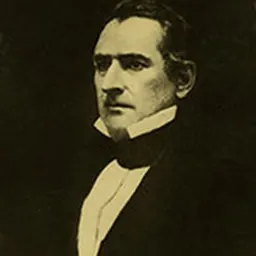

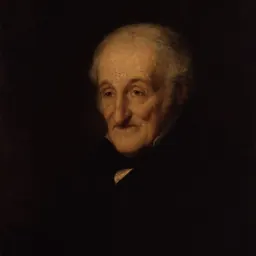
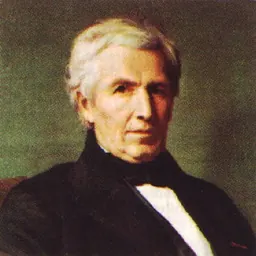
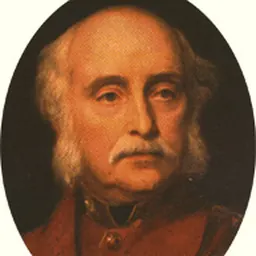
Contemporaries
People whose lives overlapped Jean Eugène Robert-Houdin's






Frequently asked questions
Who was Jean Eugène Robert-Houdin?
French magician (1805-1871)
When was Jean Eugène Robert-Houdin born?
Jean Eugène Robert-Houdin was born on 7 December 1805 in Blois.
When did Jean Eugène Robert-Houdin die?
Jean Eugène Robert-Houdin died on 13 June 1871 in Saint-Gervais-la-Forêt.
What was Jean Eugène Robert-Houdin's occupation?
Jean Eugène Robert-Houdin was an inventor, clockmaker, magician, watchmaker and illusionist.
What nationality was Jean Eugène Robert-Houdin?
Jean Eugène Robert-Houdin was French.
Sources & further reading
· Wikipedia: Jean Eugène Robert-Houdin
· DBpedia: Jean-Eugène Robert-Houdin
Cite this page
APA: Biography.guide. (2026). Jean Eugène Robert-Houdin. https://biography.guide/jean-eugene-robert-houdin/
MLA: "Jean Eugène Robert-Houdin." Biography.guide, https://biography.guide/jean-eugene-robert-houdin/.
Chicago: "Jean Eugène Robert-Houdin." Biography.guide. https://biography.guide/jean-eugene-robert-houdin/.
Data last updated: 2026-09-26 · Spot an error? Report a correction.
Page generated 2026-09-27 05:16 UTC