
About Jean Elleinstein
Lived 1927 – 2002 (aged 74). Jean Elleinstein was a French politician and historian.
Jean Elleinstein (6 August 1927 – 16 January 2002) was a French historian specialising in communism.
Biography Son of a small industrialist, Jean Elleinstein had to cross the demarcation line in 1941 and live illegally until 1944 when he joined the Milices Patriotiques (Patriotic Militia) in Megève. He joined the French Communist Party at the Liberation at the age of seventeen. He soon became a Party member, first as a journalist with the communist press agency, then at the PCF press office, before being assigned to the Mouvement Jeunes Communistes de France and the World Federation of Democratic Youth.
His activities against the Indochina war, caused him to spend a few weeks in prison in 1949, then sixteen months in hiding in 1952–53. He then resumed his studies, became a professor in 1954, passed the CAPES (diploma in teaching – secondary schools) in history in 1958, his diploma in teaching higher education in 1960 and was appointed lecturer. At the same time, he was responsible for the founding of the Union of Communist Students. Elleinstein used a freedom of tone that brought him closer to the Italian or Spanish communists. Appointed deputy director of the Center for Marxist Studies and Research, between 1972 and 1975 he published a 4-volume history of the Soviet Union (Histoire de l'URSS) in which he diverted substantially from the orthodox version that had been expressed since 1945 by Jean Bruhat. In line with the policy of openness of the time of the Union of the Left and Eurocommunism, his history was authorised by the PCF. Further exploiting his freedom to speake, in 1975 Elleinstein published History of the Stalinist phenomenon in which he analyzes Stalinism as the unfortunate product of historical circumstances.
The 22nd French Communist Party Congress in 1976 was marked by an attempted break with the Soviet system spearheaded by . Ellerstein became the non-official spokesman for a communism now redefined to be democratic and revised, with his book, Le PC, (the French Communist Party), and his Open Letter to the French people about a reformed republic based on the Programme commun,
Following the failure of the Union of the Left in 1977 and the rapprochement of PCF leader Georges Marchais with Brezhnev, and especially in view of Ellerstein's regular contributions to Le Figaro Magazine, by the second half of 1980, the conventional wisdom among upper echelons of the PCF was "that he had ejected himself from the party" and that there was therefore no need to eject him formally.
Notes and references
Don’t just read it —
keep it.
Full-length biographies made to live with: read them, listen on the way to work, watch them tonight.
- E-book
- Audio
- Video
Instant download · yours to keep · every purchase keeps this site free
Important facts
People in Jean Elleinstein's life
Named in this biography and alive at the same time
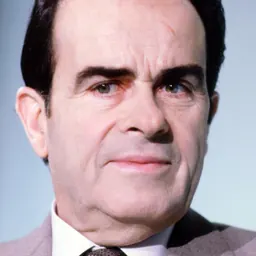
Related people
Same field, nearest in time



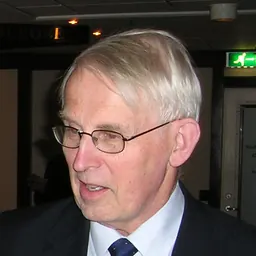


Contemporaries
People whose lives overlapped Jean Elleinstein's
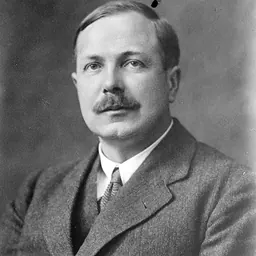
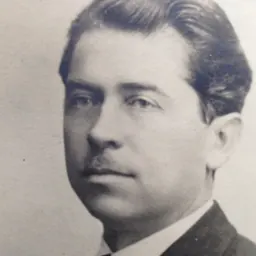

Frequently asked questions
Who was Jean Elleinstein?
French politician and historian (1927–2002)
When was Jean Elleinstein born?
Jean Elleinstein was born on 6 August 1927 in 12th arrondissement of Paris.
When did Jean Elleinstein die?
Jean Elleinstein died on 16 January 2002 in Pernay.
What was Jean Elleinstein's occupation?
Jean Elleinstein was a politician and historian.
What nationality was Jean Elleinstein?
Jean Elleinstein was French.
Sources & further reading
Cite this page
APA: Biography.guide. (2026). Jean Elleinstein. https://biography.guide/jean-elleinstein/
MLA: "Jean Elleinstein." Biography.guide, https://biography.guide/jean-elleinstein/.
Chicago: "Jean Elleinstein." Biography.guide. https://biography.guide/jean-elleinstein/.
Data last updated: 2026-09-20 · Spot an error? Report a correction.
Page generated 2026-09-27 05:31 UTC