
About Jean Devanny
Lived 1894 – 1962 (aged 68). Jean Devanny was a New Zealand novelist.
Jane (Jean) Devanny (7 January 1894 – 8 March 1962) was a New Zealand writer and communist. She was born to William and Jane Crook in Ferntown near Collingwood, in the Nelson district of New Zealand. She migrated to Australia in 1929, eventually moving to Townsville, in North Queensland, where she died at the age of 68.
She is best known for the novels Sugar Heaven and The Butcher Shop, but she also wrote short stories and political papers.
Literary connections Devanny was one of the founders of the Writers' League, along with Katharine Susannah Prichard and Egon Kisch. In 1935, she became the League's first president. The Writers' League became the Writer's Association in 1937.
She was a close friend and correspondent of Miles Franklin, Marjorie Barnard and Winifred Hamilton, and was in frequent contact with other Australian writers throughout the mid-20th Century.
In 1948, she approached Mary Gilmore to write a foreword to Travels in North Queensland, but Gilmore declined on the basis that Devanny should write it herself, because "I have written so many that I have decided not to write any more for a time, as they will have no value by now".
Political activity
Devanny joined the Communist Party of Australia in the early 1920s, and had a long-term affair with the general secretary Jack Miles; called "Leader" in her memoirs. Despite that, many in the party disagreed with her "forthright avant-garde views" and her candid discussion of sexual activities and women's sexuality. Devanny used her novels as a way of expressing ideological principles.
During the 1930s, she toured North Queensland to spread propaganda for the communist movement. Sugar Heaven was written during that period, drawing upon her experiences working as a domestic servant on a sugar plantation, and was intended to be a form of propaganda. Despite the egalitarian ideals espoused by communist ideology, the party leadership was dominated by men, who often adhered to the idea that women's participation in politics should be restricted to a supporting role. Although she remained a staunch communist after leaving the Communist Party, she often expressed disagreement with other communists of the time, most notably Pablo Picasso, of whom she reportedly said: "Picasso hasn't got any political opinions. His work proves that. He's only got a sentimental attachment to the idea of social justice".
Don’t just read it —
keep it.
Full-length biographies made to live with: read them, listen on the way to work, watch them tonight.
- E-book
- Audio
- Video
Instant download · yours to keep · every purchase keeps this site free
Important facts
Family & relationships
People in Jean Devanny's life
Named in this biography and alive at the same time

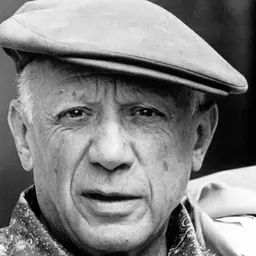
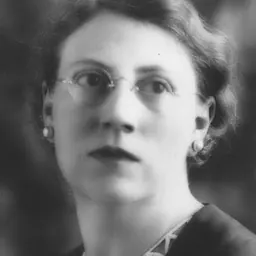

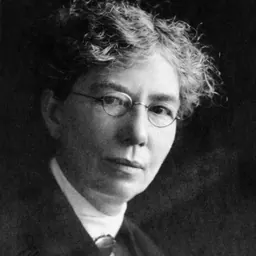
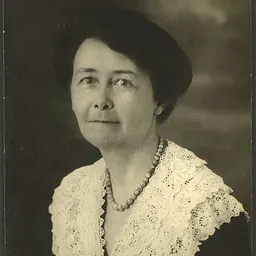
Related people
Same field, nearest in time



Contemporaries
People whose lives overlapped Jean Devanny's


Frequently asked questions
Who was Jean Devanny?
Australian writer (1894-1962)
When was Jean Devanny born?
Jean Devanny was born on 7 January 1894 in Ferntown.
When did Jean Devanny die?
Jean Devanny died on 8 March 1962 in Townsville.
What was Jean Devanny's occupation?
Jean Devanny was a novelist.
What nationality was Jean Devanny?
Jean Devanny was New Zealand.
Sources & further reading
Cite this page
APA: Biography.guide. (2026). Jean Devanny. https://biography.guide/jean-devanny/
MLA: "Jean Devanny." Biography.guide, https://biography.guide/jean-devanny/.
Chicago: "Jean Devanny." Biography.guide. https://biography.guide/jean-devanny/.
Data last updated: 2026-09-20 · Spot an error? Report a correction.
Page generated 2026-09-27 05:18 UTC