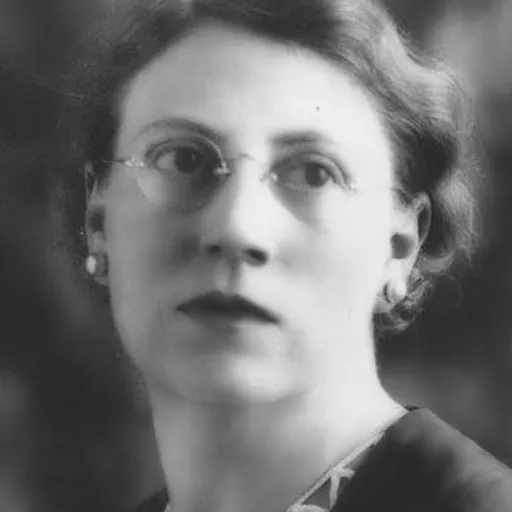
Marjorie Barnard
Australian novelist and short story writer, critic and historian
About Marjorie Barnard
Lived 1897 – 1987 (aged 89). Marjorie Barnard was an Australian novelist, librarian, short story writer, historian, literary critic and science fiction writer.
Marjorie Faith Barnard (16 August 18978 May 1987) was an Australian novelist and short story writer, critic, historian and librarian. She went to school and university in Sydney, and then trained as a librarian. She was employed as a librarian for two periods in her life (1923–1935 and 1942–1950), but her main passion was writing.
Barnard met her collaborator, Flora Eldershaw (1897–1956), at the University of Sydney, and they published their first novel, A House is Built in 1929. Their collaboration spanned the next two decades, and covered the full range of their writing: fiction, history and literary criticism. They published under the pseudonym M. Barnard Eldershaw. Marjorie Barnard was a significant part of the literary scene in Australia between the wars and, for both her work as M. Barnard Eldershaw and in her own right, is recognised as a major figure in Australian letters.
Life Barnard was born in Ashfield, Sydney, to Ethel Frances and Oswald Holme Barnard, and was their only surviving child. She had polio as a child and was taught by a governess until she was 10 years old. She then attended the Cambridge School and Sydney Girls High School. After high school, she went to the University of Sydney, from which she graduated with first class honours and the first University Medal for History in 1918. She was offered a scholarship to Oxford, but her father refused her permission to go, and so she trained as a librarian at the Sydney Teachers' College. She worked as a librarian at the Public Library of New South Wales and then the Sydney Technical College until 1935 when she left to write full-time, at the encouragement of her friend, writer and literary critic, Nettie Palmer, and made possible through a small allowance from her father. She wrote to Nettie Palmer at the time that she was seeking "some sort of fulfilment, to run my vital energy into a creative mould instead of just letting it soak into the thirsty sand of a daily round".
She joined the Fellowship of Australian Writers in 1935, of which Flora Eldershaw was President for a couple of terms. During the next five years, she, Flora Eldershaw and Frank Dalby Davison were known as "the triumvirate" As well as Flora Eldershaw and Frank Dalby Davison, Marjorie Barnard knew many of the leading writers of her time, including Vance and Nettie Palmer, Miles Franklin, Katharine Susannah Prichard, Eleanor Dark, Xavier Herbert and Patrick White.
Barnard travelled overseas several times, the first time in 1933 with her mother. She loved travel but in 1986 stated that "I think it's dangerous for writers to leave their roots. I am—was—an Australian writer". She wrote of this relationship to her writer friend, Jean Devanny, "I was deeply in love with him ... We were lovers for eight years ... In 1942 I knew things were coming to an end ... I was, as he said, very naïve".
Her father died in 1940, leaving her with an ailing mother. She returned to library work in 1942, at the Public Library of New South Wales and then the CSIRO. However, her mother's death in 1949 left her 'modestly independent' enabling her to leave work in 1950.
Career
Marjorie Barnard's writing career spanned four decades, from the 1920s to the 1960s, with the majority of her works being written in the 1930s–1940s, a period in Australia noted for its flowering of women writers. Despite this, in an interview in 1986, she stated that there was no such thing as a "woman writer", that "there are writers good and bad. Only the work counts". The stories were published soon after the end of her relationship with Davison, and were seen by Barnard as some "compensation for the hurt that was integral to their production". As Maryanne Dever writes, "stories such as 'The Persimmon Tree', 'The Woman Who Did the Right Thing' and 'Beauty is Strength' take as their themes the consequences of illicit love, rivalry between women and the withdrawal and stoicism sometimes demanded of injured lovers". He goes on to say that "her argument is not original, but she states it with clarity, a well-calculated density of detail, and with authority, especially when she writes on the subject she knows best, Macquarie's world". It was this work that resulted in their being known as 'the triumvirate'. Fiona Capp writes, for example, that through the FAW Barnard and Eldershaw actively lobbied against National Security regulations and infringements on the freedom of speech.
Barnard regarded herself as a 'nineteenth century liberal' Dever suggests that this denial may be due to the Cold War witch hunts of the 1950s in which her name, among others, was mentioned. She suggests that Barnard received more criticism at that time than Eldershaw, who was frequently defended as a member of the CLF Advisory Board, and that, not being fond of publicity, she was likely to have been "deeply disturbed" by "the accusations and embarrassingly public attention".
FAW Marjorie Barnard Short Story Award Barnard provided for a biennial prize in her will, in which $500 is offered as first prize for a short story of 3,000 words. When Yasmine Gooneratne won the award in 1991, it was titled the Marjorie Barnard Literary Award for Fiction.
2017: Gabrielle Leago: "The Dark Road Home" 2015: Dorothy Simmons: "Count Down" 2009: Sharyn Munro: "Live at the Bellevue" 2007: Geoffrey Dean: "The Man Who Forgot Himself" 2005: Jacqueline Winn: "Once More with Feeling" Carolline Rhodes 1999: Antonia Hildebrand: "To Breathe" 1997: Helen Armstrong: "Encounter at Arkadi" 1991: Yasmine Gooneratne: A Change of Skies (novel)
Honours and awards
1928: The Bulletin Prize 1980: Medal of the Order of Australia (OAM) 1983: Patrick White Award 1984: NSW Premier's Special Award 1986: Honorary Doctor of Letters from the University of Sydney.
Selected works
Fiction
As Marjorie Barnard The Persimmon Tree, and Other Stories (1943)
As M. Barnard Eldershaw
A House is Built (1929) Green Memory (1931) The Glasshouse (1936) Plaque with Laurel (1937) Tomorrow and Tomorrow (1947)
Non-fiction
As Marjorie Barnard Macquarie's World (1941) Australian Outline (1943) A History of Australia (1962) Miles Franklin: A Biography (1967)
As M. Barnard Eldershaw Phillip of Australia: An Account of the Settlement of Sydney Cove, 1788-92 (1938) Essays in Australian Fiction (1938) The Life and Times of Captain George Piper (1939) My Australia (1939)
Don’t just read it —
keep it.
Full-length biographies made to live with: read them, listen on the way to work, watch them tonight.
- E-book
- Audio
- Video
Instant download · yours to keep · every purchase keeps this site free
Important facts
People in Marjorie Barnard's life
Named in this biography and alive at the same time




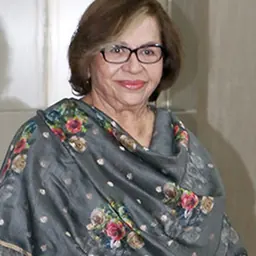
Related people
Same field, nearest in time
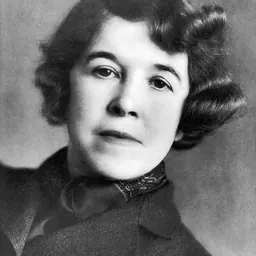
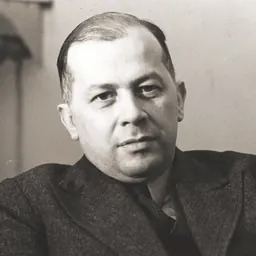


Contemporaries
People whose lives overlapped Marjorie Barnard's

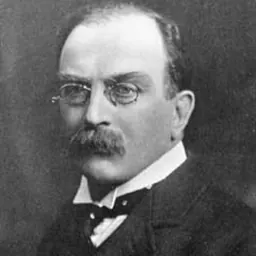


Frequently asked questions
Who was Marjorie Barnard?
Australian novelist and short story writer, critic and historian
When was Marjorie Barnard born?
Marjorie Barnard was born on 16 August 1897 in Ashfield.
When did Marjorie Barnard die?
Marjorie Barnard died on 8 May 1987 in Point Clare.
What was Marjorie Barnard's occupation?
Marjorie Barnard was a novelist, librarian, short story writer, historian, literary critic and science fiction writer.
What nationality was Marjorie Barnard?
Marjorie Barnard was Australian.
Sources & further reading
Cite this page
APA: Biography.guide. (2026). Marjorie Barnard. https://biography.guide/marjorie-barnard/
MLA: "Marjorie Barnard." Biography.guide, https://biography.guide/marjorie-barnard/.
Chicago: "Marjorie Barnard." Biography.guide. https://biography.guide/marjorie-barnard/.
Data last updated: 2026-09-23 · Spot an error? Report a correction.
Portrait: Wikimedia Commons · author & licence
Page generated 2026-09-27 05:05 UTC