
About Jean de Botton
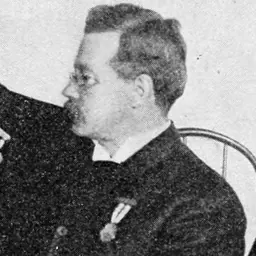
Lived 1898 – 1978 (aged 79). Jean de Botton was a French and Turkish painter, sculptor and printmaker.
Jean Isy de Botton (born June 20, 1898, in Thessaloniki, Greece; died June 13, 1978, in New York City) was a French artist, ballet librettist and designer, lecturer, and teacher.
Education and early career His parents were from Royan. In Paris, he studied classics at the Lycée Rollin, received a degree in philosophy, and was a pupil of author Jules Romains.
His parents intended a diplomatic career for him, but in 1920, he entered the École des Beaux-Arts de Paris. He studied sculpture under Antoine Bourdelle and painting under Bernard Naudin. He studied fresco painting and worked as an assistant to .
In 1924, he made his first trip to Spain, where he studied the work of Zurbaran and El Greco.
In 1932, he was appointed Chef d'Atelier at the , where he taught until 1939; his inaugural lecture was titled "The Vanity of Teaching Art."
Also in 1937, he painted fresco murals for the Musée de la Marine in Paris, under the theme History of Sailing Through the Ages: From Slavery to Sports.
World War II; de Botton in San Francisco He enlisted as a private and served in Morocco, where he discovered "Arab architecture, Muslim interlacing, earthenware panels with floral decoration, the colorful shadows dear to Delacroix and the sumptuous contrasts of tones that had so seduced Matisse. His palette, muffled by the English grayness, warms up, his color rises several registers, his impasto is impregnated with sensuality."
Demobilized in Morocco in 1940, he traveled to New York and then across the United States, acting as a goodwill ambassador for France; whether such a role was assigned to him officially is unclear. In New York, he met with other artists and intellectuals who had fled France, including Jules Romains, André Maurois, Saint-John Perse, Fernand Léger, Salvador Dalí, and Amédée Ozenfant. De Botton also took inspiration from Manet, Seurat, Gauguin, and Van Gogh, as well as "the primitives and the Byzantines."
Ernest Hemingway was also in San Francisco in the early 1940s and collected work by de Botton. De Botton made several paintings depicting views of the city and of San Francisco Bay, including San Francisco from Ernest Hemingway's Window.
In San Francisco he also painted the 12-by-25 foot America at War, a panoramic celebration of America's wartime industry dominated by a full-length portrait of Henry J. Kaiser holding a set of blueprints.
Less successful was his collaboration with the San Francisco Ballet, The Triumph of Hope, set to music by César Franck and staged at the War Memorial Opera House with a full orchestra and fifty dancers. De Botton designed the costumes and backdrops and wrote the libretto,
Capping his goodwill tour of the States, de Botton illustrated and authored (in both English and French) a children's book published in San Francisco in 1945, Fou Fou Discovers America, the story of a French poodle whose travels mirrored his own.
After World War II
After the war, de Botton remained in the United States and became a naturalized citizen. He returned to France with a retrospective at the Wildenstein Gallery in Paris in 1956, followed the next year by a major exhibition at the Knoedler Gallery in New York, and thereafter spent half of each year in Paris and half in New York.
His later work, which de Botton called "Humanized Abstraction," was showcased in the book Jean de Botton by (1968). In these later works, Elgar wrote, de Botton,who had painted many of them, definitively renounced the portrait and the female nude. When he is not executing imaginary landscapes and still lifes, it is from music, about which he is passionate, that he looks for his inspiration. And since music is, in essence, a subjective and abstract art that rejects imitation and description, it is logical that the canvases that proceed from it are anti-naturalist, that they draw the viewer into the realm of dreams and fantasy.
"What makes de Botton important," the British critic Eric Newton wrote, are his hitherto undiscovered harmonies of color...a complex chord of colour that takes incredible risks and yet is always triumphant. Jean de Botton can dance on the very edge of the precipice with his daring juxtapositions of colour that are never simple, never obvious, always gay, yet always a little surprising....One trembles to see him taking such risks, yet he never makes a false step....He is a poet of hope, not of despair. Yet his optimism is not sentimental or sweet. It is robust and daring. But because behind his romantic elegance there is a hard, classic structure, these paintings will endure. They are as gay as a jewelled necklace, but as firmly constructed as the safe that contains it.
In the 1950s and 1960s de Botton became an international artist, with exhibitions in the United States including Philadelphia, New York, Boston, San Francisco, Chicago, Detroit, Phoenix, Atlanta, Fort Worth, Palm Beach, Dallas, the University of Maine, and Adelphi University; in Europe, including London, Geneva, Osnabrück, Hamm, Cologne, Salzburg, Munich, Vienna, Monaco, Nice, and Paris.
His paintings were collected by Ernest Hemingway, Queen Elizabeth II, Winston Churchill, Jules Romains, Paul Valéry, and Charlie Chaplin.
Auction record: 1931 Joséphine Baker nude An auction record for a work by de Botton was set in 2021 by the nude portrait Joséphine Baker, auctioned by Ader at Drouot in Paris for EUR 179,200 (including fees). When the painting was first shown at the Salon d'Automne in 1931, among 2,750 works, it was the "cynosure for all eyes." The timing of the 2021 auction took advantage of a flurry of interest in Josephine Baker in the French press as she was about to be honored by the symbolic reburial of her remains at the Panthéon in Paris. The success of the auction "pays homage to the painter and restores the artist to the height of his notoriety," and the "portrait presents itself more than ever as a manifesto of freedom, still relevant today."
Two drawings by de Botton depicting Josephine Baker, also from 1931, are conserved at the Musée franco-américain du château de Blérancourt.
Don’t just read it —
keep it.
Full-length biographies made to live with: read them, listen on the way to work, watch them tonight.
- E-book
- Audio
- Video
Instant download · yours to keep · every purchase keeps this site free
Important facts
People in Jean de Botton's life
Named in this biography and alive at the same time

Related people
Same field, nearest in time




Contemporaries
People whose lives overlapped Jean de Botton's




Frequently asked questions
Who was Jean de Botton?
French artist (1898–1978)
When was Jean de Botton born?
Jean de Botton was born on 20 June 1898 in Thessaloniki.
When did Jean de Botton die?
Jean de Botton died on 13 June 1978 in New York City.
What was Jean de Botton's occupation?
Jean de Botton was a painter, sculptor and printmaker.
What nationality was Jean de Botton?
Jean de Botton was French and Turkish.
Sources & further reading
Cite this page
APA: Biography.guide. (2026). Jean de Botton. https://biography.guide/jean-de-botton/
MLA: "Jean de Botton." Biography.guide, https://biography.guide/jean-de-botton/.
Chicago: "Jean de Botton." Biography.guide. https://biography.guide/jean-de-botton/.
Data last updated: 2026-09-20 · Spot an error? Report a correction.
Page generated 2026-09-27 05:22 UTC