
Jean-Claude Nicolas Forestier
French urbanist
About Jean-Claude Nicolas Forestier
Lived 1861 – 1930 (aged 69). Jean-Claude Nicolas Forestier was a French landscape architect, urban planner and architect, known for Paseo del Prado, Havana.
Jean-Claude Nicolas Forestier (9 January 1861 – 26 October 1930) was a French landscape architect who trained with Adolphe Alphand and became conservator of the promenades of Paris.
Works
Forestier studied at the École Polytechnique de Paris from 1880 to 1882. He also studied at the École libre des sciences politiques, and at the École forestière de Nancy.
Forestier worked as a civil servant for the City of Paris from 1887-1927. There, he worked on the Bois de Vincennes (1889), the Bois de Boulogne and the western sector of the Promenades de Paris (1898). He also worked on the Avenue de Breteuil (1898) and developed an arboretum at Vincennes and the gardens of the Champ-de-Mars below the Eiffel Tower. Forestier also did design projects in the French Protectorate of Morocco.
Forestier also worked in Spain, setting up gardens in Seville including the Maria Luisa Park (1914) which showcased botanicals, French geometry and Latin and Islamic design and decoration. The park also includes an honorary statue of Forestier. In Barcelona, Forestier designed the gardens of Montjuic, including Laribel Park, the Miramar gardens, and the Greek Theatre Gardens. Elsewhere in Barcelona, he worked on Pedralbes Park (1916). Forestier introduced several ornamental plants to Catalonia, such as rosewood. Throughout Barcelona, he worked closely with Maria Rubió i Tudurí. Forestier also worked in private commissions, such as the Palacio de Liria (1916) in Madrid and the gardens of La Casa del Rey Moro in Ronda.
In 1923, he also made a plan for the improvement of Buenos Aires and the seaside town of Ostende, Buenos Aires. In 1925 he became Inspector of Gardens for the International Exhibition of Decorative Arts and undertook projects in the Americas. In 1925, he moved to Havana for five years to collaborate with architects and landscape designers, where he designed the gardens for the El Capitolio and worked on the master plan of the city, aiming to create a harmonic balance between classical forms and the tropical landscape. He embraced and connected the city's road networks while accentuating prominent landmarks. He had great influence in Havana, although many of his ideas were cut short by the great depression in 1929.
In 1927, Forestier began working with the city of Lisbon on garden design and urban planning. Forestier's Haussmanian tradition and tendencies towards monumentality were popular with cities looking to represent ideas of nationalism in their design. Forestier developed an urban plan and road system articulating from the Avenida da Liberdade. Although his plans were not implemented, his ideas influenced future urban planning in Lisbon. His last major project was the garden of the Bastide du Roy for the Princess of Polignac near Biot.
The scholar Vincent Casals Costa argues that Forestier's practical model of urban design is that of a "city-park." It includes features such as the park as a framework within a monumental city which follows Fredric Law Olmsted's avenues model, internal division within the city, and regional elements, and functionality.
Don’t just read it —
keep it.
Full-length biographies made to live with: read them, listen on the way to work, watch them tonight.
- E-book
- Audio
- Video
Instant download · yours to keep · every purchase keeps this site free
Important facts
People in Jean-Claude Nicolas Forestier's life
Named in this biography and alive at the same time
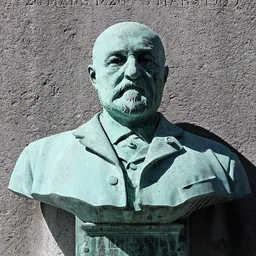
Related people
Same field, nearest in time



Contemporaries
People whose lives overlapped Jean-Claude Nicolas Forestier's



Frequently asked questions
Who was Jean-Claude Nicolas Forestier?
French urbanist
When was Jean-Claude Nicolas Forestier born?
Jean-Claude Nicolas Forestier was born on 9 January 1861 in Aix-les-Bains.
When did Jean-Claude Nicolas Forestier die?
Jean-Claude Nicolas Forestier died on 26 October 1930 in Paris.
What was Jean-Claude Nicolas Forestier's occupation?
Jean-Claude Nicolas Forestier was a landscape architect, urban planner and architect.
What was Jean-Claude Nicolas Forestier known for?
Jean-Claude Nicolas Forestier was known for Paseo del Prado, Havana.
What nationality was Jean-Claude Nicolas Forestier?
Jean-Claude Nicolas Forestier was French.
Sources & further reading
· Wikipedia: Jean-Claude Nicolas Forestier
· DBpedia: Jean-Claude Nicolas Forestier
Cite this page
APA: Biography.guide. (2026). Jean-Claude Nicolas Forestier. https://biography.guide/jean-claude-nicolas-forestier/
MLA: "Jean-Claude Nicolas Forestier." Biography.guide, https://biography.guide/jean-claude-nicolas-forestier/.
Chicago: "Jean-Claude Nicolas Forestier." Biography.guide. https://biography.guide/jean-claude-nicolas-forestier/.
Data last updated: 2026-09-22 · Spot an error? Report a correction.
Page generated 2026-09-27 05:25 UTC