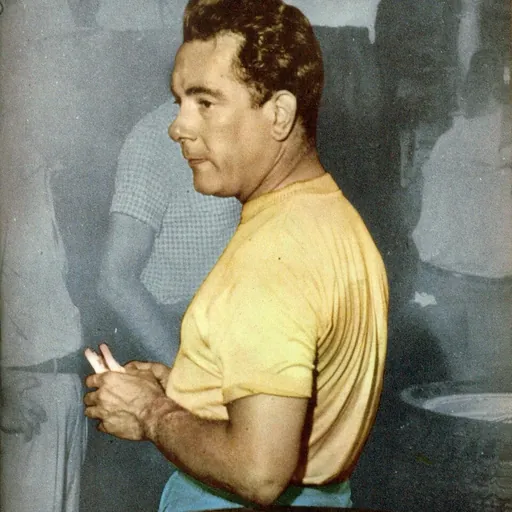
Jean Behra
French racing driver
About Jean Behra
Lived 1921 – 1959 (aged 38). Jean Behra was a French motorcycle racer, racing automobile driver and formula One driver.
Jean Marie Behra (16 February 1921 – 1 August 1959) was a French racing driver, who competed in Formula One from to .
Behra contested 54 Formula One Grands Prix across eight seasons for Gordini, Maserati, BRM, Ferrari, and Behra-Porsche. He achieved nine podiums and one fastest lap, finishing fourth in the World Drivers' Championships with Maserati.
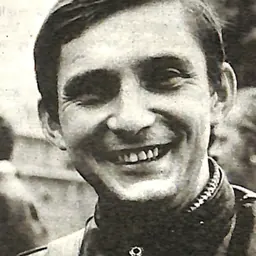
Appearance and personality Behra was small in stature, stocky, and weighed 178 pounds. Behra had big shoulders and was scarred from 12 crashes. In 1955 he had an ear torn off from a collision. He sometimes drove magnificently, while at other times he drove with a lack of enthusiasm. Behra was known for being hard-charging and temperamental, which led to confrontations with Ferrari team managers after being accused of overstressing engines at the 24 Hours of Le Mans and the Reims Grand Prix race in 1959. He was dismissed from the Ferrari team after assaulting a team manager, shortly before his death.
Career synopsis
Behra raced motorcycles for Moto Guzzi prior to changing to sports cars and Grand Prix racing. In January 1950, he drove (with Julio Quinlin) a Simca 8 coupé to third place in the Monte Carlo Rally. Behra began driving cars competitively in 1952. Joakim Bonnier claimed that he learned the majority of his racing skill from Behra. On the second day of competition, Behra crashed his car on a curve approximately fifty miles from Puebla. In April 1954, Behra passed the leader in the last ten minutes on his way to victory in the Grand Prix of Pau, France. He finished ahead of Maurice Trintignant after having to make many pit stops due to mechanical trouble. Behra drove a six-cylinder Gordini.
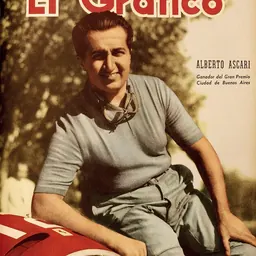
Maserati Behra finished first at the Grand Prix de Pau for a second consecutive year, this time at the wheel of a Maserati. Alberto Ascari led until the 19th lap but dropped back after brake failure. A crowd of 50,000 watched as only eleven of sixteen starters finished the race. Behra and Luigi Musso were teammates in the 1,008 kilometre Supercortemaggiore Grand Prix at Monza, Italy. The two Italians shared a 3000cc Maserati that won and established course and lap records for 6.3 kilometre track.
Behra had surgery on his leg in June 1956, forcing him to miss a 1,000 kilometre Monza Grand Prix. He earned the pole position for the Rouen GP, a non-championship race for 3000cc sports cars, in July 1956. His Maserati was clocked at an average speed of nearly 155.46 kilometres per hour. Behra drove a Maserati to capture the Grand Prix of Rome, a 2000cc sports car event, in October 1956. His winning distance was 166.030 kilometres. He covered one lap in 2 minutes, 16.9 seconds, to average 174.003 kilometres an hour. This established a record for the Castelfusano track.
Behra had his best season in the Formula One World Championship in 1956, finishing 4th overall in the championship, with 5 podiums out of 7 starts.
In April 1957, Behra turned in the quickest time for the Pau Grand Prix. He circuited the 2.77 kilometre course in 1 minute 35.7 seconds, which was a half second slower than his lap record time. The race covered a distance of 304.6 kilometres or about . Behra won the race which was run through the streets of Pau, with an average speed of . Behra was injured while testing a car for the Mille Miglia in May 1957. He recovered and entered a Maserati in the 24 hours of Le Mans on 22 June. Behra was triumphant in a Maserati at Kristianstad, Sweden in August 1957. He drove in a Swedish 6-hour Grand Prix at the Rabelov, 6,537 metre, asphalt track. He followed this with a win in the Grand Prix of Modena, Italy in September.
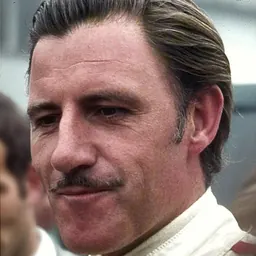
Porsche Behra drove a Porsche to victory in the 6th Rouen Grand Prix. He bested the British drivers, Graham Hill and Alan Stacey. Behra took 4th place at Porto in the 1958 Portuguese Grand Prix, driving for BRM. He drove a Porsche to achieve first place in the Grand Prix of Berlin, Germany held in September. He navigated the twenty circuits of the track with a time of . in 48 minutes, 14.8 seconds. Altogether, he scored wins in eight straight European races in 1958. In each sports car event, he piloted a Porsche Spyder. In Formula One, he drove exclusively for BRM that year.
Final season and death
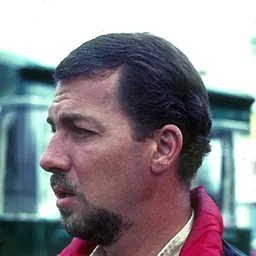
In 1959, Behra moved to Ferrari where he partnered with Tony Brooks. Behra won a international race of Formula One cars at Aintree, in April 1959. He averaged 88.7 miles per hour in an event in which Brooks took second place, 10 seconds behind.
While still contracted to the team, Behra began development of a Formula Two car based on a Porsche 718 RSK. The team, known as Behra-Porsche, entered the 1959 Monaco Grand Prix with Maria Teresa de Filippis at the wheel but did not qualify. Despite the lack of initial success, Behra regarded the project as "tremendous fun" and was rewarded when Hans Herrmann drove the car to second in the prestigious Reims F2 race supporting that year's French Grand Prix. In so doing, Behra had beaten Scuderia Ferrari's own F2 entries, enraging Enzo Ferrari and doing little to ease tensions in an already strained relationship with the team. Things came to a head later that weekend, after he retired from the Grand Prix with a piston failure. Behra was involved in a strong discussion in a restaurant in which he punched team manager Romolo Tavoni and another patron, and was instantly dismissed from the team.
Less than a month later, Behra crashed his Porsche RSK in rainy weather in the sports car race that preceded the German Grand Prix at AVUS, in Berlin, Germany. He was thrown from his car and fatally injured when he hit a flagpole, causing a skull fracture.
The sports car race featured entries of small, under 1,500 c.c. engine capacity. After three laps, Behra was third behind Wolfgang von Trips and Bonnier, who eventually finished one and two. The AVUS was unique among race tracks. It used a strip of the Autobahn in length. The north and south bound lanes were fifty feet apart. At one end was a hairpin turn which drivers negotiated at around . At the other end was a high, steeply banked loop. Behra lost control in the pouring rain, while going . The Porsche began to fishtail with the tail of the car going higher and higher up the slick, steep bank. Then the Porsche spun and went over the top of the banking, with its nose pointing toward the sky. It landed heavily on its side on top of the banking. It remained there wrecked, while the race continued on underneath. Behra was thrown out and for a fleeting moment he could be seen against the background of the sky, with his arms outstretched as though attempting to fly. He impacted one of eight flagpoles arranged at the summit of the embankment which bore the flags of the competing nations. The flagpole toppled over when Behra collided with it, about halfway to its top.
Behra came down into trees and rolled almost into a street where drivers and cars often waited in a paddock to practice. A doctor arrived from a Red Cross ambulance close by. He examined Behra briefly and shook his head. A hospital bulletin stated that Behra broke most of his ribs in addition to the skull fracture which killed him.
Racing record Complete Formula One World Championship results (key) (Race in italics indicates fastest lap (shared))
Indicates shared drive with Harry Schell Indicates shared drive with Cesare Perdisa Indicates shared drive with Roberto Mieres
Non-Championship Formula One results (key)
Indicates shared drive with André Simon Indicates shared drive with Jacques Pollet
Don’t just read it —
keep it.
Full-length biographies made to live with: read them, listen on the way to work, watch them tonight.
- E-book
- Audio
- Video
Instant download · yours to keep · every purchase keeps this site free
Important facts
People in Jean Behra's life
Named in this biography and alive at the same time





Related people
Same field, nearest in time


Contemporaries
People whose lives overlapped Jean Behra's



Frequently asked questions
Who was Jean Behra?
French racing driver (1921-1959)
When was Jean Behra born?
Jean Behra was born on 16 February 1921 in Nice.
When did Jean Behra die?
Jean Behra died on 1 August 1959 in Berlin.
What was Jean Behra's occupation?
Jean Behra was a motorcycle racer, racing automobile driver and formula One driver.
What nationality was Jean Behra?
Jean Behra was French.
Sources & further reading
Cite this page
APA: Biography.guide. (2026). Jean Behra. https://biography.guide/jean-behra/
MLA: "Jean Behra." Biography.guide, https://biography.guide/jean-behra/.
Chicago: "Jean Behra." Biography.guide. https://biography.guide/jean-behra/.
Data last updated: 2026-09-21 · Spot an error? Report a correction.
Portrait: Wikimedia Commons · author & licence
Page generated 2026-09-27 04:59 UTC