
About Jean Alexandre Vaillant
Lived 1804 – 1886 (aged 81). Jean Alexandre Vaillant was a French and Romanian writer, linguist, historian, translator, hofmeister and romanist.
Jean Alexandre Vaillant (; 1804 – 21 March 1886) was a French and Romanian teacher, political activist, historian, linguist and translator, who was noted for his activities in Wallachia and his support for the 1848 Wallachian Revolution. A Romantic nationalist and Freemason, he was an associate of the liberal faction in both Wallachia and Moldavia, as well as a collaborator of Ion Heliade Rădulescu, Ion Câmpineanu, Mitică Filipescu, and Mihail Kogălniceanu.
A tutor and later teacher at the Saint Sava School in Bucharest during the 1830s, he rose suspicions for his involvement in political conspiracies and was ultimately banned from Wallachia. Vaillant advocated the unification of the Danubian Principalities and other Romanian-inhabited areas, an ideal he notably expressed in his 1844 work La Romanie. Credited with having publicized the Romanian cause in his native country during the 1850s, and with having introduced the modern references to "Romania" in international discourse, he briefly returned to Bucharest and was naturalized by the new Romanian state in 1864. The state of the Roma community was another one of Vaillant's interests, and the practice of Roma slavery led him to express support for abolitionist goals.
Career
Private tutor
Vaillant arrived in Bucharest on November 4, 1829, being first employed as a French language tutor by the Great Ban George Iordachi, a member of the Filipescu family of boyars. Joining a sizable community of French and other European expatriates, he was, according to historian Nicolae Iorga, "the only one [of them] whose literary activity was able serve the rapprochement between distant France and this Latin country on the Danube".
He terminated his contract in spring of the following year, and decided to open of school for boys aged 12 to 15; the initiative was publicized by Heliade Rădulescu's magazine Curierul Românesc. Together with the similar activities of Félix Colson (who was tutoring young members of the Văcărescu family), and those of the Moldavian-based Cuénim and the abbé Lhommé, this brought an important step in the Westernization of Romanian society, while contributing to enforcing admiration for France among young boyars. It also signified a breaking point with education in Greek, which had been the norm before and during the Phanariote age (ever since the 17th century initiatives of Prince Matei Basarab). The memoirist Ion Ghica later noted that, among Vaillant's pupils, were scions of the Filipescu family, as well as those of the Grădişteanus, Bălăceanus, Rosettis, Golescus and his own family (the Ghicas).
Saint Sava professor In 1832, he was appointed French-language teacher and head of the boarding house at the prestigious Saint Sava School, which he had been commissioned to modernize. This came upon the end of the Russo-Turkish War of 1828–1829, when Imperial Russian troops had taken over administration of Wallachia, without removing it from Ottoman tutelage. Vaillant was able to persuade the new authorities after authoring a poem in honor of Governor Pavel Kiselyov.
The high standards he endorsed earned him even more popularity, as well as a salary worth twice that of local staff. According to Iorga, he was also sympathetic to the cause of other Balkan peoples in their conflict with the Ottoman Empire (including the rebellious activities of Bulgarian activists in Brăila and the plans devised by the former Prince of Serbia, Miloš Obrenović, who was residing in Bucharest at the time). After Câmpineanu was defeated, Vaillant rallied with a conspiracy formed around Filipescu; on November 18, 1840, as authorities clamped down on Filipescu's movement, he fled Bucharest, heading for the Moldavian capital of Iaşi. According to Iorga, Vaillant's involvement with the revolutionary milieu, and especially with Filipescu and Heliade Rădulescu, had made him the object of suspicion. As Russian troops retreated, to be replaced by a provisional Austrian administration, in turn superseded by a protectorate of powers (including the French Empire), he issued text supporting a Moldo-Wallachian union and emphasizing the two countries' autonomy in respect to the Porte.
The union he supported was accomplished in 1859, through the election of Alexandru Ioan Cuza as ruler of both countries. Three years later, Vaillant was back in Bucharest for a few months, giving free lectures on ancient history. He was naturalized Romanian in 1864, at the same time as his compatriots and fellow pro-Romanian activists Paul Bataillard and Jean Henri Abdolonyme Ubicini. and that of inns and hotels (he calculated that there were 20 of each).
On Roma slavery Vaillant also authored a work on the history of the Romani people, to whom he referred as Romes or "the actual Bohémiens". Centered on the Roma community in Wallachia and Moldavia, the work was an investigation of slavery, to which Roma people were subjected in both lands. Making reference to the corvées required from peasants, Vaillant stressed: "if the peasant is a serf, the Gypsy is entirely a slave", while noting the prevalence of slavery among in Romanian society, the Orthodox Church included ("the state sells them, the private entrepreneurs buy them, and the monks also sit around with their palms exposed").
He noted that the institution relied on Roma settlement, indicating that most members of the ethnic group had abandoned their semi-nomadic lifestyle, commenting that the remaining few "do not pay taxes, but neither are they worth more than the wolves in the forest to their country". Reflecting on the status of slaves involved in manual labor, he provided an indignant account of the way in which they were chained. Vaillant's abolitionist views were probably an influence on his students, and arguably contributed to the proclamation ending slavery that was issued during the Wallachian Revolution of 1848.
Selected works Grammaire valaque à l'usage des français ("Wallachian Grammar for French People"), 1836 Grammaire roumaine ("Romanian Grammar"), 1840 Vocabulaire roumain-français et français-roumain ("Romanian-French and French-Romanian Vocabulary"), 1840 La Roumanie, ou Histoire, langue, littérature, orographie, statistique des peuples de la langue d'or, Ardialiens, Vallaques et Moldaves, résumés sur le nom de Romans ("Romania, or The History, Language, Literature, Orography, Statistics of the People with a Golden Language, Ardialians, Wallachians and Moldavians, Concisely Referred to as Romans"), 1844 Les Romes, histoire vraie des vrais Bohémiens ("The Rom, the Actual History of the Actual Bohemians"), 1857
Don’t just read it —
keep it.
Full-length biographies made to live with: read them, listen on the way to work, watch them tonight.
- E-book
- Audio
- Video
Instant download · yours to keep · every purchase keeps this site free
Important facts
People in Jean Alexandre Vaillant's life
Named in this biography and alive at the same time
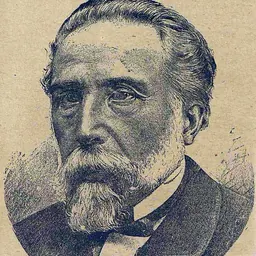


Related people
Same field, nearest in time
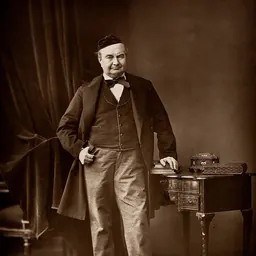
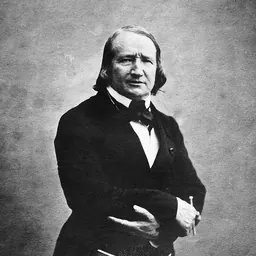


Contemporaries
People whose lives overlapped Jean Alexandre Vaillant's





Frequently asked questions
Who was Jean Alexandre Vaillant?
French-Romanian academic
When was Jean Alexandre Vaillant born?
Jean Alexandre Vaillant was born on 28 October 1804 in Paris.
When did Jean Alexandre Vaillant die?
Jean Alexandre Vaillant died on 18 March 1886 in 19th arrondissement of Paris, Paris.
What was Jean Alexandre Vaillant's occupation?
Jean Alexandre Vaillant was a writer, linguist, historian, translator, hofmeister and romanist.
What nationality was Jean Alexandre Vaillant?
Jean Alexandre Vaillant was French and Romanian.
Sources & further reading
· Wikipedia: Jean Alexandre Vaillant
· DBpedia: Jean Alexandre Vaillant
Cite this page
APA: Biography.guide. (2026). Jean Alexandre Vaillant. https://biography.guide/jean-alexandre-vaillant/
MLA: "Jean Alexandre Vaillant." Biography.guide, https://biography.guide/jean-alexandre-vaillant/.
Chicago: "Jean Alexandre Vaillant." Biography.guide. https://biography.guide/jean-alexandre-vaillant/.
Data last updated: 2026-09-20 · Spot an error? Report a correction.
Page generated 2026-09-27 05:09 UTC