
About Jean-Adam Guilain
Lived 1680 – 1800. Jean-Adam Guilain was a French and German composer, organist and musician.
Jean-Adam Guilain Freinsberg (born Johann Adam Wilhelm Freinsberg; c. 1680 – after 1739) was a German-French organist and harpsichordist who was mostly active in Paris during the first half of the eighteenth century.
Biography Little is known about his life. He was born in Germany, possibly around 1680 (the exact dates of birth and death are unknown). For an unknown reason he moved to France some time before 1702, and almost certainly became one of Louis Marchand's pupils - Guilain's organ collection is dedicated to Marchand, by then a prominent organ teacher.
He was a Catholic, though it is unknown whether he was baptised Catholic or converted later.
Guilain died some time after 1739, the year when he published a collection of harpsichord pieces.
Compositions Although of German origin, Guilain's musical style appears to be in the pure French tradition.
Harpsichord The sole surviving copy of Guilain's only known collection of harpsichord works may be found in the collection of the British Library. The volume is entitled "PIÈCES DE CLAVECIN / D'UN GOUT NOUVEAU / PAR Mr. GUILAIN./ Gravées par De Gland Graveur du Roy./ Prix 3l./ A PARIS." and has twenty-six pieces:
Fanfare Je veux garder Le beau B.T. Amis Ton H.C. Babé L.R. Joconde Mirtil Mon cousin Tircis couché Ma cloris L'autre jour Mamy Margot Ô Gué Pierre B. Les Pèlerins : 1er Air Les Pèlerins : 2e Air Boire à son tour Je suis encor Bransle de Metz On dit Allons La Tétard Menuet allemand
Organ A single collection of organ pieces (Pièces d'orgue pour le Magnificat sur les huit tons différents de l'église) was published in 1706 in two volumes, of which only the former remains extant. The full collection includes eight suites of pieces for use with the Magnificat, one suite for each church mode. Each suite contains seven short movements that were to alternate with the vocal parts of the liturgy.
Suite du premier ton : Plein jeu - Trio - Duo - Basse de trompette - Récit - Dialogue - Petit plein jeu ''Suite du deuxième ton : Prélude - Tierce en taille - Duo - Basse de trompette - Trio de flûtes - Dialogue - Petit plein jeuSuite du troisième ton : Plein jeu - Quatuor - Dialogue de voix humaine - Basse de trompette - Duo - Grand jeu - Petit plein jeuSuite du quatrième ton'' : Plein jeu - Cromorne en taille - Duo - Basse de cromorne - Trio - Dialogue - Petit plein jeu
Don’t just read it —
keep it.
Full-length biographies made to live with: read them, listen on the way to work, watch them tonight.
- E-book
- Audio
- Video
Instant download · yours to keep · every purchase keeps this site free
Important facts
People in Jean-Adam Guilain's life
Named in this biography and alive at the same time


Related people
Same field, nearest in time
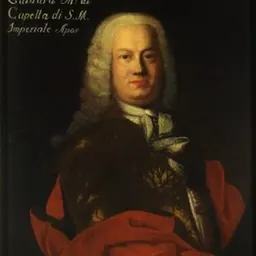
Contemporaries
People whose lives overlapped Jean-Adam Guilain's

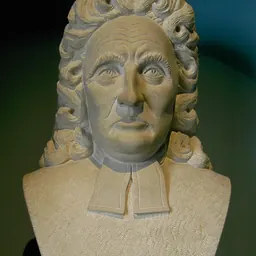


Frequently asked questions
Who was Jean-Adam Guilain?
German composer living in Paris
When was Jean-Adam Guilain born?
Jean-Adam Guilain was born in 1680.
When did Jean-Adam Guilain die?
Jean-Adam Guilain died in 1800.
What was Jean-Adam Guilain's occupation?
Jean-Adam Guilain was a composer, organist and musician.
What nationality was Jean-Adam Guilain?
Jean-Adam Guilain was French and German.
Sources & further reading
· Wikipedia: Jean-Adam Guilain
Cite this page
APA: Biography.guide. (2026). Jean-Adam Guilain. https://biography.guide/jean-adam-guilain/
MLA: "Jean-Adam Guilain." Biography.guide, https://biography.guide/jean-adam-guilain/.
Chicago: "Jean-Adam Guilain." Biography.guide. https://biography.guide/jean-adam-guilain/.
Data last updated: 2026-09-20 · Spot an error? Report a correction.
Page generated 2026-09-27 05:07 UTC