
About Jay Stowitts
Lived 1892 – 1953 (aged 60–61). Jay Stowitts was an American painter.
Hubert Julian "Jay" Stowitts was an openly gay American ballet dancer and painter.
Early life Jay Stowitts was born on June 26, 1892, in Rushville, Nebraska. He spent his most formative years in Lead, South Dakota where his father worked in the offices of the Homestake gold mine. After graduating with top honors from high school in 1910, Stowitts and his family moved to Southern California to seek a warmer and healthier climate for his father, who suffered from respiratory troubles. The next year, Stowitts was accepted at the University of California, Berkeley, where he studied business and economics. During that time Stowitts took up athletics, eventually becoming captain of the track team. He also became interested in dance and appeared with great success in both private and public performances. Although not trained as a classical dancer, Stowitts gained fame as a 'character dancer,' a specialist in national or folk styles of movement. He also introduced elements of modern dance to the traditional ballet repertoire. In 1921 he left Pavlova's company and struck out on his own. In addition to dancing, Stowitts also had a growing reputation as a talented painter and theatrical designer. Beginning in 1924 he collaborated with wealthy collector and writer Templeton Crocker on a Chinese opera, Fay Yen Fah, for which Stowitts devised the fanciful costumes and scenery.
Ethnographic artist and film career
In 1925 Stowitts was hired to choreograph and perform in the film The Magician. This was his first film commission. In 1927 Stowitts went to Italy where he painted portraits of such personalities as Ezra Pound and Benito Mussolini. After returning home to Los Angeles, Stowitts began doing choreographic and design work for the motion pictures. His most remarkable piece was an exotic ballet sequence for the 1934 film The Painted Veil starring Greta Garbo. That same year he choreographed an elaborate scene for the film Dante's Inferno.
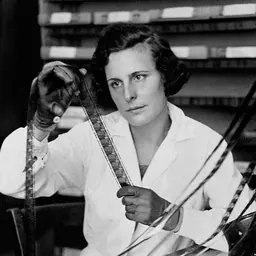
After having paid for shipping and for his fare to Berlin, Stowitts was left destitute in Germany. He was befriended by the film maker Leni Riefenstahl who was fascinated by the American Champions paintings. In 1936 Riefenstahl helped Stowitts obtain a job choreographing a spectacular Javanese dance sequence for the film Fanny Elssler. This job provided him with enough money to sail back home. Early in 1938 Riefenstahl contacted Stowitts for help in promoting an American showing of her film, Olympia. He did the best he could, but anti-German sentiment was on the rise in the wake of Nazi atrocities, and this made reception of the film and its director unfavorable.
During World War II Stowitts kept a low profile as he worked on his next series of paintings, "The Golden Age of the Ballets Russe," which grew to feature forty-two canvases depicting the great stars of the age of Pavlova, Nijinsky, and Diaghilev. Stowitts was adored by his family, and they did whatever they could to make his life more comfortable. Without their help, he would have had a much harder existence.
Legacy Stowitts always claimed that he was an ethnographer, not a fine artist, though clearly he was both. During his lifetime, Stowitts generally refused to sell any paintings, hoping that his collected works would be preserved together. After his death, his possessions passed to his sister, who struggled to find a buyer for them. A museum dedicated to Stowitts was opened in Pacific Grove, California in 1980. It displayed a number of his paintings in exhibitions before closing in 2008.
Most of the hundreds of paintings that Stowitts created have disappeared or been dispersed. Stowitts generally painted in egg tempera on prepared boards. Unfortunately, this is a fragile medium, and many works are believed to have deteriorated. Some of the Java and India paintings are known to be in private and/or public collections. The fate of the vast majority of Stowitts's work is currently unknown.
Don’t just read it —
keep it.
Full-length biographies made to live with: read them, listen on the way to work, watch them tonight.
- E-book
- Audio
- Video
Instant download · yours to keep · every purchase keeps this site free
Important facts
People in Jay Stowitts's life
Named in this biography and alive at the same time




Related people
Same field, nearest in time


Contemporaries
People whose lives overlapped Jay Stowitts's

Frequently asked questions
Who was Jay Stowitts?
American artist, 1892-1953
When was Jay Stowitts born?
Jay Stowitts was born on 26 June 1892 in Rushville.
When did Jay Stowitts die?
Jay Stowitts died in 1953.
What was Jay Stowitts's occupation?
Jay Stowitts was a painter.
What nationality was Jay Stowitts?
Jay Stowitts was American.
Sources & further reading
· DBpedia: Hubert Julian "Jay" Stowitts
Cite this page
APA: Biography.guide. (2026). Jay Stowitts. https://biography.guide/jay-stowitts/
MLA: "Jay Stowitts." Biography.guide, https://biography.guide/jay-stowitts/.
Chicago: "Jay Stowitts." Biography.guide. https://biography.guide/jay-stowitts/.
Data last updated: 2026-09-20 · Spot an error? Report a correction.
Page generated 2026-09-27 04:58 UTC