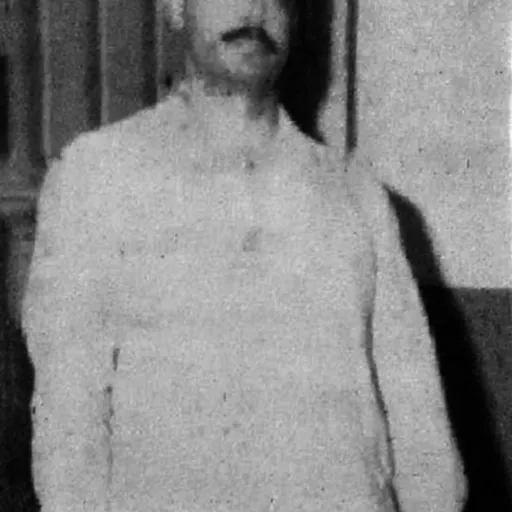
About Jassem Alwan
Lived 1928 – 2018 (aged 89). Jassem Alwan was a Syrian politician and military personnel.
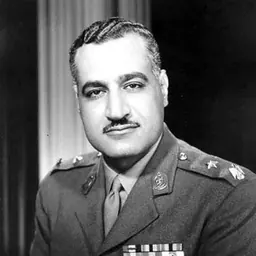
Jassem Alwan (, Jāsim ʿAlwān; 4 July 1928 – 3 January 2018 ) was a Syrian military officer and prominent military figure in Syria in the early 1960s. He rose to prominence during the period of the United Arab Republic (UAR) when he served as the Commander of the Qatana Base near Damascus. Alwan, a staunch supporter of UAR President Gamal Abdel Nasser, opposed Syria's secession from the union in 1961, leading two failed coup attempts to overthrow the secessionist government in 1962.
He participated in the Baathist-led 8 March coup that toppled President Nazim al-Qudsi in 1963, but after a Baathist attempt to purge Nasserist officers from the military, Alwan led an insurrection against the new government. It failed, and resulted in Alwan's imprisonment and sentencing to death until he was released in 1964 upon the intervention of Nasser and other Arab presidents. Alwan's aborted counter-coup was a significant episode leading to the deterioration of ties between the governments of Egypt and Syria. From then on, Alwan lived in Egypt where he continued his activism against the Baathist government until he returned to Syria in 2005.
Early life and career Alwan was born to a Sunni Muslim Arab family of Bedouin origins in 1928 in the city of Deir ez-Zor, located along the Euphrates River in eastern Syria. After studying for a period at the Homs Military Academy, Alwan joined the Syrian Army in 1946. During the presidency of Adib al-Shishakli, Alwan had been teaching at the academy.
Military career Commander of Qatana Base When Syria and Egypt merged to form the United Arab Republic (UAR) in 1958, Alwan became a high-ranking officer in the army, serving in the position of commander of the Qatana Base, located outside of Damascus. On 28 September 1961, a military coup in Syria resulted in the dissolution of the union with Egypt. Alwan had not been at his base on that day, instead participating in a mission in Damascus city. and he consequently blamed himself for the coup's success, concluding that he could have prevented it had he taken up his post in Qatana. Soon after the secession, a loose coalition of Nasserist officers led by Alwan and members of the Arab Nationalist Movement (ANM), Baathist officers led by the Military Committee and politically independent unionist officers led by Ziad al-Hariri was formed to remove Kudsi's administration and install a pro-union government. While the unionist coup was planned for 2 April 1962, the Nasserist officers under Alwan's leadership made their move on 31 March, launching the revolt from the army garrison in Homs. However, no other army units joined in to back the uprising, resulting in its quick end. A divided military and an unstable political situation prevented the government from pursuing decisive action against the coup officers. Instead, on 1 April, an agreement to between the military factions to deal with the coup participants peacefully was devised in Homs, whereby Abd al-Karim al-Nahlawi (the officer who staged the secessionist coup, but soon after joined the pro-unionist officers), Alwan and a small number of officers loyal to them would be exiled.
The 1 April proposal was rejected outright by Alwan who proceeded to encourage his independent and Baathist allies in the officer corps to move ahead with the original coup plan. Thus, on 2 April, officers Alwan, Muhammad Umran and Hamad Ubayd led the insurrection in Homs and Aleppo, while Lu'ay al-Atassi led the revolt in Deir ez-Zor. The flag of the UAR was raised over the Citadel of Aleppo and the unionist officers broadcast a request for Egyptian military intervention to aid their uprising. Most of the Baathist officers,
Coup d'etat of 1963 and counter coup
A pan-Arabist coalition of officers led by the Ba'athists and joined by the Nasserists, including Alwan, managed to successfully overthrow the government in Damascus on 8 March 1963, establishing the National Council for the Revolutionary Command (NCRC) —a body dominated by Ba'athists, but also including several Nasserists—to temporarily govern the country. On 17 April a unity agreement between Egypt, Iraq and Syria was signed, stipulating a federal system with Nasser as president. Weeks later, dozens of Nasserist officers were purged by the Ba'athists, and the Nasserist members of the government consequently resigned. At this time, Alwan, disappointed that the Military Committee was neither interested in a genuine power-sharing agreement nor having Nasser preside over Syria, initiated plans with the ANM and Egyptian intelligence officers to remove the Baathist government. His forces launched daytime assaults on the Army General Headquarters and the broadcast station in Damascus. Alwan and his deputy, Colonel Raef al-Maarri, evaded the authorities and went into hiding in the Ghouta countryside of Damascus. Their safe house was eventually discovered and besieged by security forces and both men were arrested and taken to Mezzeh Prison. Alwan refused to testify in the military tribunal, and the court found him guilty of treason and sentenced him to death, along with al-Maarri, Captain Muhammad al-Nabhan and 16 Palestinians, who were also alleged participants in the failed coup. The death sentences were commuted on 10 December to life imprisonment. Alwan was imprisoned for less than a year, before intervention on his behalf by Nasser, President Abd al-Salam Arif of Iraq, President Houari Boumediene of Algeria and President Josip Broz Tito of Yugoslavia resulted in his release on 5 December. Alwan, al-Maarri, al-Nabhan and the co-accused Palestinian participants were exiled and three days later were escorted to the border with Lebanon, from which they headed to Egypt's embassy in Beirut.
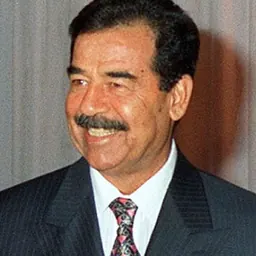
The failure of Alwan's revolt marked the end of significant Nasserist influence in Syria's military and civilian institutions and with the pro-Nasser forces largely defeated, the Military Committee of the Ba'ath Party became the sole power center of the country. Later, after Amin al-Hafiz, who had succeeded Lu'ay al-Atassi as president, was overthrown by a regionalist faction (known as Qutriyun) of the Ba'ath Party (as opposed to the pan-Arabist faction to which Hafiz belonged) led by Salah Jadid and Hafez al-Assad in February 1966, Alwan eventually joined Hafiz, his former enemy, to establish a diverse coalition of dissidents opposed to the ruling Baathists of Syria. They were financially supported by President Saddam Hussein of Iraq. According to anti-government activists, Syrian security forces raided Alwan's home in Deir ez-Zor on 9 August 2011, during the Syrian Civil War.
Don’t just read it —
keep it.
Full-length biographies made to live with: read them, listen on the way to work, watch them tonight.
- E-book
- Audio
- Video
Instant download · yours to keep · every purchase keeps this site free
Important facts
People in Jassem Alwan's life
Named in this biography and alive at the same time

Related people
Same field, nearest in time






Contemporaries
People whose lives overlapped Jassem Alwan's


Frequently asked questions
Who was Jassem Alwan?
Syrian politician (1928–2018)
When was Jassem Alwan born?
Jassem Alwan was born on 4 July 1928 in Deir ez-Zor.
When did Jassem Alwan die?
Jassem Alwan died on 3 January 2018 in Cairo.
What was Jassem Alwan's occupation?
Jassem Alwan was a politician and military personnel.
What nationality was Jassem Alwan?
Jassem Alwan was Syrian.
Sources & further reading
Cite this page
APA: Biography.guide. (2026). Jassem Alwan. https://biography.guide/jassem-alwan/
MLA: "Jassem Alwan." Biography.guide, https://biography.guide/jassem-alwan/.
Chicago: "Jassem Alwan." Biography.guide. https://biography.guide/jassem-alwan/.
Data last updated: 2026-09-21 · Spot an error? Report a correction.
Portrait: Wikimedia Commons · author & licence
Page generated 2026-09-27 05:00 UTC