
About Jaromír Weinberger
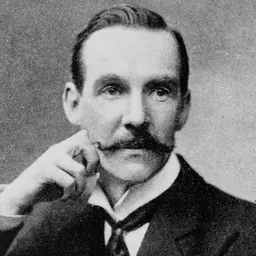
Lived 1896 – 1967 (aged 71). Jaromír Weinberger was an American composer, conductor and music educator.
Jaromír Weinberger (8 January 1896 – August 8, 1967) was a Bohemian-born Jewish subject of the Austrian Empire, who became a naturalized American composer.
Biography Weinberger was born in Prague, Austria-Hungary, into a family of Jewish origin. He heard Czech folksongs from time spent at his grandparents' farm as a youth. He started playing the piano aged 5, and composing and conducting aged 10. He began musical studies with Jaroslav Křička, and later teachers included Václav Talich and Rudolf Karel. Between 1922 and 1926 he was professor of composition at the Ithaca Conservatory (now the music school of Ithaca College), New York.
When he returned to Czechoslovakia he was appointed director of the National Theater in Bratislava, and later received appointments in Eger, Hungary, and Prague. In 1926 Weinberger completed Schwanda the Bagpiper (Švanda Dudák), which became highly successful, with thousands of performances in hundreds of theatres including the Metropolitan Opera in New York City. In later life, he developed cancer of the brain. This, together with money worries and the neglect of his music, prompted him to take a lethal sedative overdose in August 1967. His wife, Jane Lemberger Weinberger (also known as Hansi), died on July 31, 1968.
In 2004 Czech pianist Tomáš Víšek and cellist František Brikcius organized a tour celebrating Weinberger's work.
Major works Weinberger composed over 100 works, including operas, operettas, choral works, and works for orchestra. Colloque sentimental, Prelude after the Poem by Paul Verlaine for violin and piano (1920) Une cantilène jalouse (Žárlivá kantiléna) for violin and piano (1920) 3 Pieces (Tři skladby) for violin and piano (1924) Banjos Cowboy's Christmas (Cowboyovy Vánoce) To Nelly Gray (Na Nelly Gray) 6 Czech Songs and Dances (České písně a tance) violin and piano (1929); also for orchestra 10 Characteristic Solos for snare drum with piano (1939–1941) Sonatina for bassoon and piano (1940) Sonatina for clarinet and piano (1940) Sonatina for flute and piano (1940) Sonatina for oboe and piano (1940) Der Rabe for cello and piano
Organ Bible Poems (1939) Sonata (1941) 6 Religious Preludes (1946) Meditations, 3 Preludes (1953) Dedications, 5 Preludes (1954)
Piano Sonatina (1908) Sonata, Op.4 (1915) Étude in G major on a Polish Chorale "Z dymem pożarów" (1924; included in the 1942 collaborative album Homage to Paderewski) Rytiny (Engravings; Gravures), 5 Preludes and Fugues (UE 1924) Drei Klavierstücke (Tři klavírní kusy) (1924) Spinett-Sonate (Spinet Sonata) (UE 1925) Neckerei (1929); also for orchestra Dupák, Folk Tune (1941) Five-Eighths, Etude (1941)
Vocal Hatikvah for voice and piano (1919) Písně s průvodem klavíru (Songs with Piano Accompaniment) for low voice and piano (1924) Má první láska byla Olympia (My First Beloved Was Olympia); words by Miloš Kareš Rozhovor (Conversation); words by Miloš Kareš Námořnická; words by the composer Psalm 150 for high voice and organ (1940); Biblical text The Way to Emmaus for high voice and organ (1940); Biblical text Ecclesiastes, Cantata for soprano, baritone, mixed chorus, organ and bells (1946), premiered May 13, 1947 by the John Harms Chorus in New York's Town Hall. Of Divine Work, Anthem for mixed chorus (1946); Biblical text from Ecclesiastes Five Songs from Des Knaben Wunderhorn for soprano and piano (1962) Ave, Rhapsody for chorus and orchestra (1962) Tři písně (3 Songs) for children's chorus and piano Volnost for 4 voices; words by Josef Václav Sládek Dvě písně (2 Songs) for voice and piano Pan Vrchní; words by Pavel Maternov U Vrátek; words by Josef Václav Sládek
Don’t just read it —
keep it.
Full-length biographies made to live with: read them, listen on the way to work, watch them tonight.
- E-book
- Audio
- Video
Instant download · yours to keep · every purchase keeps this site free
Important facts
People in Jaromír Weinberger's life
Named in this biography and alive at the same time





Related people
Same field, nearest in time




Contemporaries
People whose lives overlapped Jaromír Weinberger's

Frequently asked questions
Who was Jaromír Weinberger?
Czechoslovak-American composer (1896–1967)
When was Jaromír Weinberger born?
Jaromír Weinberger was born on 8 January 1896 in Prague.
When did Jaromír Weinberger die?
Jaromír Weinberger died on 8 August 1967 in St. Petersburg.
What was Jaromír Weinberger's occupation?
Jaromír Weinberger was a composer, conductor and music educator.
What nationality was Jaromír Weinberger?
Jaromír Weinberger was American.
Sources & further reading
· Wikipedia: Jaromír Weinberger
Cite this page
APA: Biography.guide. (2026). Jaromír Weinberger. https://biography.guide/jaromir-weinberger/
MLA: "Jaromír Weinberger." Biography.guide, https://biography.guide/jaromir-weinberger/.
Chicago: "Jaromír Weinberger." Biography.guide. https://biography.guide/jaromir-weinberger/.
Data last updated: 2026-09-26 · Spot an error? Report a correction.
Page generated 2026-09-27 05:15 UTC