
Jane Sharp
British midwife
About Jane Sharp
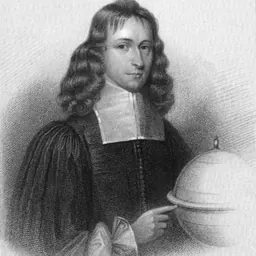
Lived 1641 – 1671 (aged 29–30). Jane Sharp was an English midwife.
Jane Sharp was an English midwife. Her work The Midwives Book: or the Whole Art of Midwifery Discovered, published in 1671, was the first on the subject to be produced by an Englishwoman.
Life Little is known of Sharp's life beyond her publication. The title page of her book claims that she had been a "practitioner in the art of midwifry [sic] above thirty years." She is believed to have practised in London, although Sharp's name does not appear in any Church of England registration books or in witness signatures on any of almost 500 London midwifery certificates surviving from 1661–1669. Her ability to write and to travel to and from London suggests she may have been economically advantaged, but it is unclear whether she received a formal education. While no marriage records have been found, it appears that Jane Sharp had either a daughter or a daughter-in-law, for the midwife Anne Parrott of St. Clement Danes in London, bequeathed a small sum to "Sarah Sharp the daughter of Jane Sharp".
With little known of the person's life and no record of her death, some have proposed that Jane Sharp is a pseudonym.
Profession It is not known whether Sharp received any formal education, but she claims to have practised midwifery for 30 years. Most births in Sharp's time took place in the mother's home, where a female midwife would preside. Jane Sharp, in her practical advice, urges women to adopt a comfortable position during labour, even an upright birth in a birthing chair.
The Midwives Book The first edition of The Midwives Book, or, The Whole Art of Midwifry Discovered appeared in 1671. Subsequent editions in 1674, 1724 and 1725. The first two were published by Simon Miller and the third and fourth posthumously by John Marshall as The Compleat Midwife's Companion.
Purpose and structure
The Midwives Book as published in 1671 instructed women how to conceive a child, maintain pregnancy, prepare for childbirth, bear a child, and care for a woman after childbirth. This meant it was intended as a manual not only for midwives, but for women and men to learn about anatomy and sexuality. Most midwifery manuals of the period came from men, some of whom had never witnessed a childbirth, Sharp's book focuses on the practices. She uses her practical guide also as a platform for her views on women's education, male midwives and female sexuality. It was also notable for its use of the vernacular; Sharp eschewed "hard words... are but the shell" of knowledge.
Phraseology
Sharp's writing draws from accepted medical knowledge of the time, suggesting she was well read in scientific and medical publications. By writing in the vernacular, she conveyed surgical and pharmacological techniques to women training to be midwives, so that they need not always depend on male physicians when birthing complications or emergencies arose.
Sharp also employs techniques of commonplacing, a familiar science-writing practice of the time. As with scrapbooks and commonplace books, it includes information on other memorable sources, along with notes, quotations, tables and drawings. Her use of commonplacing allowed Sharp to integrate existing academic knowledge of anatomy, childbirth and women's health, while adding her practical expertise. She could also affirm and correct medical knowledge on women's anatomy, reproduction and childbirth.
Thus Sharp challenged and improved on the academic methods of trained male physicians with empirically based corrections from her practical experience,
In opposing the trend towards male midwives, she expressed a belief that women were naturally inclined toward midwifery. She acknowledged that men had better access to education and tended to have greater theoretical knowledge, but she deplored their lack of practical understanding. She called on female midwives to end their reliance on male doctors entirely and learn how to deal with emergencies and complications themselves.
Other midwifery manuals The Midwives Book drew on contemporary sources such as Nicholas Culpepper's A Directory for Midwives (1651) and Daniel Sennert's Practical Physick (1664), but in doing so corrected misinformation and changed their tone to reflect her own protofeminist views.
The midwifery manuals in England began with The Byrth of Mankynd, a 1540 translation of Eucharius Rösslin's Der Rosengarten. From then until the publication of The Midwives Book, such manuals were dominated by male authors without practical experience. Rather than consult midwives and mothers, they drew on ancient Greek translations and other midwifery manuals written by inexperienced men. Such writers exhibited a grotesque fascination with female sexuality, reflecting an understanding of women as hypersexual, excessive, weak, and inferior beings, valuable solely in terms of usefulness to men.
The introduction to the 1999 publication of The Midwives Book states, "For all the parallels between The Midwives Book and its male equivalents, then, the differences in detail result in a fundamental shift in the way sexuality and gender are conceptualized."
Impact The Midwives Book: or the Whole Art of Midwifry Discovered gave valuable advice at a time when midwifery faced change. Its popularity indicates that it was probably a household item in the 18th century. It remained in print as a primary source on women, childbirth and sexuality in the Early Modern period.
Karen Cushman's 1991 children's novel The Midwife's Apprentice features a character based on Jane Sharp. It won the Newbery Medal in 1996.
Don’t just read it —
keep it.
Full-length biographies made to live with: read them, listen on the way to work, watch them tonight.
- E-book
- Audio
- Video
Instant download · yours to keep · every purchase keeps this site free
Important facts
Related people
Same field, nearest in time


Contemporaries
People whose lives overlapped Jane Sharp's




Frequently asked questions
Who was Jane Sharp?
British midwife
When was Jane Sharp born?
Jane Sharp was born in 1641 in Shrewsbury.
When did Jane Sharp die?
Jane Sharp died in 1671.
What was Jane Sharp's occupation?
Jane Sharp was a midwife.
What nationality was Jane Sharp?
Jane Sharp was English.
Sources & further reading
Cite this page
APA: Biography.guide. (2026). Jane Sharp. https://biography.guide/jane-sharp/
MLA: "Jane Sharp." Biography.guide, https://biography.guide/jane-sharp/.
Chicago: "Jane Sharp." Biography.guide. https://biography.guide/jane-sharp/.
Data last updated: 2026-09-20 · Spot an error? Report a correction.
Page generated 2026-09-27 05:00 UTC