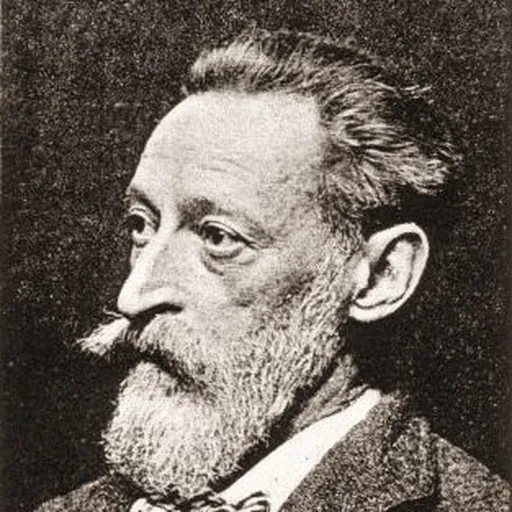
About Jan Verhas
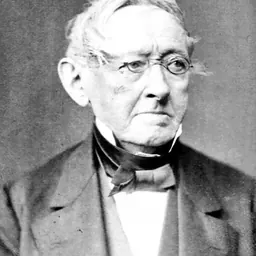
Lived 1834 – 1896 (aged 62). Jan Verhas was a Belgian painter and genre painter.
Jan Verhas or Jan Frans Verhas (9 January 1834 – 31 October 1896) was a Belgian painter of the Realist school. He was known for his portraits and genre paintings often depicting children of the Belgian bourgeoisie. Jan Verhas also painted history paintings, coastal landscapes, beach scenes, seascapes and the occasional still life of flowers. He was an important representative of the Realist movement in Belgium.
Life Jan Verhas was born in Dendermonde as the son of Emmanuel Verhas. His father was a painter who for twenty years was a teacher at the local Academy and also served as a director of that Academy. Jan received his initial art training from his father as did his older brother Frans). Just like Jan, his brother Frans became a successful artist.
Verhas studied initially at the Academy of Fine Arts in his hometown Dendermonde and from 1853 onwards at the Royal Academy of Fine Arts of Antwerp. His teachers at the Antwerp Academy included Nicaise de Keyser and Jan Antoon Verschaeren. Nicaise de Keyser was a painter of mainly history paintings and portraits and one of the key figures in the Belgian Romantic-historical school of painting. Verhas' fellow students at the Academy included the Dutch painter Lawrence Alma-Tadema and Karel Ooms. Verhas struck up a life-long friendship with them. This meant he did not win the large stipend that came with the first prize. Still, the Belgian government awarded him a special subsidy of 1,200 francs and commissioned from him a composition depicting the Battle of Kallo. Here he made a living as a portrait artist and finished the composition of the Battle of Kallo in 1863.
Verhas made a number of trips including to Berlin where he met Adolph Menzel and to Munich and London where he met up with his old friend Lawrence Alma-Tadema.
Verhas regularly contributed works to the various Salons of his time. He won a second class medal in the Paris Salon of 1881 and gold medals at the Berlin exhibition of 1883 and the Exposition Universelle of 1889.
Verhas received several official distinctions. The Belgian government made him an Officer in the Order of Leopold and the French government made him a Chevalier (Knight) in the Legion of Honour in 1881.
Work Verhas was known for his genre paintings often involving children of the Belgian bourgeoisie. He painted portraits of persons from the political and artistic world. Jan Verhas commenced his career as a history painter in the Belgian Romantic style. In his later period he created coastal landscapes, beach scenes, and the occasional still life of flowers. He was also a fresco painter who painted a number of historical frescoes in the city hall of his hometown Dendermonde.
His earliest works dealt with history subjects and were executed in the Romantic style which was then in vogue in Belgian academic circles. His most important work from this period is the Battle of Kallo of 1863 (City Hall of Kallo), in which he depicts a cavalry skirmish in a whirlwind of figures.
After moving to Brussels, he gradually developed his own Realist approach to rendering scenes of everyday life with a humoristic touch. His favourite subject were children engaged in some innocent activity or mischief. The settings of these scenes were typically interiors of bourgeois residences, princely libraries and large terraces with rich decorations and opulent furniture and accessories. These works show a certain indebtedness to Alma-Tadema in the lines of the composition. In the artistic development of Verhas, The parade of the schools of 1878 in the presence of King Leopold II signified a move towards a clearer palette. In the final period of his artistic activity Verhas was inspired by his experiences during his lengthy stays at the Belgian coast. Here he not only observed the tourists but also the local people and customs. Working en plein air he created lively, sun-drenched scenes set on or near the beach. A representative work from this period is the Donkey ride on the beach, which shows a bourgeois family riding donkeys on the beach. The family members are all dressed in fine clothes while the donkeys are being led by local children in plain clothes.
Don’t just read it —
keep it.
Full-length biographies made to live with: read them, listen on the way to work, watch them tonight.
- E-book
- Audio
- Video
Instant download · yours to keep · every purchase keeps this site free
Important facts
more
jan verhas, J. VerhasPeople in Jan Verhas's life
Named in this biography and alive at the same time


Related people
Same field, nearest in time

Contemporaries
People whose lives overlapped Jan Verhas's





Frequently asked questions
Who was Jan Verhas?
Belgian painter (1834-1896)
When was Jan Verhas born?
Jan Verhas was born on 9 January 1834 in Dendermonde.
When did Jan Verhas die?
Jan Verhas died on 31 October 1896 in Brussels.
What was Jan Verhas's occupation?
Jan Verhas was a painter and genre painter.
What nationality was Jan Verhas?
Jan Verhas was Belgian.
Sources & further reading
Cite this page
APA: Biography.guide. (2026). Jan Verhas. https://biography.guide/jan-verhas/
MLA: "Jan Verhas." Biography.guide, https://biography.guide/jan-verhas/.
Chicago: "Jan Verhas." Biography.guide. https://biography.guide/jan-verhas/.
Data last updated: 2026-09-20 · Spot an error? Report a correction.
Portrait: Wikimedia Commons · author & licence
Page generated 2026-09-27 04:57 UTC