
About Jan Le Witt
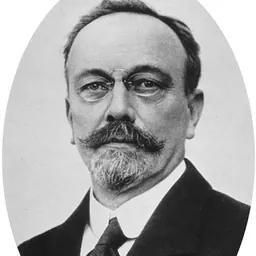
Lived 1907 – 1991 (aged 83). Jan Le Witt was a Polish and British painter, graphic designer, graphic artist, illustrator and artist.
Jan Le Witt (1907–1991) was a Polish-born British abstract artist, graphic designer and illustrator. He had a long professional partnership with George Him. As a design company, Lewitt-Him brought an innovative use of colour, abstraction and symbolism to commercial design. They established a reputation for fine poster work during World War Two and for exhibition displays, most notably with the Guinness clock for the Festival of Britain. The partnership dissolved in 1955 when Le Witt decided to concentrate upon his own, often abstract, art.
Biography
Le Witt came from a Jewish family and after leaving school in Częstochowa he spent over three years travelling in Europe and the Middle East. In 1929, he designed the first Hebrew font "Chaim" which corresponded to the Latin fonts.
In 1930, he presented his work in a solo exhibition in Warsaw.
In 1933, he met the graphic artist George Him in a Warsaw café and began a working partnership, which lasted until 1955. Their characteristic style evolved from 'blending surrealist and cubist tendencies with whimsical humour.' Him wrote of their meeting, 'when I met Lewitt ... we discovered that we had almost identical views on graphic design. We were both perfectionists. We also discovered that instead of showering each other with compliments, we could together achieve a much higher level. Although over the years we never quit arguing, the results seem to suggest that ultimately, in this we were not mistaken.' In the mid-1930s, the partners were commissioned by Przeworski publishers to design illustrations for three poems that had been written for children by the Polish poet and satiricist, Julian Tuwim. The poems, Lokomotywa (The Locomotive), Rzepka (The Little Turnip) and Ptasie Radio (The Birds' Broadcast), were put into a single book entitled Lokomotywa, (1937) which was later published in English, German and French.
Le Witt emigrated to London in 1937 and was naturalised 10 years later. Work produced by the partnership in Poland had been reproduced in foreign publications, such as Gebrauchsgraphik and Arts et Métiers Graphiques, and caught the attention of Philip James of the Victoria and Albert Museum in London and the directors of the Lund Humphries publishing company. The two organisations sponsored the partners' move to London; the Victoria & Albert Museum prepared their immigration forms and Lund Humphries put on an exhibition of their graphic work. Upon establishing themselves in London, the Lewitt-Him partnership designed advertising posters for London Transport and Imperial Airways. They also designed the Guinness Festival clock for the Festival of Britain, held in Battersea Park. Le Witt gained British citizenship in 1947. He was also a fire warden for Kensington and Chelsea; the London borough in which he lived.
While living in London Le Witt became good friends with a circle of artists including Henry Moore, Piero Fornasetti and David Zwemmer, and met and worked with Pablo Picasso on a number of occasions.
Book illustrations
Julian Tuwim, 'Lokomotywa' (with George Him, 1934) Jan Lewitt and George Him, 'The Football's Revolt' (1939) Diana Ross, 'The Little Red Engine Gets a Name' (with George Him, 1942) Alina Le Witt, 'Blue Peter' (1943) Alina Le Witt, 'Five Silly Cats' (with George Him, 1945) Jan Le Witt, 'The Vegetabull' (1956)
Literature and sources
Read, Herbert Edward, Jean Cassou and John Smith: Jan Le Witt, Routledge & Kegan Paul: New York, 1971 Documenta III. International Exhibition; Catalog: Volume 1: Painting and sculpture; Volume 2: Hand drawings; Industrial design, graphics; Kassel/Cologne, 1964 Mackay, Bertha E .: Illustrators of Children's Books 1744–1945, Boston 1947, reprint 1961 Warda, Michał in Very Graphic – Polish Designers of the 20th Century, edited by Jacek Mrowczyk, Adam Mickiewicz Institute, 2015, pp. 104–111. Gryglewicz, T., Groteska w sztuce polskiej XX wieku, Kraków, 1984, pp. 137–138. Hölscher, E., ‘Lewitt-Him, Warschau’, International Advertising Art, 1936, No. 7. Ostrowski, H. L., ‘Reklama firm chemiczno-farmaceutycznych’, Reklama 1931, No. 6 Gasser, Manuel, Graphis, No.14, 1946, p. 203. Elvin, René, in Art and Industry, October 1956, p. 120. ‘Lewitt-Him’ in Graphis No. 14, 18, 22, 31, 37, 42, 48. Gebrauchs Grafik, July 1936 and No. 5, 1953. Tomrley, C.G., ‘Lewitt-Him’ in Graphis No. 48, 1953, pp. 268–275. Hollis, R., Graphic Design: A Concise History, London, 2001, pp. 176–177.
Don’t just read it —
keep it.
Full-length biographies made to live with: read them, listen on the way to work, watch them tonight.
- E-book
- Audio
- Video
Instant download · yours to keep · every purchase keeps this site free
Important facts
People in Jan Le Witt's life
Named in this biography and alive at the same time





Related people
Same field, nearest in time


Contemporaries
People whose lives overlapped Jan Le Witt's



Frequently asked questions
Who was Jan Le Witt?
Polish painter (1907-1991)
When was Jan Le Witt born?
Jan Le Witt was born on 3 April 1907 in Częstochowa.
When did Jan Le Witt die?
Jan Le Witt died on 21 January 1991 in London.
What was Jan Le Witt's occupation?
Jan Le Witt was a painter, graphic designer, graphic artist, illustrator and artist.
What nationality was Jan Le Witt?
Jan Le Witt was Polish and British.
Sources & further reading
Cite this page
APA: Biography.guide. (2026). Jan Le Witt. https://biography.guide/jan-le-witt/
MLA: "Jan Le Witt." Biography.guide, https://biography.guide/jan-le-witt/.
Chicago: "Jan Le Witt." Biography.guide. https://biography.guide/jan-le-witt/.
Data last updated: 2026-09-20 · Spot an error? Report a correction.
Page generated 2026-09-27 05:15 UTC