
About Jan Frans Boeckstuyns
Lived 1650 – 1734 (aged 83–84). Jan Frans Boeckstuyns was a Belgian sculptor and architect.
Jan Frans Boeckstuyns, Boekstuijns or Boecxstuyns (Mechelen, c. 1650 – Mechelen 1734) was a Flemish sculptor and architect who spent most of his active career in his native city Mechelen. He was also active as a manufacturer of gilded leather. While he mainly created church furniture and decorations, he also produced a number of small-scale works, including crucifixes and terracotta figures. He further designed architectural elements of buildings. His works show a transition from the high Baroque towards a more realistic and decorative style closer to the Rococo.
Life Jan Frans Boeckstuyns was born around 1650 in Mechelen. He has to be distinguished from the sculptor Gillis Frans Boeckstuyns who was baptised in the St. Rumbold's Cathedral in Mechelen on 3 July 1651 and likely was a relative. He studied with the prominent Mechelen sculptor Lucas Faydherbe. Faydherbe was a sculptor from Mechelen who had studied in the workshop of Rubens in Antwerp where he became part of the artists developing the Flemish Baroque style in painting and sculpture. Boeckstuyns became a master in the local Guild of Saint Luke in 1680. He likely continued to work for the workshop of Faydherbe after becoming a master.
In 1690, Jan Frans Boeckstuyns worked with Mechelen sculptors Frans Langhemans and Laurens van der Meulen on the realization of the high altar of the Church of Our Lady-across-the-Dyle (Onze-Lieve-Vrouw over de Dijlekerk) in Mechelen.
Boeckstuyns' works in the Saint Alexius and Catharina Church (the Grand Beguinage Church) in Mechelen include a portal at the northern entrance dedicated to Saint Ursula (1700), a gable wall, a wooden confessional, a communion bank and the head of God in the façade of the church. This work has also been attributed to Michiel van der Voort the Elder. It is believed that the two artists collaborated on this work with the help of assistants including Theodoor Verhaegen, a pupil of Boeckstuyns. Boeckstuyns provided the original design which was then modified by van der Voort. The pulpit was conceived for the rather small Church of Our Lady of Leliendaal, in Mechelen, which was designed by Boeckstuyns' master Lucas Faydherbe . The pulpit is a representative of the naturalistic pulpits that were popular in the Habsburg Netherlands in the Late High Baroque. They are conceived as a single large sculpture in which the constructive form disappears. The lower part of the composition simulates a rock, in the hollow of which is the main subject: Saint Norbert, who after being struck by lightning, has been knocked off his horse. Above the rock are two scenes, the Calvary and the Fall of Man. On the right side of the preacher is Jesus as the Savior on the cross between the Blessed Virgin and St. John. Weeping humanity sits at the feet of the cross and raises its pleading eyes to the crucifix. On the left side of the staircase is represented in bas-relief an episode from Genesis. Eve, seduced by the serpent, which crawls on the stony steps of the staircase, presents the apple to Adam. The crown of the tree of Good and Evil forms the sounding board. The general conception of the pulpit is ingenious and original. The figures which decorate it would have produced an excellent effect in the smaller cloister church for which they were destined. When the pulpit was acquired for the St. Rumbold's Cathedral in 1809, the sculptor Jan Frans van Geel was asked to adapt it to one of the rounded pillars of the cathedral.
Don’t just read it —
keep it.
Full-length biographies made to live with: read them, listen on the way to work, watch them tonight.
- E-book
- Audio
- Video
Instant download · yours to keep · every purchase keeps this site free
Important facts
People in Jan Frans Boeckstuyns's life
Named in this biography and alive at the same time
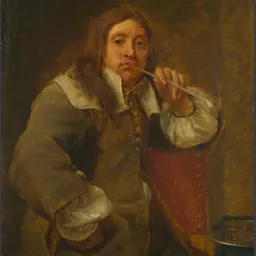
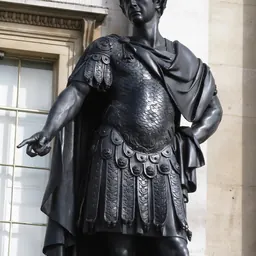



Related people
Same field, nearest in time


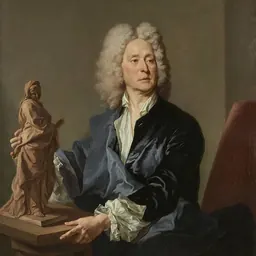
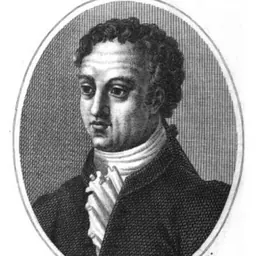
Contemporaries
People whose lives overlapped Jan Frans Boeckstuyns's


Frequently asked questions
Who was Jan Frans Boeckstuyns?
Flemish sculptor and architect (1650–1734)
When was Jan Frans Boeckstuyns born?
Jan Frans Boeckstuyns was born in 1650 in Mechelen.
When did Jan Frans Boeckstuyns die?
Jan Frans Boeckstuyns died in 1734 in Mechelen.
What was Jan Frans Boeckstuyns's occupation?
Jan Frans Boeckstuyns was a sculptor and architect.
What nationality was Jan Frans Boeckstuyns?
Jan Frans Boeckstuyns was Belgian.
Sources & further reading
· Wikipedia: Jan Frans Boeckstuyns
· DBpedia: Jan Frans Boeckstuyns
Cite this page
APA: Biography.guide. (2026). Jan Frans Boeckstuyns. https://biography.guide/jan-frans-boeckstuyns/
MLA: "Jan Frans Boeckstuyns." Biography.guide, https://biography.guide/jan-frans-boeckstuyns/.
Chicago: "Jan Frans Boeckstuyns." Biography.guide. https://biography.guide/jan-frans-boeckstuyns/.
Data last updated: 2026-09-20 · Spot an error? Report a correction.
Page generated 2026-09-27 05:22 UTC