
About Jan de Beijer
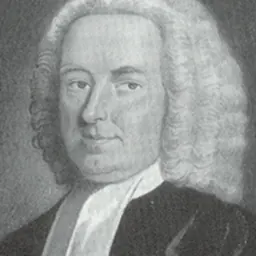
Lived 1703 – 1780 (aged 76). Jan de Beijer was a Dutch painter and copper engraver.
Jan de Beijer (24 September 1703 – c. 1780), also given as Jan de Beyer, was a Dutch draughtsman and painter known for this drawings of towns and buildings in the present-day countries of the Netherlands, Belgium and Germany. In total, he produced some 1500 drawings, over 600 of which were reproduced as engravings by other artists.
De Beijer travelled through the Netherlands in summertime to draw views of cities and towns as well as castles and other buildings. In the wintertime, he would retire to his home to produce colour drawings based on his sketches in the field, as well as drawings that could be used by other artists to produce engravings.
Drawings by Jan de Beijer and engravings based on his work can be found in numerous museums, archives, and private collections. In Amsterdam, the Joods Historisch Museum has a 1765 drawing of the Grote Synagoge and Nieuwe Synagoge, two of the synagogues making up the complex that now houses the museum. Also, the Amsterdam Museum has a drawing of the now-demolished tower Haringpakkerstoren.
In 1999, the Historisch Museum Arnhem in Arnhem devoted an exhibition to work by Jan de Beijer.
Life
Jan de Beijer was born in Switzerland to Johan Jacob de Beijer (1654–1719) and his wife Maria Barbara Huisch. His father was a Dutch officer who was in Switzerland to hire mercenaries for the army of the Dutch Republic. At the age of six, he moved with his parents to Emmerich on the Dutch-German border.
Around 1722 he moved to Amsterdam to study with Cornelis Pronk, who was considered the most important topographical draughtsman of his time. De Beijer lived for some years in Vierlingsbeek, near Boxmeer. Sometime after 1750 he returned to Amsterdam, where he received further instruction from Jan Maurits Quinkhard who, like Pronk, had been a pupil of Arnold Boonen. In Amsterdam, he founded a draughtsmen's society. He was active as an artist until 1769 and then retired to a small town near Kleve on the Dutch-German border, where he died. According to some sources he died on 15 February 1780 in Emmerich, although Doesburg is also mentioned as his place of death.
Don’t just read it —
keep it.
Full-length biographies made to live with: read them, listen on the way to work, watch them tonight.
- E-book
- Audio
- Video
Instant download · yours to keep · every purchase keeps this site free
Important facts
People in Jan de Beijer's life
Named in this biography and alive at the same time
Related people
Same field, nearest in time





Contemporaries
People whose lives overlapped Jan de Beijer's




Frequently asked questions
Who was Jan de Beijer?
Dutch painter (1703-1780)
When was Jan de Beijer born?
Jan de Beijer was born on 24 September 1703 in Aarau.
When did Jan de Beijer die?
Jan de Beijer died on 15 February 1780 in Emmerich am Rhein, Doesburg.
What was Jan de Beijer's occupation?
Jan de Beijer was a painter and copper engraver.
What nationality was Jan de Beijer?
Jan de Beijer was Dutch.
Sources & further reading
Cite this page
APA: Biography.guide. (2026). Jan de Beijer. https://biography.guide/jan-de-beijer/
MLA: "Jan de Beijer." Biography.guide, https://biography.guide/jan-de-beijer/.
Chicago: "Jan de Beijer." Biography.guide. https://biography.guide/jan-de-beijer/.
Data last updated: 2026-09-20 · Spot an error? Report a correction.
Page generated 2026-09-27 05:27 UTC