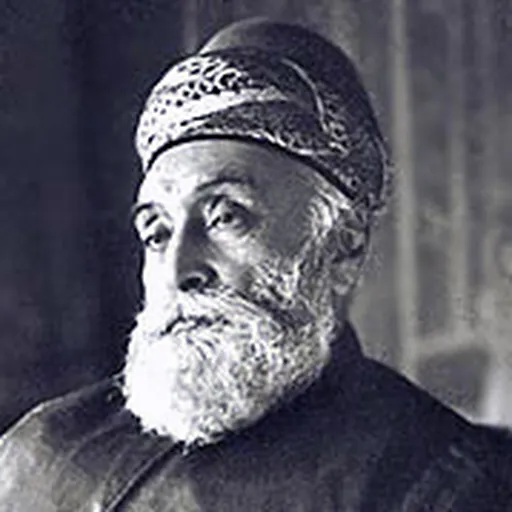
Jamsetji Tata
Indian industrialist, founder of the Tata Group (born 1839)
About Jamsetji Tata
Lived 1839 – 1904 (aged 65). Jamsetji Tata was an entrepreneur and industrialist.
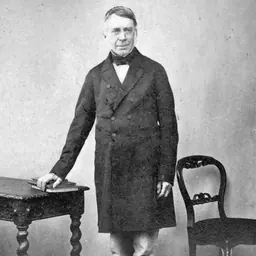
Jamsetji Nusserwanji Tata (3 March 1839 – 19 May 1904) was an Indian industrialist, philanthropist and patriarch of the Tata family who founded the Tata Group, India's largest conglomerate. He established the city of Jamshedpur.
Born into a Parsi family of priests in Navsari. It was his father Nusserwanji that broke tradition to become the first businessman in his menage. Jamsetji was 20 when he joined his father's already-established small trading and banking business in 1859. He graduated from Elphinstone College in Mumbai as a "Green Scholar."
After working in his father's export-trading firm and recognizing opportunities in the cotton industry during a business trip to China, Tata, at 29, founded a trading company in 1868. He later ventured into the textile industry and established Empress Mill, Nagpur, afterwards purchasing a bankrupt oil mill in Mumbai and converting it into a cotton mill. Tata's innovative strategies and commitment to industrial development in India led him to establish key institutions and companies, including the Taj Mahal Hotel in Mumbai, which was India's first hotel with electricity, and made significant contributions towards the establishment of the Indian Institute of Science, Tata Steel, and Tata Power. He was so influential in the world of industry that Jawaharlal Nehru referred to Tata as a One-Man Planning Commission.
Tata was a philanthropist, particularly in the fields of education and healthcare. His donations and foundations laid the groundwork for modern Indian industry and philanthropy. Tata's legacy includes the city of Jamshedpur, named in his honour, and a lasting influence on India's industrial and social landscape. He married Hirabai Daboo, and their sons, Dorabji Tata and Ratanji Tata, continued his legacy within the Tata Group. Tata's contributions were recognized posthumously, including being ranked first in the "Hurun Philanthropists of the Century" (2021) by total donations of $102.4 billion (in 2021 prices) with the start of his key endowments back in 1892.
Early life Jamsetji Nusserwanji Tata was born on 3 March 1839 in Navsari, Bombay Presidency, Company Raj to Jeevanbai Nusserwanji Tata (née Kawasji Tata) and Nusserwanji Ratanji Tata. He was born in a respectable, but poor family of Zoroastrian priests (Mobeds). His mother tongue was Gujarati. He broke his family's priestly tradition to become the first member of the family to start a business. He started an export trading firm in Bombay. while still a student.
After graduating from the Elphinstone College in 1858, he joined his father's export-trading firm, and helped establish its strong branches in Japan, China, Europe, and the United States. Nusserwanji Tata wanted his son to be a part of this business, so he sent him to China to learn running a business there and the details about the opium trade. However, when Tata travelled around China, he began to realize that the cotton industry was booming and there was an opportunity of making a great profit.
In 1885, Tata floated another company in Pondicherry for the sole purpose of distributing Indian textiles to the nearby French Colonies and not having to pay duties; however, this failed due to insufficient demand for the fabrics. This led to his purchase of the Dharamsi Mills at Kurla in Bombay and later reselling it to buy the Advance Mills in Ahmedabad. Tata named it Advance Mills because it was one of the most high-tech mills at the time. On top of its technology, the company left a great effect on the city of Ahmedabad because Tata made an effort to integrate the mill within the city in order to provide economic growth to its community. Through these many contributions, Tata advanced the textile and cotton industry in India. Jamsetji Tata continued to be an important figure in the industrial world even in his later stages of life. Later on, Tata became a strong supporter of Swadeshism.
Philanthropy Jamsetji donated generously mainly for education and healthcare. He was named the greatest philanthrope of the 20th century by EdelGive Foundation and Hurun Research India. He topped the list of the world's top philanthropists of the 20th century with an estimated donation of $102 billion adjusted for inflation. Shrimad Rajchandra, the Jain spiritual mentor of Mahatma Gandhi, is said to have left a deep impression on Jamsetji Tata. Once during a visit to his opulent residence in Bombay, in the course of their interaction, Rajchandra spoke about the transient nature of material wealth and non-attachment, an idea that some interpretations associate with the philanthropic vision of the Tata Group. A portrait at New York Jain temple depicting Shrimad Rajchandra and Jamsetji Tata at his bungalow where Shrimad spoke about insignificance of transient material possessions.
Personal life Tata married Hirabai Daboo. They had two children, Dorab and Ratan, the former of whom succeeded Tata as the chair of the Tata Group.
Tata's first cousin was Ratanji Dadabhoy Tata, who played an important role in the establishment of Tata Group. His sister Jerbai, through marriage to a Mumbai merchant, became the mother of Shapurji Saklatvala, who Tata employed to successfully prospect for coal and iron ore in Odisha and Bihar. Saklatvala later settled in England, initially to manage Tata's Manchester office, and later became a Communist Member of the British Parliament.
Through his cousin, Ratanji Dadabhoy, he was the uncle of entrepreneur JRD Tata and Sylla Tata; the latter was married to Dinshaw Maneckji Petit, the third baronet of Petits. The baronet's sister Rattanbai Petit, was the wife of Muhammad Ali Jinnah, the founder of Pakistan.
Death
While on a business trip to Germany in 1900, Tata became seriously ill. He died in Bad Nauheim on 19 May 1904, and was buried in the Parsi burial ground in Brookwood Cemetery, Woking, England. A commemorative postage stamp on Jamsetji Tata was issued on 7 January 1965 by India Post.
Quotes
"When you have to give the lead in action, in ideas – a lead which does not fit in with the very climate of opinion – that is true courage, physical or mental or spiritual, call it what you like, and it is this type of courage and vision that Jamsetji Tata showed. It is right that we should honour his memory and remember him as one of the big founders of modern India." — Jawaharlal Nehru
"While many others worked on loosening the chains of slavery and hastening the march towards the dawn of freedom, Tata dreamed of and worked for life as it was to be fashioned after liberation. Most of the others worked for freedom from a bad life of servitude; Tata worked for freedom for fashioning a better life of economic independence." —Zakir Husain, the former president of India
"That he was a man of destiny is clear. It would seem, indeed, as if the hour of his birth, his life, his talents, his actions, the chain of events which he set in motion or influenced, and the services he rendered to his country and to his people, were all pre-destined as part of the greater destiny of India." —JRD Tata
Don’t just read it —
keep it.
Full-length biographies made to live with: read them, listen on the way to work, watch them tonight.
- E-book
- Audio
- Video
Instant download · yours to keep · every purchase keeps this site free
Important facts
Family & relationships
People in Jamsetji Tata's life
Named in this biography and alive at the same time




Related people
Same field, nearest in time


Contemporaries
People whose lives overlapped Jamsetji Tata's


Frequently asked questions
Who was Jamsetji Tata?
Indian industrialist, founder of the Tata Group (born 1839)
When was Jamsetji Tata born?
Jamsetji Tata was born on 3 March 1839 in Navsari.
When did Jamsetji Tata die?
Jamsetji Tata died on 19 May 1904 in Bad Nauheim.
What was Jamsetji Tata's occupation?
Jamsetji Tata was an entrepreneur and industrialist.
What nationality was Jamsetji Tata?
Jamsetji Tata's recorded nationality: British Empire.
Sources & further reading
Cite this page
APA: Biography.guide. (2026). Jamsetji Tata. https://biography.guide/jamsetji-tata/
MLA: "Jamsetji Tata." Biography.guide, https://biography.guide/jamsetji-tata/.
Chicago: "Jamsetji Tata." Biography.guide. https://biography.guide/jamsetji-tata/.
Data last updated: 2026-09-22 · Spot an error? Report a correction.
Portrait: Wikimedia Commons · author & licence
Page generated 2026-09-27 05:02 UTC