
About James Yonge
Lived 1646 – 1721 (aged 74–75). James Yonge was a surgeon.
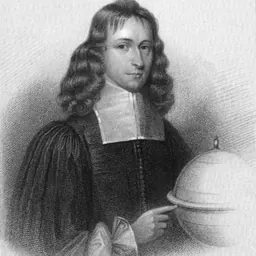
James Yonge (27 February 1646/1647 – 25 July 1721) was a Royal Navy surgeon from Plymouth, England, where his father was a surgeon. He went to sea as an apprentice surgeon as a young boy. Later he joined several voyages with Newfoundland fishing fleets. In his twenties he set up a practice in Plymouth and prospered. He was elected a fellow of the Royal Society in 1702 and mayor of Plymouth for 1694 and 1695. He wrote medical textbooks and a journal of his life.
Background Little is known of the forebears of James Yonge. His father's origins as a surgeon in the Plymouth area are unclear. He may have come from Ireland as a member of the Protestant ascendancy there. Yonge refers in his Journal to visiting his grandmother in Cork. The accounts in Burke's Landed Gentry that he descended from the Yonges of Colyton, Devon, are unfounded.
Yonge's mother, Joanna Blackaller (1618–1700), was the daughter of Nicholas Blackaller, a merchant of Dartmouth, Devon. His parents were married in St Saviour's, Dartmouth, in September 1640. By the time Yonge was born, his parents had moved to Plymouth, where he was baptised in the Parish Church of St Andrew on 11 March 1647. In January 1666, during the Second Dutch War, his ship the Bonaventure was captured by the Dutch and he was shackled with other prisoners for 51 days. The biography of the Victorian writer Charlotte Mary Yonge by Christabel Coleridge dubs Yonge a galley slave of the Moors, possibly conflating his time as a Dutch prisoner with his naval service off Algiers. In September 1666 he was exchanged for a relative of the secretary of the Dutch Admiralty, who was imprisoned at Harwich.
Yonge made what was to be his final voyage in February 1668, to Newfoundland in the Marigold of Plymouth. He describes his arrival: "Coming up with the ice we find no passage, stand through it and in two hours got on the inside of it ... but not without knocking our ship. find ourselves the first ship in the land and Admiral of St Johns. God be praised for this good landfall and good place!" He was also a frequent visitor to Oxford, where he catalogued the Ashmolean Museum and was entertained at the University.
Yonge exposed the plagiarism of John Browne, whose Compleat Treatise of the Muscles appeared in a second edition in 1683. Yonge pointed out that it put together text from the Muskotomia of William Molins with illustrations from the Tabula anatomicae of Giulio Casserius.
Civic affairs By the 1670s Yonge had become of importance, called to fill successive civic and professional offices in Plymouth, whose charter had been restored by Charles II. In 1679 he was elected a life member of the Common Council of the Borough of Plymouth. In 1682 he was appointed a churchwarden at St Andrew's. In 1694 he became an alderman and mayor of Plymouth. He gives an account of his mayoralty in 1694–1695 in Plymouth Memoirs Dec. the Lord Cutts came to town, Lay at my house. 3 Regiments quartered in town, to be Embarked for the W. India by this Lord, gave me great trouble in Quartering them.... June My Ld Marquis of Carmarthen, son & heir to the duke of Leeds, being Rere Admiral of the blew came into port, spent an evning merryly at my house, & treated me wth r Governor, &c next day on board the Lenox very nobly, wth Gunnes.... In August up both Benches, by chosing In", Rogers, Nics. Edgcumb, Wm• Munyon, and m' Tho Bound Aldermen. Tho Burgoyn, James Bligh, Tho Darracot, Wm Lovel, Ben Berely and Wm Wyat 0who had been my aprenytic, assistants.... The new Key fid up to the outside of the Slipp before Mr Allens house, and all new paved over.
Yonge's brother Nathaniel was also involved in the politics of the town. On his death, Yonge wrote in the Plymouth Memoirs: It is hard to compare monetary value with today, but as an example from several sources, an average farm labourer in 1718 earned £18 a year and an attorney £120. Yonge's wealth placed the family in society for generations to come.
Death Yonge died on 25 July 1721 and was buried in the Church of St Andrew, Plymouth. A memorial was erected, but apparently destroyed in the Second World War, when the church was badly damaged. An old church guide quotes it: "Here underneath lyeth buried the body of James Yonge physitian. Fellow of the Royal Society. He was once mayor of his native town and dyeth the 25th day of July 1721 in the 76th year of his age."
Publications Yonge's best known work is his Journal, published in 1963 by Frederick Noël Lawrence Poynter as The Journal of James Yonge, Plymouth Surgeon. It gives a complete account of his life from the age of ten to 61 and is viewed as the most important 17th-century diary after those of Samuel Pepys and John Evelyn.
Yonge published in 1685 Medicaster Medicatus, criticizing John Browne and William Salmon, and in 1699 Sidrophel Vapulans: or, The Quack-Astrologer tossed in a blanket, again criticizing Salmon, In Sidrophel Vapulans, He wrote on the large number of unqualified people practising medicine, saying it was "a great wonder that in this age of regulation and amendment nothing is done to rectify the notorious abuses and secure us from the mischief done by those men who without skill or authority under he pretence of restoring and preserving do destroy men's lives and estates and more especially at such a time when the Nation is in need of both for its defence and preservation.... Why then should impudent ignorant quack and empirics (smiths weavers cobblers draymen women etc.) boldly and unaccountably take upon them great cures and things of great difficulty in which they partly use sorcery, witchcraft, [cause] grievous hurt damage and destruction of many of the Kings liege people, most especially of them that can not discern the uncunning from the comic cunning[?]"
Yonge did not get everything right. Also in Sidrophel Vapulans he wrote: How absurd it is to affirm that a bright and dark moon shall have the same effect, that a body fourteen times less than the Earth and at such a great distance from it shall press the ocean to such an extent and while its in the like situation force it to retire.... So the cause of the motion seems as that of the heart only known to him that made it.
Most of Yonge's published works were on surgical procedures. He was probably the first in England to perform a successful brain operation. Because few believed him, he published in 1682 a treatise entitled "Wounds of the Braine Proved Curable", based on several of his cases. He left details of an early trepanning operation performed on a man who "by a prodigious wound in the forehead lost as much brain as the shell of a pullets egg can contain and was cured in Plimmouth by J. Y. 1686."
Yonge published Several Evidences to show that Eikon Basilike was written by Charles I. Modern research, however, ascribes it to John Gauden.
Family Yonge married on 28 March 1671 Jane, daughter of Thomas Crampporne of Buckland Monachorum in Devon. By her he had two sons, the elder predeceasing him, and six daughters, of whom only one, Johanna, survived to adulthood to have a family of her own.
His brother Samuel wrote a work entitled "A Censure of Three Scandalous pamphlets, and in it he commented on Yonge:
"I am sorry to say my Prefacer [Yonge] a great friend to all dissenters, went to all their meetings, contributions etc. till he was forced to go to sacrament to get the hospital at Plymouth and then he baulked at complying and was dragged to the Lords table and then became one of the greatest enemies they had."
Yonge's eldest son James Yonge (1679–1718) married Mary Upton, daughter and heir of John Upton of Puslinch, Newton Ferrers, Devon. Yonge made this possible by paying off Upton's debts and mortgages and building a new Puslinch House for some £10,000. The house remains in Yonge family ownership.
Don’t just read it —
keep it.
Full-length biographies made to live with: read them, listen on the way to work, watch them tonight.
- E-book
- Audio
- Video
Instant download · yours to keep · every purchase keeps this site free
Important facts
People in James Yonge's life
Named in this biography and alive at the same time


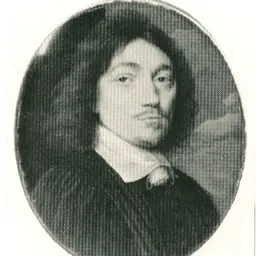

Related people
Same field, nearest in time
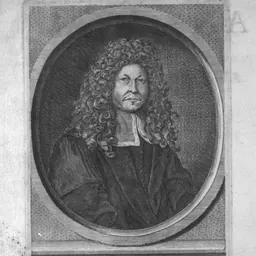


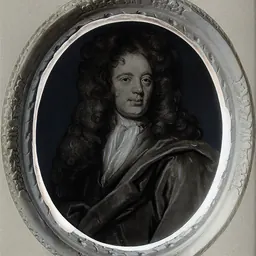
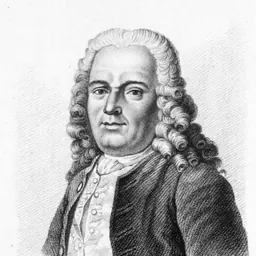

Contemporaries
People whose lives overlapped James Yonge's



Frequently asked questions
Who was James Yonge?
English naval surgeon
When was James Yonge born?
James Yonge was born on 11 May 1646.
When did James Yonge die?
James Yonge died in 1721.
What was James Yonge's occupation?
James Yonge was a surgeon.
Sources & further reading
· DBpedia: James Yonge (surgeon)
Cite this page
APA: Biography.guide. (2026). James Yonge. https://biography.guide/james-yonge-surgeon/
MLA: "James Yonge." Biography.guide, https://biography.guide/james-yonge-surgeon/.
Chicago: "James Yonge." Biography.guide. https://biography.guide/james-yonge-surgeon/.
Data last updated: 2026-09-20 · Spot an error? Report a correction.
Page generated 2026-09-27 05:21 UTC