
William Salmon
English empiric doctor
About William Salmon
Lived 1644 – 1713 (aged 68–69). William Salmon was a physician writer.
William Salmon (2 June 1644–1713) was an English empiric doctor and a writer of medical texts. He advertised himself as a "Professor of Physick". Salmon held an equivocal place in the medical community. He led apothecaries in opposing attempts by physicians to control the dispensing of medicines,
Salmon "copied, translated, abridged, enlarged and compiled from the texts of others" to create popular books emphasizing practice over theory, and often marketing his own medications. His books were owned by respected men including Isaac Newton, Daniel Defoe, William Congreve and Samuel Johnson. Almost nothing is known about his upbringing or his education. It was rumoured that his earliest teacher was a travelling charlatan from whom he inherited his original stock-in-trade.
Salmon set up in business near the Smithfield gate of St. Bartholomew's Hospital in London, He treated diseases, compounded and sold prescriptions, cast horoscopes, and studied alchemy, all "form of medical practice common at the time". Nonetheless, from the focus of his books, it is clear that he emphasized Medicina practica, or, Practical physick. He recommended herbal preparations such as the "spirituous tincture" of dried lavender to cure "hysterick fits" and as a poultice for bites. His descriptions of senile dementia suggest careful observation: he described a patient as "not mad, or distracted like a man in Bedlam", but rather "decayed in his wits". He identified depression and hypochondriasis as symptomatic of senility's early stages. His products were heavily promoted in his published books.
Critics differ in their opinions on Salmon's writing style. In his books Salmon uses a mixture of the language of 'modern' chemistry and philosophy and the language of older Galenic medicine. It has been argued that such a mixture of terms would have been acceptable at the time and provided "good advertising copy". Salmon has been described as "modern, traditionally learned, and commercially minded".
Partly as a result of such tensions, Salmon became a target of satire and "collegiate obloquy." In 1699 Yonge's Sidrophel Vapulans: or, The Quack-Astrologer tossed in a blanket was directed at Salmon, and he was satirized in physician Sir Samuel Garth's mock-heroic poem, "The Dispensary".
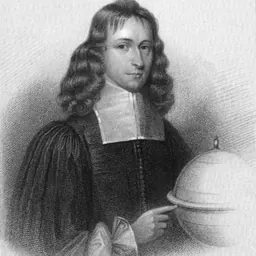
Between his medical practice, the sale of medicines, and the sales of his books, Salmon is presumed to have had a considerable income. He accumulated an extensive library, and owned scientific and mathematical instruments including two microscopes and a calculating device called Napier's bones. From 1687 to 1690, a period of religious and political tension in the reign of James II of England, Salmon is said to have left England and travelled in New England and the Caribbean. After his return, he wrote books on baptism and transubstantiation which are listed in A Descriptive Catalogue of Friends' Books. A Discourse against Transubstantiation (1690) was written in the form of a dialogue between a Protestant and a Catholic. George Vertue lists several portraits of Salmon in A catalogue of engravers (1782). Robert White is credited with a portrait of "William Salmon, M.D." in 1700, while a painter named Burnford "is known only by a print of William Salmon, chymist, 1681." A third portrait by William Sherwin, dating to 1670, is included in Portraits of doctors & scientists in the Wellcome Institute of the History of Medicine. Other engravings include one by Michael Vandergucht after White. In addition, instead of taking a specific philosophical position and siding with one of the competing schools of medical thought, Salmon created "a compendium of everything". and held sustained popularity as an art manual. It was one of the earliest and most successful "printed academies", with wide geographical impact. Such works supported the transfer or visual knowledge and helped to create a broad taste for art. Expanding far beyond their initially intended audience of amateur and profession artists and craftsmen, they found a dominant audience among middle and upper-class women.
In 1679 Dawks released Salmon's Horæ Mathematicæ seu Urania – The Soul of Astrology. Dawks also reissued Sytema Medicinale (1681) and published Salmon's Iatrica, seu, Praxis medendi, The practice of curing being a medicinal history of above three thousand famous observations in the cure of diseases (1681, reissued 1684). In 1683, Dawks published Doron Medicon: Or a supplement to the New London Dispensatory. Among other materials, his London Almanack featured an ailment of the month with suggested "physical recipes" for its treatment, advertisements for his medicines, and complaints about competitors like astrologer Joseph Blagrave.
In 1687 Salmon published Paraieremata, or Select Physical and Chirurgical Observations. In 1689 he published The anatomy of human bodies, a translation of Isbrand van Diemerbroeck of Utrecht. It was reprinted in 1694.
His Medicina Practica, with the Claris Alcymiae (3 vols. London, 1692), a vademecum combining medicine with alchemy, reveals its scope in its subtitle: Practical Physick. Shewing the Method of Curing the most Usual Diseases Happening to Humane bodies. As all Sorts of Aches and Pains, Apoplexies, Agues, Bleeding, Fluxes, Gripings, Wind, Shortness of breath, Diseases of the Breast and Lungs, Abortion, Want of Appetite, Loss of the use of Limbs, Cholick, or Belly-ache, Appositions, Thrushes, Quinsies, Deafness, Bubo's, Cachexis, Stone in the Reins, and Stone in the Bladder... To which is added, The philosophick Works of Hermes Trismegistus, Kalid Persicus, Geber Arabs, Artesius Longævus, Nicholas Flammel, Roger Bacon, and George Ripley. All Translated out of The best Latin Editions, into English...
In 1693, Salmon published Seplasium. The compleat English physician : or, The druggist's shop opened.
In 1694, he published a translation of the work of court physician George Bate under the title Pharmacopoeia Bateana: Or Bate's Dispensatory. Editions appeared in 1694, 1700, 1706, and 1713.
In 1696 Salmon published The family-dictionary, or, Household companion, a work on cookery and domestic medicine. Containing recipes such as snail broth for consumption, and spiced spirits to protect the lungs, the book had been first published the year previously by "J.H." It was commended to "the use of Ladies, Gentlewomen, and other such Persons whose Station requires their taking care of a House".
In 1698 Salmon published a general surgical treatise, Ars chirurgica: a Compendium of the Theory and Practice of Chirurgery, and became involved in the Dispensary controversy. In the Harveian Oration of 1697, Sir Samuel Garth promoted the idea that the Royal College of Physicians should build and staff a dispensary offering free treatment to paupers. In the spring of 1698, the first of several such dispensaries was opened at Warwick Lane. This was seen as a direct challenge to the apothecaries.
Salmon published A rebuke to the authors of a blew-book call'd, The state of physick in London ... written in behalf of the apothecaries and chirurgians of the city of London (1698). James Yonge published Sidrophel Vapulans: or, The Quack-Astrologer tossed in a blanket (1699) specifically attacking Salmon. Garth himself weighed in with a mock-heroick poem, "The Dispensary" (1699), in which physicians were "on the side of charity against the intrigues of interest, and of regular learning against licentious usurpation of medical authority". I deem it a very great Honour done me, to be thought worthy of their Envy and Malice... I have unfolded the whole Medical Art in our English Tongue, and improved and advanced the same in all its Parts of Anatomy, Pharmacy, Chymistry, Chirurgery and Physick, beyond not only what these Warwick-Lane Fellows have done, ever since they have been a fraternity, to this day, but beyond all what ever was done before in the World by any one Man or Body of Men; As also because I have withal laid myself out in the Service of the Publick
In 1710–1711 Salmon published Botanologia; or the English Herbal (2 vols.), dedicated to Anne, Queen of Great Britain. He mentions his travels in the British colonies of North America, making the first known reference to the tomato's cultivation there, in what is now the Carolinas. Preparations of cannabis root are suggested for the treatment of gout, arthritis, and painful joints.
Other titles by Salmon include Officina Chymica, Systema Medicinale (1686), and Phylaxa Medicinæ (1688). He has also been credited with parts of the Bibliothèque des Philosophes (1672) and the Dictionnaire Hermetique (1695).
Don’t just read it —
keep it.
Full-length biographies made to live with: read them, listen on the way to work, watch them tonight.
- E-book
- Audio
- Video
Instant download · yours to keep · every purchase keeps this site free
Important facts
People in William Salmon's life
Named in this biography and alive at the same time
Related people
Same field, nearest in time


Contemporaries
People whose lives overlapped William Salmon's




Frequently asked questions
Who was William Salmon?
English empiric doctor (1644-1713)
When was William Salmon born?
William Salmon was born on 2 June 1644.
When did William Salmon die?
William Salmon died in 1713.
What was William Salmon's occupation?
William Salmon was a physician writer.
Sources & further reading
Cite this page
APA: Biography.guide. (2026). William Salmon. https://biography.guide/william-salmon/
MLA: "William Salmon." Biography.guide, https://biography.guide/william-salmon/.
Chicago: "William Salmon." Biography.guide. https://biography.guide/william-salmon/.
Data last updated: 2026-09-20 · Spot an error? Report a correction.
Page generated 2026-09-27 05:22 UTC