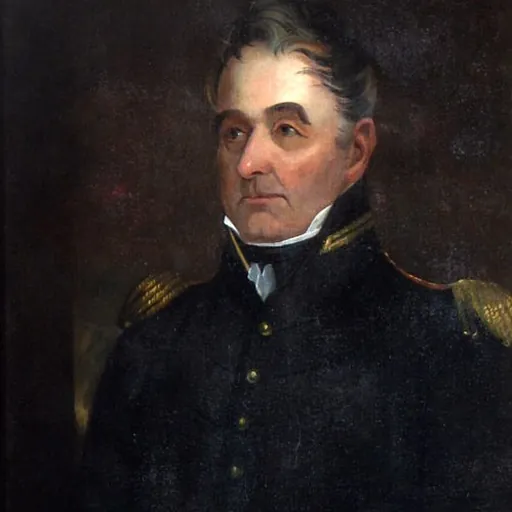
About James Winchester
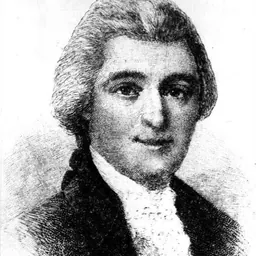
Lived 1752 – 1826 (aged 74). James Winchester was an American politician.
James Winchester (February 26, 1752 – July 26, 1826) was an American military officer, entrepreneur and statesman. He served in the Continental Army during the American Revolutionary War and was promoted to the rank of brigadier general during the War of 1812. He operated a shipping business, held various offices, and was one of the co-founders of the city of Memphis.
Early life James Winchester was born in Westminster, Maryland to William Winchester and Lydia Richards, on February 26, 1752. He was one of eleven siblings. Winchester and several of his brothers enlisted in the Maryland militia during the American Revolution. In the early part of the war he served in a battalion of the Flying Camp commanded by Brigadier General Hugh Mercer. In August 1777, he took part in Major General John Sullivan's failed raid on Staten Island, and was captured by British forces. He was later released in a prisoner exchange. In May 1778, he was commissioned a lieutenant in the 3rd Maryland Regiment which was assigned to the Southern Department in April 1780. He was taken prisoner a second time at the surrender of Charlestown, South Carolina on May 12, 1780. Exchanged in December, he was promoted to captain and served the remainder of the war under Major General Nathanael Greene.
At the conclusion of his service in November 1783, he was admitted as an original member of The Society of the Cincinnati in the state of Maryland.
Life in Tennessee After the war, Winchester settled in Davidson County, then part of the Southwest Territory, where he oversaw the construction of a mill and a distillery. In 1787 when Sumner County was formed following the partition of Davidson County, James served in the militia as a captain of horse, eventually being appointed as inspector of the brigade of the Metro District Militia. In 1790, Governor William Blount appointed Winchester as the commandant of the Militia of Sumner County and a Justice of the Peace. That same year he married Susan Black. In 1797, Winchester purchased a tract of land in Castalian Springs known as Bledsoe's Station and oversaw the construction of Cragfont, a Georgian style mansion that was completed in 1802. The mansion was designed and built by craftsmen from Winchesters home state of Maryland.
Following Tennessee's 1796 admission as a state to the Union, Winchester served in the State Senate, and was appointed as the states first Speaker of the Senate.
He was considered for the United States Senate in the 1809 election in Tennessee, but Jenkin Whiteside was elected to the seat. Winchester was also an unsuccessful candidate in the 1811 United States House of Representatives elections in Tennessee.
War of 1812 In March 1812, three months before the war with Britain began, Winchester was commissioned a brigadier general in the United States Army. After the surrender of Detroit by Brigadier General William Hull, Winchester assumed command of the Army of the Northwest although many felt that William Henry Harrison, the governor of the Indiana Territory, was better qualified. In September, Harrison who had been breveted a major-general in the Kentucky militia, unilaterally led an expedition to relieve Fort Wayne which was under siege by the Potawatomi and Miami. On September 19, Harrison met with Winchester at Fort Wayne and acknowledged Winchester's seniority, unaware that two days earlier President James Madison had decided to appoint Harrison to lead the Army of the Northwest.
Battle of Frenchtown
After his meeting with Harrison, Winchester agreed to conduct 400 regulars and 800 Kentucky militia down the Maumee River to the confluence with the Auglaize River in preparation for a campaign to retake Detroit. On September 25, his scouts skirmished with a British and Indigenous expedition led by Captain Adam Muir heading upriver towards Fort Wayne. Aware that they were badly outnumbered, Muir withdrew back to Maumee Bay before returning to Fort Amherstburg in Upper Canada.
Winchester's force reached the confluence with the Auglaze River at the end of September. He was visited by Harrison in early October and learned that his appointment as commander of the Army of the Northwest had been revoked, and that Harrison had been chosen to replace him. Harrison ordered the construction of Fort Winchester at the confluence, then instructed Winchester to proceed downriver to the Maumee Rapids. Winchester was to wait at the rapids for Harrison to arrive with additional men before advancing on Detroit.
Meanwhile, the Kentucky militia held their ground behind the palisade that protected the village. Over the next few hours they repulsed three frontal assaults and inflicted heavy casualties on the British gunners who had moved their artillery to within 50 yards (46 m) of the palisade. Procter finally pulled his men back and waited for his Indigenous allies to return.
Winchester was held prisoner at Quebec in Lower Canada for more than a year. He was released in a exchange in April 1814 and later assigned to command the District of Mobile. After the war ended, he resigned his regular army commission and returned home to Tennessee.
Death and legacy
Winchester died in Gallatin, Tennessee at the age of 74 on July 26, 1826. He is buried in Winchester Cemetery at Gallatin.
The city of Winchester, Tennessee, is named in his honor although he never lived there. Winchester Road in Memphis is named in recognition of his role in founding the city.
Don’t just read it —
keep it.
Full-length biographies made to live with: read them, listen on the way to work, watch them tonight.
- E-book
- Audio
- Video
Instant download · yours to keep · every purchase keeps this site free
Important facts
People in James Winchester's life
Named in this biography and alive at the same time



Related people
Same field, nearest in time



Contemporaries
People whose lives overlapped James Winchester's




Frequently asked questions
Who was James Winchester?
American military figure and politician (1752–1826)
When was James Winchester born?
James Winchester was born on 26 February 1752 in Carroll County.
When did James Winchester die?
James Winchester died on 26 July 1826.
What was James Winchester's occupation?
James Winchester was a politician.
What nationality was James Winchester?
James Winchester was American.
Sources & further reading
· DBpedia: James Winchester (general)
Cite this page
APA: Biography.guide. (2026). James Winchester. https://biography.guide/james-winchester-politician/
MLA: "James Winchester." Biography.guide, https://biography.guide/james-winchester-politician/.
Chicago: "James Winchester." Biography.guide. https://biography.guide/james-winchester-politician/.
Data last updated: 2026-09-21 · Spot an error? Report a correction.
Portrait: Wikimedia Commons · author & licence
Page generated 2026-09-27 05:00 UTC