
About James Wilkes Maurice
Lived 1775 – 1857 (aged 82). James Wilkes Maurice was a British naval officer.
Vice-Admiral James Wilkes Maurice (10 February 1775 – 4 September 1857) was a Royal Navy officer who served in the French Revolutionary and Napoleonic Wars. Unlike his contemporaries who won fame commanding ships, Maurice gained accolades for his command of a number of island fortresses.
Maurice was employed on a number of ships prior to the outbreak of the French Revolutionary Wars, and by 1794 held the position of midshipman. He saw action in the English Channel and in the Western Approaches the following year, participating in the Battle of Groix and the Quiberon expedition. Good service in these actions led to his appointment to a number of acting commissions as a lieutenant. His career took a major step forward when Maurice, his lieutenant's commission by now confirmed, went out to the West Indies with Commodore Sir Samuel Hood.
Hood had decided to fortify Diamond Rock, in order to harass French shipping off the port of Fort de France in Martinique and Maurice, as first lieutenant of Hood's flagship, began to oversee the arduous task. After work was completed Hood commissioned the Rock and rewarded Maurice's efforts by putting him in command. For seventeen months Maurice and his men raided and interdicted shipping off Martinique, and proved a continual thorn in the side of the French. The arrival of a large fleet under Vice-admiral Pierre-Charles Villeneuve in May 1804 during the Trafalgar campaign gave the French enough resources to assault the Rock. In the subsequent battle, Maurice held out for several days until the exhaustion of the Rock's supplies of water and ammunition forced him to surrender.
Maurice spent a brief period in command of a sloop, before being appointed governor of Marie-Galante, tasked with the defence of the island. His next posting was as governor of Anholt during the Gunboat War. In 1811 he fought off an attack from a much larger Danish force, inflicting heavy casualties. Maurice then returned to Britain and largely retired from active service, though he continued to be promoted. He reached the rank of vice-admiral before his death in 1857.
Family and early life Wilkes was born on 10 February 1775 in Devonport, Devon. He was nominally entered onto the books of Lieutenant James Glassford's in 1783, but did not actually enter the navy until August 1789, when he became an able seaman aboard Captain Alexander Mackey's 14-gun sloop . He served on Inspector until joining the 74-gun under Captain Thomas Hicks in December 1792.
Maurice remained with Concorde after Captain Anthony Hunt replaced Strachan and served in the Western Approaches based out of Falmouth. Large numbers of privateers used the ports on the islands as a base from which to operate against British merchant shipping in the Caribbean. They had captured a number of valuable cargoes and were diverting British warships to protect the merchant fleets. Hood decided to blockade Martinique, and thus curtail the privateers and intercept supplies destined for the French garrison. Maurice volunteered to lead a party of men to prepare the fortifications. Bats were driven out by burning bales of hay, and a space was cleared by blasting at the top of the rock in order to establish a battery.
With work complete by 7 February Hood decided to formalise the administration of the island, and wrote to the Admiralty, announcing that he had commissioned the rock as a sloop, under the name Fort Diamond. Shortly after their arrival Maurice discovered that the main cistern, holding a month's supply of water, had cracked in some earth tremors, and the leak had been made worse by the vibration from the guns. There was barely two weeks left, but fresh supplies were now unobtainable as a blockade of the rock began by a number of schooners, brigs and frigates. A French force landed unopposed on 31 May, Maurice having assessed the overwhelming strength of the French, and having decided that it would be impossible to hold the lower stages withdrew his forces to defend the upper levels. Cosmao began an intense bombardment while the infantry forced their way onto the landing stage, losing three gunboats and two rowing boats full of soldiers as they did so.
At five o'clock Maurice agreed to surrender Diamond Rock. They were returned to Barbados by 6 June. As Diamond Rock was legally considered a Royal Navy vessel, and the commander was legally "captain" of it, he was tried by court-martial on 28 June (as the law dictated in any case where a captain loses his ship, regardless of the cause) for its loss.
Command in the West Indies Maurice again returned to the West Indies in July 1808, joining the fleet at Barbados under Sir Alexander Cochrane. He carried with him a letter of recommendation from the Admiralty, and Cochrane appointed him governor of Marie-Galante, a commission confirmed by the Admiralty on 18 January 1809 with a promotion to post-captain. Marie-Galante had not been long in British possession, and there was the risk of an uprising. Maurice had only 400 soldiers under his command, many of whom were seriously ill.
Governor of Anholt Maurice was made Governor of Anholt in August 1810, a Danish island in the Kattegat captured in May the previous year during the Gunboat War. He had a force of 400 marines under his command, while British frigates patrolled the approaches to the island. These patrols prevented any Danish attack, except possible for a few weeks during the beginning and end of the winter freeze, when the supporting ships would be off station. It was expected that the Danes or French would attempt to recapture it, and Maurice was forewarned of a Danish attack that began on 27 March 1811. Maurice recorded that the enemy force attacked the British in their well prepared positions, but were driven off after four and a half hours of fighting. The Naval Chronicle recorded
Though this account was probably exaggerated, the battle remained a crushing defeat for the Danes, who were unaware of the presence of the two frigates, and , when they made their attack. Maurice was presented with a sword by the garrison, and continued at Anholt until September 1812.
Later years Maurice then returned to Britain and saw no more active service. He married Sarah Lyne of Plymouth on 5 October 1814, but she died of typhus in June the following year at the age of 21. Maurice never remarried. He was promoted to rear-admiral on the retired list on 1 October 1846, and to vice-admiral on 28 May 1853. He died at East Emma Place, East Stonehouse, Plymouth, on 4 September 1857 at the age of 82.
Don’t just read it —
keep it.
Full-length biographies made to live with: read them, listen on the way to work, watch them tonight.
- E-book
- Audio
- Video
Instant download · yours to keep · every purchase keeps this site free
Important facts
People in James Wilkes Maurice's life
Named in this biography and alive at the same time

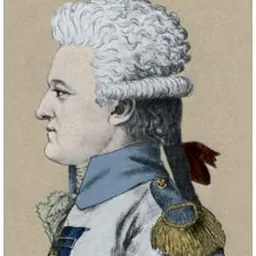
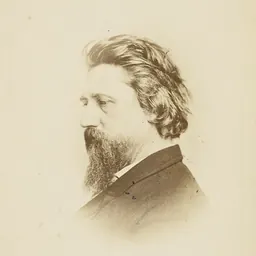


Related people
Same field, nearest in time



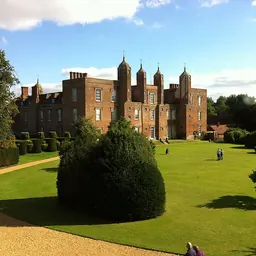
Contemporaries
People whose lives overlapped James Wilkes Maurice's



Frequently asked questions
Who was James Wilkes Maurice?
British officer of the Royal Navy (1775-1857)
When was James Wilkes Maurice born?
James Wilkes Maurice was born on 10 February 1775 in Devonport.
When did James Wilkes Maurice die?
James Wilkes Maurice died on 4 September 1857 in Stonehouse.
What was James Wilkes Maurice's occupation?
James Wilkes Maurice was a naval officer.
What nationality was James Wilkes Maurice?
James Wilkes Maurice was British.
Sources & further reading
· Wikipedia: James Wilkes Maurice
· DBpedia: James Wilkes Maurice
Cite this page
APA: Biography.guide. (2026). James Wilkes Maurice. https://biography.guide/james-wilkes-maurice/
MLA: "James Wilkes Maurice." Biography.guide, https://biography.guide/james-wilkes-maurice/.
Chicago: "James Wilkes Maurice." Biography.guide. https://biography.guide/james-wilkes-maurice/.
Data last updated: 2026-09-20 · Spot an error? Report a correction.
Page generated 2026-09-27 05:28 UTC