
About James Walker
Lived 1764 – 1831 (aged 66–67). James Walker was a British military personnel.
Rear-Admiral James Walker CB CvTE (1764 – 13 July 1831) was an officer of the Royal Navy. He served during the American War of Independence, and the French Revolutionary and Napoleonic Wars.
Walker spent his early years in the navy at first in British waters during the invasion scares of 1779, and then in North American waters where he saw action at most of the decisive naval battles of the war, particularly at the Chesapeake, St. Kitts and the Saintes. He reached the rank of lieutenant before the end of hostilities and spent the interwar years travelling on the continent. Returning to service with the outbreak of war with the French, he again participated in many of the key naval actions of the period, with his service at the Glorious First of June securing his promotion to his own commands. His career was almost ended with an accusation of disobeying orders, which led to his dismissal from the navy, but he was reinstated in time to develop a plan to subdue the mutinies at Spithead and the Nore. He commanded a ship at the Battle of Camperdown, and another at the Battle of Copenhagen, earning Nelson's praise for his actions.
The early part of the Napoleonic Wars were spent in the Caribbean, where Walker played an important role in the Haitian Revolution, and took the surrender of a French garrison. After time spent escorting convoys, Walker joined the ships covering the transfer of the Portuguese Court to Brazil, and struck up a friendship with the Prince Regent. His association with royalty continued with his services in transporting the Duke of Clarence, Tsar Alexander I of Russia and King Frederick William III of Prussia, and he was duly invested as a Companion of the Order of the Bath and a Knight of the Order of the Tower and Sword. His later years were spent managing a fleet off the American coast during the War of 1812, and he commanded several ships after the end of the wars, retiring with the rank of rear-admiral.
Family and early life James Walker was born in 1764, the son of James Walker of Innerdovat, Fife and his wife the novelist, Mary Leslie, the third daughter of Alexander Melville, 5th Earl of Leven. He entered the navy as a midshipman aboard the 32-gun on 18 December 1776, serving under Captain William Garnier. Despite his efforts the privateer suddenly sank, nearly taking Walker down with her. He was in the water for ten minutes before being rescued. Walker was then on the verge of being promoted again, due to the intimate friendship between his father and Admiral Sir George Rodney, but before this could be carried out Rodney was superseded by Admiral Hugh Pigot, and Walker remained at his previous rank. While in Vienna in 1787, news reached him of political troubles with the Dutch, and he began to journey back to England in hope of a commission. While travelling through the forest near Aschaffenburg, the diligence he was in was attacked by ten armed men, who fired into the coach and demanded the passengers' money. He received an appointment on 15 July 1795 to the temporary command of the 50-gun , and was ordered to escort five East Indiamen to a safe latitude, and then to return to Spithead. Having escorted the merchants to the designated point he received news that a fleet of 36 English merchants were assembled at Cádiz, in need of an escort. Walker set out down the Thames but only got as far as Gravesend before news reached him that the mutineers had submitted and his operation was no longer necessary. alt=On a stormy sea beneath towering clouds, a number of sailing warships battle. In the foreground are three ships, two to the right of the ame bridged by clouds of smoke and the mainmast of the far right ship, which bears a prominent horizontally-striped flag is toppling. To the left of the frame a third ship drifts as flames leap from her deck. The Battle of Camperdown, 11 October 1797 by Thomas Whitcombe, painted 1798. On his return he was appointed captain of the 64-gun on 20 August, still in an acting capacity. The battle was a decisive victory for the British over the Dutch, and Walker was among those captains rewarded, having his post rank confirmed on 17 October, and receiving the Naval Gold Medal and the thanks of parliament. When eventually Nelson was able to work his way down the line he left Walker at his task and took another position. As he passed, Nelson took off his hat, waved it, and cried, 'Well done, brave Walker! Go on as you have begun; nothing can be better'. Nelson came aboard Isis the following morning and thanked Walker and his men for their brave efforts. Duquesne arrived in England without incident, and Walker paid her off for repairs. He then received command of the 36-gun HMS Thalia on 1 March 1805 and escorted convoys to the East Indies and Quebec. The voyage to Quebec was made in company with two frigates, which delivered the convoy, but were delayed in port by gales until 1 December 1806. After setting sail Thalia became caught in a gale off the Newfoundland Banks and ran for 1250 miles for five days under bare poles. James Walker was twice married, at first to a daughter of General Sir John Irwin, Commander-in-Chief, Ireland. The marriage did not produce any children and after her death Walker married Priscilla Sarah, the fourth daughter of the MP Arnoldus Jones-Skelton. and Thomas, followed their father into the navy. Rear-Admiral James Walker died at Blatchington, near Seaford, Sussex on 13 July 1831 at the age of 67, after a short illness.
b. According to the Oxford Dictionary of National Biography, Walker had received his promotion on 18 June 1781. This date is quoted in contemporary biographical sketches in the Annual Biography and Obituary, The United Service Journal, and Marshall's Royal Navy Biography. Tracey's Who's Who in Nelson's Navy however describes this as an acting-lieutenancy, and that Walker did not receive his commission until 8 May 1783.
Don’t just read it —
keep it.
Full-length biographies made to live with: read them, listen on the way to work, watch them tonight.
- E-book
- Audio
- Video
Instant download · yours to keep · every purchase keeps this site free
Important facts
People in James Walker's life
Named in this biography and alive at the same time



Related people
Same field, nearest in time
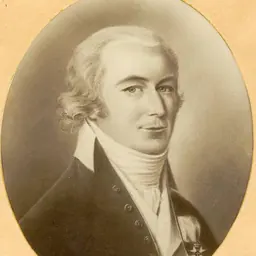
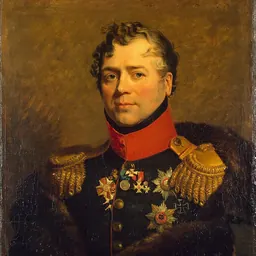

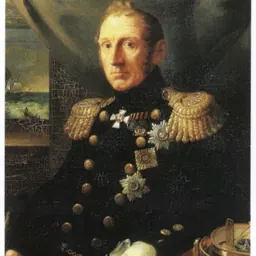

Contemporaries
People whose lives overlapped James Walker's




Frequently asked questions
Who was James Walker?
Royal Navy officer from Great Britain, born 1764
When was James Walker born?
James Walker was born in 1764.
When did James Walker die?
James Walker died on 13 July 1831 in East Blatchington.
What was James Walker's occupation?
James Walker was a military personnel.
What nationality was James Walker?
James Walker was British.
Sources & further reading
· DBpedia: James Walker (Royal Navy officer)
Cite this page
APA: Biography.guide. (2026). James Walker. https://biography.guide/james-walker/
MLA: "James Walker." Biography.guide, https://biography.guide/james-walker/.
Chicago: "James Walker." Biography.guide. https://biography.guide/james-walker/.
Data last updated: 2026-09-20 · Spot an error? Report a correction.
Page generated 2026-09-27 04:58 UTC