
James Stuart
Scottish archaeologist, architect and artist
About James Stuart
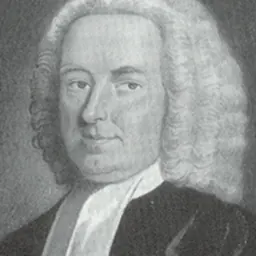
Lived 1713 – 1788 (aged 74–75). James Stuart was a British anthropologist, architect, archaeologist, painter, medalist and art historian.
James "Athenian" Stuart (1713 – 2 February 1788) was a British archaeologist, architect and artist, best known for publishing carefully measured architectural prints, including the smallest details, of key buildings of Ancient Greek architecture in The Antiquities of Athens and Other Monuments of Greece, a pioneering work in the development of Neoclassicism in Britain.
Life
Early life Stuart was born in 1713 in Creed Lane, Ludgate Street, London, to a Scottish sailor who died when he was young. Proving a talented artist while his family was in poverty, he was apprenticed to a fan painter to support the family financially. However, in around 1742, he was able to travel to Italy (albeit on foot) for his artistic improvement, working there as a cicerone and a painter, learning Latin, Italian and Greek, and studying Italian and Roman art and architecture. There he produced his first major work, his illustrated treatise on the Egyptian obelisk of Psammetichus II within A. M. Bandini's De obelisco Caesaris Augusti, and met Nicholas Revett, a young Suffolk gentleman and amateur architect on his Grand Tour.
Naples and Greece In 1748 Stuart joined Revett, Gavin Hamilton and the architect Matthew Brettingham the Younger on a trip to Naples to study the ancient ruins and, from there, they travelled through the Balkans (stopping at Pula) to Greece. Visiting Salonica, Athens, and an Ionic temple on the River Ilissos among others, they made accurate measurements and drawings of the ancient ruins.
Antiquities of Athens
Stuart and Revett returned to London in 1755 and published their work, The Antiquities of Athens and Other Monuments of Greece, in 1762. There were more than five hundred subscribers to its first volume and, although few of the subscribers were architects or builders, thus limiting its impact as a design sourcebook, it later helped fuel the Greek Revival in European architecture. Its illustrations were among the first of their kind and the work was welcomed by antiquaries, scholars, and gentleman amateurs. William Hogarth satirised its fastidious depiction of architectural detail in his 1761 engraving Five Orders of Periwigs.
In April 1758 he was elected a Fellow of the Royal Society as "Mr James Stuart of Grosvenor Square History painter and Architect, eminent in his profession and who hath particularly applyed himself to the study of antiquity, during a long residence in Greece and Italy, as will appear in a work now publishing by him in four volumes in folio, entitled, "The antiquities remaining in the city of Athens and province of Attica"."
Work in England On his return to England, he also acted as an interior designer, medal designer, and architect, creating the first tripod in metal since antiquity, building and remodelling country houses, garden buildings, and town houses (e.g. Shugborough Hall, Hagley Hall, Spencer House, and the Temple of the Winds), creating book illustrations, designing commemorative medals and tomb monuments, and being appointed Surveyor to the Royal Naval Hospital, Greenwich.
Later life
Stuart's more and more chaotic business practices (possibly to be explained by his chronic gout and deteriorating health, and to his coming into a private fortune – a contemporary report on his death in The World stated that "unexpectedly to most people, [he] has died possessed of much property, chiefly on mortgage on new buildings in Marybone") attracted adverse comment from the late 1760s. By the early 1780s, his devoting the afternoons not to business but to drinking (sources state he "regularly frequented a public-house on the north side of Leicester-fields, of the sign of the feathers" and that "his face declared him to be fond of what is called friendly society" – J. T. Smith, Nollekens and his Times, 1929, 27) and playing skittles was even commented on by his friends. Enemies even accused him of 'Epicurianism' in reference to his alcoholism and recent second marriage at 67 to Elizabeth, a maidservant of 20, by whom he had five children, of whom two died before him. (His first marriage had been to someone described in different places as his housekeeper and as a 'Grecian lady'.)
Stuart continued to work on and off, and returned to working on The Antiquities of Athens, though it was still unfinished at the time of his death in 1788, with the final volume only appearing in 1816, when the Greek Revival architecture it had fostered was starting to become the dominant force in British architecture. He died suddenly on 2 February 1788 at his house on the south side of Leicester Square, London and was buried in the crypt of nearby St Martin-in-the-Fields.
His London buildings played some part in popularising Neo-classical taste. The Antiquities of Athens allowed architects, sculptors and designers in Europe and America for the first time to use Neo-Classicism without having to go to Greece themselves and acted as a sourcebook for them for the next two centuries.
Exhibition From 16 November 2006 – 18 February 2007, the Bard Graduate Center in New York State exhibited James “Athenian” Stuart, 1713-1788 The Rediscovery of Antiquity. The exhibition explored the development of neoclassicism through his sketchbooks, drawings for projects, and various other designs. The exhibition was accompanied by a catalogue by Susan Weber and later travelled to the Victoria & Albert Museum in London (22 March– 24 June 2007). James Stuart, Critical observations on the buildings and improvements of London (London, 1771). (1992 reprint edition.) In 2007 "The Antiquities of Athens and Other Monuments of Greece" was published as a hard bound reprint edition by Princeton Architectural Press. It is represented as a complete reprint. Running in size: 9 x 12 in or 22.9 cm by 30.5 cm. 496 pages with 400 illustrations.
Gallery of works
Don’t just read it —
keep it.
Full-length biographies made to live with: read them, listen on the way to work, watch them tonight.
- E-book
- Audio
- Video
Instant download · yours to keep · every purchase keeps this site free
Important facts
People in James Stuart's life
Named in this biography and alive at the same time

Related people
Same field, nearest in time

Contemporaries
People whose lives overlapped James Stuart's




Frequently asked questions
Who was James Stuart?
Scottish archaeologist, architect and artist (1713–1788)
When was James Stuart born?
James Stuart was born in 1713 in London.
When did James Stuart die?
James Stuart died on 2 February 1788 in London.
What was James Stuart's occupation?
James Stuart was an anthropologist, architect, archaeologist, painter, medalist and art historian.
What nationality was James Stuart?
James Stuart was British.
Sources & further reading
· DBpedia: James "Athenian" Stuart
Cite this page
APA: Biography.guide. (2026). James Stuart. https://biography.guide/james-stuart-anthropologist/
MLA: "James Stuart." Biography.guide, https://biography.guide/james-stuart-anthropologist/.
Chicago: "James Stuart." Biography.guide. https://biography.guide/james-stuart-anthropologist/.
Data last updated: 2026-09-25 · Spot an error? Report a correction.
Page generated 2026-09-27 05:11 UTC