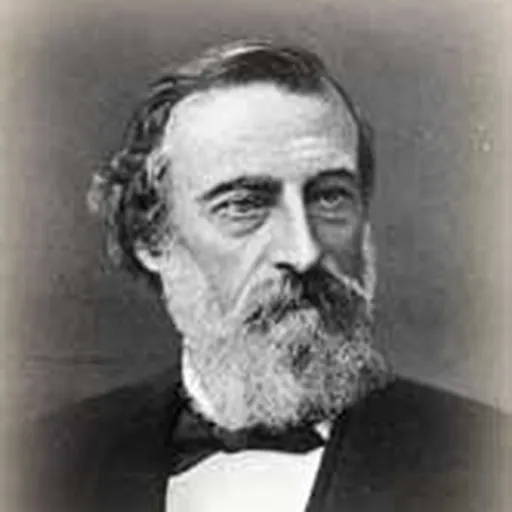
About James Stewart
Lived 1831 – 1905 (aged 74). James Stewart was a South African and British teacher.
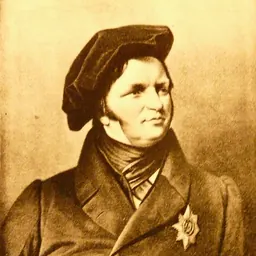
James Stewart (14 February 1831 – 21 December 1905) was a physician, and a medical missionary. He was also a highly skilled botanist and linguist. Many people view him as a pioneer in medical missions for his founding of the hospital in Lovedale, starting a medical school, and developing the founding scheme of the South African Native College, now the University of Fort Hare.
He was Moderator of the General Assembly of the Free Church of Scotland 1899/1900 and oversaw the Union of 1900.
Early life
He was born in Edinburgh, Scotland on 14 February 1831. He was educated at the Royal High School, Edinburgh. After his father remarried the family moved to a farm near Scone and James finished his education at Perth Academy. At the age of 15 he decided that he wanted to be a missionary. He studied at Edinburgh University and St Andrews University then trained as a Free Church minister at New College, Edinburgh. The church considered him suitable as a medical missionary and sent him to Glasgow University to train as a physician. In 1865 he graduated M.B. and C.M. and graduated with distinctions in surgery, material medical, and forensic medicine. He became a missionary in February 1865 for the Free Church of Scotland, sanctioned by the Free Presbytery of Glasgow. Stewart was described by some as "more as a friend than as a doctor" towards his patients.
Stewart grew up with both his mother and father, but his mother died while he was a teenager and his father remarried. His mother was part of the Dudgeon sept of the Noresmen. His mother was thought to be a major influence in Stewart’s life from whom he received his love and appreciation for beauty. He was a cab proprietor and later ran a farm called Pictstonhill near Scone in Perthshire. At the Disruption of 1843 his father allowed the newly created Free Church to preach in his barn while they awaited their church being built. He was a very religious man and influenced Stewart towards missionary work. Stewart had a desire from a young age to go to Africa. He told his cousin, "I shall never be satisfied till I am in Africa with a Bible in my pocket, and a rifle on my shoulder to supply my wants." Lovedale was supported financially by the Free Church of Scotland. At the time Stewart arrived Lovedale had a staff of more than twenty-four Europeans. Stewart became the principal of Lovedale in 1867 and maintained this position for 40 years; as a result, he was given the name Stewart of Lovedale. He made Lovedale the best school in Africa by adopting the school to the natives’ needs. For example, instead of teaching them Latin and Greek, he taught them English, which was a much more useful language for them. Stewart also had many different goals for Lovedale which he described in his book Dawn in the Dark Continent: To take young men of intellectual and spiritual qualifications and train them to be preachers. To train young men and women as teachers for native mission schools. To give education in various industrial arts, such as carpentering, waggon-making, blacksmithing, printing, bookbinding, telegraphy, and agricultural work of various kinds, to natives, that they may become industrious and useful citizens." To give a general education of an elementary kind to all whose course in life has not been definitely determined" Through these goals Stewart aimed at providing a complete education, which also prepared the students for the workforce. During Stewart's time at Lovedale, he also erected a small hospital.
Stewart became Principal of Lovedale in 1870.
During Stewart's later life he made many trips between Africa and Europe. He travelled to Lovedale in 1899, then came back to Scotland in 1900. He again visited Lovedale in 1901, and returned to Edinburgh in 1902. He then visited America in 1903, and went from there to Lovedale in 1904, then went to Cape Town in 1905. Looking back on his experience in Africa, Dr. Stewart realized that "but of all that the African continent contains which the civilized nations prize and want, it still remains true that the most valuable asset in Africa is the African himself. We cannot do without him, and, if he is wise, he will admit that he cannot do without us." Stewart learned to respect the Africans and realized that the natives had as much to offer to him as he had to them.
Stewart died on 21 December 1905, in Lovedale.
Family
In 1866 James Stewart married Williamina ("Mina") Stephen. They had one son and eight daughters.
Publications
A Synopsis of Structural and Physiological Botany Botanical Diagrams Lovedale Past and Present (1884) Lovedale: Illustrated (1894) Lovedale: Its Origin Kaffir Phrase Book and Vocabulary Outlines of Kaffir Grammar
Notes and references
Don’t just read it —
keep it.
Full-length biographies made to live with: read them, listen on the way to work, watch them tonight.
- E-book
- Audio
- Video
Instant download · yours to keep · every purchase keeps this site free
Important facts
Related people
Same field, nearest in time


Contemporaries
People whose lives overlapped James Stewart's





Frequently asked questions
Who was James Stewart?
physician and missionary from Scotland (1831-1905)
When was James Stewart born?
James Stewart was born on 14 February 1831 in Edinburgh.
When did James Stewart die?
James Stewart died on 21 December 1905 in Alice.
What was James Stewart's occupation?
James Stewart was a teacher.
What nationality was James Stewart?
James Stewart was South African and British.
Sources & further reading
· DBpedia: James Stewart (missionary)
Cite this page
APA: Biography.guide. (2026). James Stewart. https://biography.guide/james-stewart-teacher/
MLA: "James Stewart." Biography.guide, https://biography.guide/james-stewart-teacher/.
Chicago: "James Stewart." Biography.guide. https://biography.guide/james-stewart-teacher/.
Data last updated: 2026-09-21 · Spot an error? Report a correction.
Portrait: Wikimedia Commons · author & licence
Page generated 2026-09-27 04:59 UTC