
About James Seymour
Lived 1879 – 1930 (aged 50). James Seymour was a British cricketer.
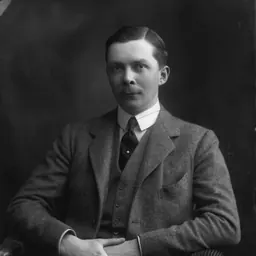
James Seymour (25 October 1879 – 30 September 1930) was an English professional cricketer who played primarily for Kent County Cricket Club in the early years of the 20th century. Seymour made 553 first-class cricket appearances in a career that lasted from 1900 until 1926, scoring over 27,000 runs in his career. He was the cricketer who established in law the principle that income from a benefit match should not normally be taxable in a case ruled on by the High Court in 1927. The judgement has had significant financial impacts over the years for other sports people.
Seymour was born in West Hoathly in Sussex in 1879. He died in 1930 aged 50 four years after he completed his cricket career. His brother John played first-class cricket for Northamptonshire and Sussex.
Cricket career
Seymour made his first-class cricket debut for London County Cricket Club in 1900 but played only three times and was offered a place in Kent's Tonbridge Nursery where young professionals were coached by Captain William McCanlis. He first appeared for Kent in 1902 having qualified for the county by residence, and was soon a regular, appearing at least 20 times each season until World War I and in all but two seasons until his retirement at the end of the 1926 season. A right-handed batsman, he was part of Kent's County Championship winners four times between 1906 and 1913.
Seymour scored more than 1,000 runs in a season 16 times, including in all four Championship winning years, and made 2,088 in 1913,
Against Worcestershire in 1904 he became the first player to score a century in both innings of a match for Kent, a feat he repeated twice more for the county. He was described in his Wisden obituary as an "indispensable member" of the team who "could never be left out", despite Kent having an excellent team in the years before the First World War.
As well as being a high quality batsman, Seymour was an excellent slip fielder. including taking six in one innings in 1904 against the South African tourists at Canterbury. As of April 2016 this remains a Kent record shared jointly with Stuart Leary who repeated the feat in 1958. He bowled off-breaks occasionally, taking 17 wickets in his career.
Seymour's final first-class match was in September 1926, appearing for Kent against Marylebone Cricket Club (MCC) at the end of the 1926 season. He made a total of 553 first-class appearances in his career, including three for the Players and toured America with Kent in 1903.
The game had important consequences for all county cricketers as the Inland Revenue used it as a test case in an attempt to define money raised by benefit matches or events as taxable income. The match had raised £939 but in 1923 the Revenue claimed that Seymour owed £3,752 in tax, including interest and penalties, more than he owned in terms of assets.
Seymour appealed against the judgment and the case went all the way to the House of Lords and in 1927 was eventually ruled in Seymour's favour. A government spending review in 2015 announced an end to the practice and that from April 2017 benefit events would be subject to Income Tax in the United Kingdom.
Don’t just read it —
keep it.
Full-length biographies made to live with: read them, listen on the way to work, watch them tonight.
- E-book
- Audio
- Video
Instant download · yours to keep · every purchase keeps this site free
Important facts
People in James Seymour's life
Named in this biography and alive at the same time


Related people
Same field, nearest in time





Contemporaries
People whose lives overlapped James Seymour's





Frequently asked questions
Who was James Seymour?
English cricketer (1879-1930)
When was James Seymour born?
James Seymour was born on 25 October 1879 in West Hoathly.
When did James Seymour die?
James Seymour died on 30 September 1930 in Marden.
What was James Seymour's occupation?
James Seymour was a cricketer.
What nationality was James Seymour?
James Seymour was British.
Sources & further reading
· DBpedia: James Seymour (Kent cricketer)
Cite this page
APA: Biography.guide. (2026). James Seymour. https://biography.guide/james-seymour-cricketer/
MLA: "James Seymour." Biography.guide, https://biography.guide/james-seymour-cricketer/.
Chicago: "James Seymour." Biography.guide. https://biography.guide/james-seymour-cricketer/.
Data last updated: 2026-09-20 · Spot an error? Report a correction.
Page generated 2026-09-27 05:05 UTC