
James Pillans
British classicist and educational reformer
About James Pillans
Lived 1778 – 1864 (aged 85–86). James Pillans was a British teacher, classical scholar and pedagogue.
James Pillans FRSE (1778–1864) was a Scottish classical scholar, Professor of Humanity at the University of Edinburgh, and educational reformer. He is credited with inventing the blackboard, alongside his colleague Jack Smart
Early life The son of James Pillans, he was born at Sheriff Brae in Leith in April 1778. His father was a merchant and then a printer in Edinburgh, creating Pillans & Wilson. He was also an elder in the Anti-Burgher branch of the Scottish Secession Church, of Adam Gib, and a liberal in politics. Pillans was educated at the Royal High School, Edinburgh, under Alexander Adam, of whom he subsequently contributed a biography to the Encyclopædia Britannica. He was second in the rector's class, after his close friend Francis Horner; another classmate was John Archibald Murray.
His father wished to apprentice him to a paper-stainer, but Pillans went on to the University of Edinburgh, where he graduated with an MA on 30 January 1801. He became a pupil of Andrew Dalzell, was influenced by Dugald Stewart, and attended the chemistry lectures of Joseph Black. He was a member of the "dialectic society" founded by "Burgher" divinity students in the university. After graduation he acted as tutor, first to Thomas Francis Kennedy at Dunure, Ayrshire, next in a family in Northumberland, where he had the opportunity of speaking French. He then moved to Eton, as a private tutor.
Pillans developed the teaching of classical Greek, which had been begun by Christison in Adam's time; and encouraged the study of classical geography.
Academic In 1820 the chair of "humanity and laws" (in effect Latin) at the University of Edinburgh was vacated by the death of Alexander Christison. Pillans was elected his successor, and occupied the chair for over 53 years. His position as Rector of the High School was filled by Aglionby Ross Carson.
He carried over some of the ideas which he had applied in the High School. He still taught elementary Latin. He believed that universities should supply elementary teaching in classics, and opposed, with Philip Kelland and others, the institution (May 1855) of an entrance examination to the junior Greek class, though he was in favour of an examination for admission to higher classes. He enlarged the conventional range of classical authors proposed for study.
Pillans gave evidence to the committee of the House of Commons on education in 1834: on religious education (p. 218), infant schools (p. 227), and teacher training (p. 231). He was an early advocate for compulsory education, wrote in defence of the classical training, and had advanced views on popular education. He became president of the Watt Institution and School of Arts, inaugurating in 1854 the statue of James Watt then in Adam Square.
Educational writings A letter from Pillans appeared in Jeremy Bentham's Chrestomathia (1815). It was entitled Successful application of the new system to language-learning, and dated 1814; it mentions the use of chalk and blackboard in teaching geography. It was followed by a letter from his Edinburgh High School colleague James Gray.
Letters on the Principles of Elementary Teaching (Edinburgh, 1827; 1828; 1855), based on correspondence with his former pupil Kennedy of Dunure, was the statement of Pillans of his method based on his work at the High School, with criticism of the educational state of Scotland. This book proved controversial, being attacked in Letters addressed to the Parochial Schoolmasters of Scotland (1829), reviewed negatively in the Edinburgh Literary Journal which defended Pillans. In the same year a long article in the Quarterly Review vol. LXXVII on elementary teaching called the work of Pillans "very sensible" (p. 114), while advocating the "Bell system" of the National Society schools (p. 120), i.e. Andrew Bell's version of the monitorial system. The review was in fact by Bell, who had met Pillans not long before, and felt that the variant of the "system" that was described in the Letters did not do justice to his own ideas. Pillans then defended himself and the rival claims of Joseph Lancaster's system; and was endorsed by the Eclectic Review. The principles brought up by Pillans entered the secondary literature.
Contributions to the Cause of Education (1856), dedicated to Lord John Russell, included reprints of earlier works. It also comprised articles in the Edinburgh Review, minutes of evidence, and other material. The blackboard method of "chalk and talk" teaching is also mentioned.
Pillans published also:
Three Lectures on the Proper Objects and Methods of Instruction, 1836; and 1854. A Word for the Universities of Scotland, 1848. The Rationale of Discipline, 1852 (written in 1823). Online text. Educational Papers, 1862.
Classical studies and geography Eclogæ Ciceronianæ, 1845 (includes selections from Pliny's letters). A Discourse on the Latin Authors read … in the earlier Stages of Classical Discipline, 1847. Outlines of Geography, 1847. Excerpta ex Taciti Annalibus, 1848. The Five Latter Books of the First Decade of Livy, 1849; 1857 First Steps in the Physical and Classical Geography of the Ancient World, 1853; 10th ed. 1873 (edited by T. Fawcett); 13th ed. 1882. Elements of Physical and Classical Geography, 1854.
His time at Eton led Pillans to value Latin verse composition, which in Scotland was a lost art. A volume of the compositions of his class appeared as Ex Tentaminibus Metricis … in Schola Regia Edinensi … electa, Edinburgh, 1812, dedicated to Joseph Goodall. It was favourably noticed in the Edinburgh Review (November 1812), but criticised by Robert Southey (or Walter Scott) in the Quarterly Review (December 1812).
Family Pillans married Helen Thomson (1786-1840), second daughter of Rev Thomas Thomson, minister of Dailly, Ayrshire, sister of Thomas Thomson and John Thomson of Duddingston, but was early left a widower without children.
Helen is buried separately from James Pillans but lies in the same section of St Cuthbert's Churchyard, against a wall to the south-east of his grave.
Don’t just read it —
keep it.
Full-length biographies made to live with: read them, listen on the way to work, watch them tonight.
- E-book
- Audio
- Video
Instant download · yours to keep · every purchase keeps this site free
Important facts
People in James Pillans's life
Named in this biography and alive at the same time


Related people
Same field, nearest in time
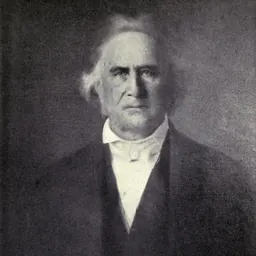
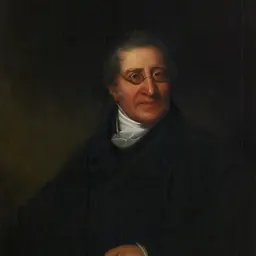


Contemporaries
People whose lives overlapped James Pillans's


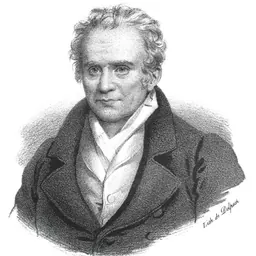
Frequently asked questions
Who was James Pillans?
British classicist and educational reformer
When was James Pillans born?
James Pillans was born in 1778 in Leith.
When did James Pillans die?
James Pillans died in 1864 in Edinburgh.
What was James Pillans's occupation?
James Pillans was a teacher, classical scholar and pedagogue.
What nationality was James Pillans?
James Pillans was British.
Sources & further reading
Cite this page
APA: Biography.guide. (2026). James Pillans. https://biography.guide/james-pillans/
MLA: "James Pillans." Biography.guide, https://biography.guide/james-pillans/.
Chicago: "James Pillans." Biography.guide. https://biography.guide/james-pillans/.
Data last updated: 2026-09-20 · Spot an error? Report a correction.
Page generated 2026-09-27 05:18 UTC