
About James Papez
Lived 1883 – 1958 (aged 74–75). James Papez was an American anatomist, neuroscientist, physician and neurologist.
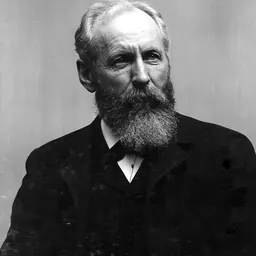
James Wenceslas Papez ( 1883–1958) was an American neuroanatomist, most famous for his 1937 description of the Papez circuit, a neural pathway in the brain thought to be involved in the cortical control of emotion.
Specifically, Papez hypothesized that the hippocampus, the cingulate gyrus (Broca's callosal lobe), the hypothalamus, the anterior thalamic nuclei, and the interconnections among these structures constituted a harmonious mechanism which elaborate the functions of emotions. Papez never mentioned Broca's limbic lobe but others noted that his circuit was very similar to Broca's great limbic lobe.
Papez received his MD from the University of Minnesota College of Medicine and Surgery. He was a neurologist at Cornell University and curator of the Wilder Brain Collection when he published his 1937 journal article.
Don’t just read it —
keep it.
Full-length biographies made to live with: read them, listen on the way to work, watch them tonight.
- E-book
- Audio
- Video
Instant download · yours to keep · every purchase keeps this site free
Important facts
Related people
Same field, nearest in time




Contemporaries
People whose lives overlapped James Papez's


Frequently asked questions
Who was James Papez?
American neuroanatomist (1883–1958)
When was James Papez born?
James Papez was born in 1883 in McLeod County.
When did James Papez die?
James Papez died in 1958.
What was James Papez's occupation?
James Papez was an anatomist, neuroscientist, physician and neurologist.
What nationality was James Papez?
James Papez was American.
Sources & further reading
Cite this page
APA: Biography.guide. (2026). James Papez. https://biography.guide/james-papez/
MLA: "James Papez." Biography.guide, https://biography.guide/james-papez/.
Chicago: "James Papez." Biography.guide. https://biography.guide/james-papez/.
Data last updated: 2026-09-20 · Spot an error? Report a correction.
Page generated 2026-09-27 05:29 UTC