
James Paddon
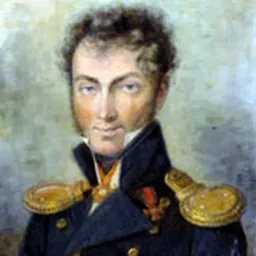
British sailor and merchant, sandalwood trader, pioneer and settler in New-Hebrides and New-Caledonia
About James Paddon
Lived 1811 – 1861 (aged 49). James Paddon was a British seafarer, merchant and frontiersman.
James Paddon (23 September 1811, Portsea, Hampshire – 13 February 1861, Nou Island, New Caledonia) was an English navigator-merchant, sandalwood, settler, pioneer in the New Hebrides and New Caledonia.
Early years
The beginning of his life remains unknown. Originally from Portsea, the island where Portsmouth is located in Hampshire, in the south of England. The fifth of ten children, his father was a pilot. It seems that Paddon left the Royal Navy with the rank of midshipman in Australia.
He was then found in 1840 in China, where he was the Captain of the brig Brigand on behalf of a Parsi Heerjeebhoy Rustomjee, his sponsor,
The New Hebrides until 1852
Source:
It was around 1841-1842 that the Paddon heard about the sandalwood in the New Hebrides (modern Vanuatu). This commodity was highly sought after by the Chinese and thus transporting it was a very lucrative activity. With the agreement of his sponsor, Paddon planned to colonize an island in the archipelago to install a depot or a trading post. He therefore brought a cargo of goods to New Zealand, the profit from the sale to finance the expedition. Paddon then held a public meeting in Wellington to announce his plans. Gathering a group of settlers including thirty lumberjacks, sixteen Chinese, and six Maori, he left Auckland on 5 October 1843 for the New Hebrides.
The installation of the trading post was difficult, however, because a competitor appeared less than two years after its creation: Robert Towns. Paddon never forgave him for this competition, for few whalers passed through the islet. In early 1846, Paddon learned that his sponsor, Heerjeebhoy Rustomjee, was in debt. Paddon then found a new sponsor: the firm Thacker & Co in Sydney. This contribution of new money made it possible to bring collaborators with their families, shipwrights (they made boats for travels in the archipelago), livestock in large quantities (horses, sheep ...), provisions, boats, trading goods for barter, coal. He also made it possible to buy (or build?) a cutter, the Rover's Bride, for the Sydney-Anatom route.
Paddon set up a shipyard at Anatom and most of his schooners came out of it: Governor, Rover's Bride, Master Bell, Speck, Bluebell, New Forest, Black Dog. Only the largest units, such as the 102 ton Julia Percy, were built at Parramatta. in New Caledonia, landed. On 29 July 1848, it was the turn of Anglican minister John Geddie and his wife. But the latter two denounced the mores of Europeans and were constantly in conflict with Paddon (who was very stubborn, and did not mince his words). Little by little, Paddon preferred the French Catholic missionaries.
Paddon had managed to "establish a shore team" at the Isle of Pines as early as 1846 despite the hostility of the inhabitants towards the Europeans in previous years.
Paddon had also discovered a coal mine (Morari Bay in Boulari)
Paddon transformed himself into a gentleman farmer. His remains were then transferred on 9 February 1866, on the property of Païta, to Gadji, at the request of the family and settlers he had introduced. They financed the mausoleum commissioned in Australia that was erected for him. James Paddon & Cie was liquidated by his partner Charles Edwards. The objects, furniture, goods and livestock that belonged to the company were sold between July and August 1861. . .. The villa-museum of Païta is dedicated to the "Paddon settlers". The funerary monument of James Paddon is part of the List of Historic Monuments of the South Province (New Caledonia) since 2012.
Don’t just read it —
keep it.
Full-length biographies made to live with: read them, listen on the way to work, watch them tonight.
- E-book
- Audio
- Video
Instant download · yours to keep · every purchase keeps this site free
Important facts
People in James Paddon's life
Named in this biography and alive at the same time


Related people
Same field, nearest in time


Contemporaries
People whose lives overlapped James Paddon's





Frequently asked questions
Who was James Paddon?
British sailor and merchant, sandalwood trader, pioneer and settler in New-Hebrides and New-Caledonia (1811-1861)
When was James Paddon born?
James Paddon was born on 23 September 1811 in Portsea.
When did James Paddon die?
James Paddon died on 13 February 1861 in île Nou.
What was James Paddon's occupation?
James Paddon was a seafarer, merchant and frontiersman.
What nationality was James Paddon?
James Paddon was British.
Sources & further reading
Cite this page
APA: Biography.guide. (2026). James Paddon. https://biography.guide/james-paddon/
MLA: "James Paddon." Biography.guide, https://biography.guide/james-paddon/.
Chicago: "James Paddon." Biography.guide. https://biography.guide/james-paddon/.
Data last updated: 2026-09-20 · Spot an error? Report a correction.
Page generated 2026-09-27 04:59 UTC