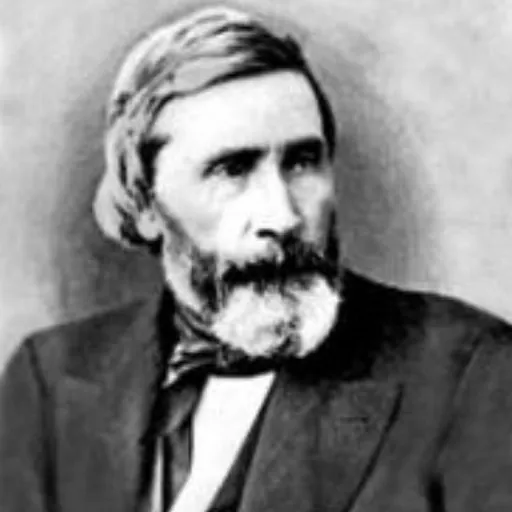
About James P. Kirkwood
Lived 1807 – 1877 (aged 70). James P. Kirkwood was an American civil engineer, engineer and executive.
James Pugh Kirkwood (27 March 1807 – 22 April 1877) was a 19th-century American civil engineer, and general superintendent of the Erie Railroad in the year 1849–1850. He left the Erie to go to the southwest to construct railroads, and he made the first survey for the Pacific Railroad (later the Missouri Pacific Railroad) west from the Mississippi to the Rocky Mountains. The towns of Kirkwood, Missouri and Kirkwood, New York are named in his honor. He served as president of the American Society of Civil Engineers (ASCE) from 1867 to 1868.
Biography Kirkwood was born in Edinburgh, Scotland He graduated at the Edinburgh College, and learned civil engineering on the Boston and Albany Railroad, an early work from which a number of engineers and contractors came to the Erie when it was being built.
In 1840 Kirkwood was Resident Engineer on the Mountain Division of the Western Rail Road., where he remained until its completion in 1843. He located and constructed the Springfield & Northampton Rail Road. In 1848 he completed the Starrucca Viaduct as Superintendent in one season; This success led to his appointment as General Superintendent of the Erie Railroad on 1 April 1849, where he succeeded Hezekiah C. Seymour.
In 1877 Kirkwood died in Brooklyn, New York at the age of 70 and was buried in Green-Wood Cemetery.
Work
Starrucca Viaduct
The Starrucca Viaduct was designed by Julius W. Adams and James P. Kirkwood and built in 1847–1848 by New York and Erie Railroad, of locally quarried random ashlar bluestone, except for three brick interior longitudinal spandrel walls and the concrete base portions of the piers and deck covering. This may have been the first structural use of concrete in American bridge construction.
The viaduct was built to solve an engineering problem posed by the wide valley of Starrucca Creek. The railroad initially considered building an embankment, but abandoned the idea because it was impractical. The Erie Railroad was well-financed by British investors, but even with money available, most American contractors at the time were incapable of the task.
Julius W. Adams, the superintending engineer of construction in the area, hired James P. Kirkwood, a civil engineer who had previously worked on the Long Island Rail Road. Accounts differ as to whether Kirkwood worked on the bridge himself, or whether Adams was responsible for the plans with Kirkwood working as a subordinate. It took 800 workers, each paid about $1 per day, equal to $ per day today, to complete the bridge in a year. The falsework for the bridge required more than half a million feet of cored and hewn timbers.
General superintendent of Erie Railroad
The first general superintendent, Hezekiah C. Seymour, came from Oneida County, and got the name on the road of the "Oneida Chief." In 1849 a successor to Superintendent Seymour was to be appointed, as he intended to quit the service. S. S. Post was superintendent of transportation. He was in the line of promotion to the general superintendency, and as he was very popular with the employees, they were delighted with the prospect of having him as their superintendent.
James P. Kirkwood was also mentioned in connection with the place. W. H. Stewart ran what was called the night line, and, in expectation of hearing the news somewhere along the line that Post had been elected superintendent, he had a big transparency, inscribed "S. S. Post, General Superintendent", all ready to light and display on his train. The news came, however, that Kirkwood was the choice of the Directors, and there was great disappointment among the "boys." This was in April, 1849. It is highly probable, though, that S.S. Post's long connection with the Railroad Company, and his popularity, would have secured him the place; if he had not shown an inclination to answer, in a non-committal way, queries put to him by the Directors, and a disposition to respond to them by asking questions himself.
Don’t just read it —
keep it.
Full-length biographies made to live with: read them, listen on the way to work, watch them tonight.
- E-book
- Audio
- Video
Instant download · yours to keep · every purchase keeps this site free
Important facts
Related people
Same field, nearest in time





Contemporaries
People whose lives overlapped James P. Kirkwood's





Frequently asked questions
Who was James P. Kirkwood?
British engineer (1807–1877)
When was James P. Kirkwood born?
James P. Kirkwood was born on 27 March 1807 in Edinburgh.
When did James P. Kirkwood die?
James P. Kirkwood died on 22 April 1877 in Brooklyn.
What was James P. Kirkwood's occupation?
James P. Kirkwood was a civil engineer, engineer and executive.
What nationality was James P. Kirkwood?
James P. Kirkwood was American.
Sources & further reading
· Wikipedia: James P. Kirkwood
Cite this page
APA: Biography.guide. (2026). James P. Kirkwood. https://biography.guide/james-p-kirkwood/
MLA: "James P. Kirkwood." Biography.guide, https://biography.guide/james-p-kirkwood/.
Chicago: "James P. Kirkwood." Biography.guide. https://biography.guide/james-p-kirkwood/.
Data last updated: 2026-09-23 · Spot an error? Report a correction.
Portrait: Wikimedia Commons · author & licence
Page generated 2026-09-27 05:06 UTC