
About James Mott
Lived 1788 – 1868 (aged 79). James Mott was an American merchant and teacher.
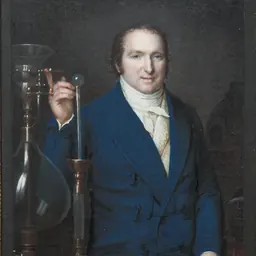
James Mott (June 20, 1788 – January 26, 1868) was a Quaker leader, teacher, merchant, and anti-slavery activist. He was married to suffragist leader Lucretia Mott. Like her, he wanted enslaved people to be freed. He helped found anti-slavery organizations, participated in the "free-produce movement", and operated an Underground Railroad depot with their family. The Motts concealed Henry "Box" Brown after he had been shipped from Richmond, Virginia in a crate. Mott also supported women's rights, chairing the Seneca Falls Convention in 1848. He spent four years supporting the establishment of Swarthmore College.
Early life James was born in Cow Neck (now North Hempstead) on Long Island, New York to a Quaker family. His parents Anne (née Mott) and Adam Mott, distant cousins, descended from English Quakers who immigrated to the Thirteen Colonies in the 17th century. Dutchess County, New York.
Mott's sister, Abigail Lydia Mott, and brother-in-law, Lindley Murray Moore were instrumental in founding the Rochester Anti-Slavery Society in 1838. His brother, Richard Mott, was elected as an Opposition Party candidate to the Thirty-fourth and reelected as a Republican to the Thirty-fifth Congresses (March 4, 1855 - March 3, 1859).
Marriage and children
Mott was a teacher at Nine Partners School, where he met Lucretia Coffin. After she graduated there, Lucretia became a teacher, too. five of whom made it to adulthood. He was a member of the Philadelphia Yearly Meeting.
Career After teaching at the Nine Partners Boarding School, Mott became a merchant in Philadelphia, working as a partner in Lucretia's father's nail business.
Abolitionist Mott was one of the first people to support William Lloyd Garrison. In 1833, he was a member of the American Anti-Slavery Society. The same year, he was one of the founders of the Philadelphia Anti-Slavery Society, and Lucretia attended as a guest.
Frederick Douglass attended an anti-slavery meeting in Norristown, Pennsylvania at the First Baptist Church in 1842. People in the sanctuary were hit by stones thrown by pro-slavery rioters. Mott was threatened by the mob until freedmen and abolitionists got the better of the situation.
The Christiana Riot erupted on September 11, 1851, which resulted in the death of Edward Gorsuch, a slaveholder from Maryland. A trial was held in November of that year at Independence Hall in Philadelphia. Judge Robert C. Grier stated, "The guilt of this foul murder rests not alone on the deluded individuals who were its immediate perpetrators, but the blood taints with even deeper dye the skirts of those who promulgated doctrines subversive of all morality and all government," which implicated James Mott and Thaddeus Stevens, a defense attorney. Lucretia attended the trial, during which she knitted in red, white, and blue yarn, "display[ing] cool abolitionist sentiment."
The Harrisburg Telegraph said Mott was an "inveterate enemy of American slavery" in his obituary.
Underground Railroad Like his paternal grandparents Mary Underhill and James Mott, and his Underhill great-grandparents, Mott helped Black people escape slavery. His grandparents helped people who arrived at Hempstead Harbor, Long Island, near a boat landing site near their home and provided transportation to New Rochelle, New York. Mott's elders helped formerly enslaved people before the Underground Railroad was established.
James Mott, operated an Underground Railroad depot at their house at 338 Arch Street in Philadelphia, Pennsylvania with the help of his family members. People that came through the Mott house were also aided on their journey by Isaac Hopper and Hannah Cox. He aided and his family aided Henry "Box" Brown in 1849. Brown was packed in a wooden crate and was sent from Richmond, Virginia to Philadelphia, after which the Motts concealed Brown for his safety.
Passmore Williamson, an attorney, helped Jane Johnson attain her freedom from her slaveholder, John Hill Wheeler of North Carolina. A trial was held in Philadelphia against Williamson on August 29, 1855. Mott, Reverend James Miller McKim, and an agent escorted Johnson to the trial so that she could testify.
Women's rights James chaired the Seneca Falls Convention, the first women's rights convention, held in Seneca Falls, New York in 1848 on July 19 and 20 at which his wife was the main speaker. He was the only male to have chaired a women's rights convention.
Swarthmore College From 1865 to 1869, Mott helped found Swarthmore College in Pennsylvania. It was one of the first coeducational colleges in the United States.
Don’t just read it —
keep it.
Full-length biographies made to live with: read them, listen on the way to work, watch them tonight.
- E-book
- Audio
- Video
Instant download · yours to keep · every purchase keeps this site free
Important facts
People in James Mott's life
Named in this biography and alive at the same time



Related people
Same field, nearest in time
Contemporaries
People whose lives overlapped James Mott's



Frequently asked questions
Who was James Mott?
American activist (1788-1868)
When was James Mott born?
James Mott was born on 20 June 1788 in North Hempstead.
When did James Mott die?
James Mott died on 26 January 1868 in New York City.
What was James Mott's occupation?
James Mott was a merchant and teacher.
What nationality was James Mott?
James Mott was American.
Sources & further reading
Cite this page
APA: Biography.guide. (2026). James Mott. https://biography.guide/james-mott-merchant/
MLA: "James Mott." Biography.guide, https://biography.guide/james-mott-merchant/.
Chicago: "James Mott." Biography.guide. https://biography.guide/james-mott-merchant/.
Data last updated: 2026-09-26 · Spot an error? Report a correction.
Page generated 2026-09-27 05:15 UTC