
About James Manby Gully
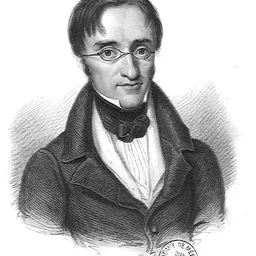
Lived 1808 – 1883 (aged 74–75). James Manby Gully was a British physician.
"Hydropathy". Caricature by Spy published in Vanity Fair in 1876. James Manby Gully (14 March 1808 – 27 March 1883) was an English physician, well known for practising hydrotherapy. Along with his partner, he founded a very successful "hydropathy" clinic in Malvern, Worcestershire, which had many notable Victorians, including such figures as Charles Darwin and Alfred, Lord Tennyson, as clients.
Gully's clinic using Malvern water in Great Malvern, and those that followed, were largely responsible for Malvern's rapid development from a village to a large town. He is also remembered as a suspect in the Charles Bravo poisoning case, and as a recipient of payments from the Slavery Abolition Act 1833.
Early life, education and family James Manby Gully was born in Kingston, Jamaica, the son of Daniel Gully, a wealthy coffee planter.
Gully's father, Daniel, died in or before 1824. James Gully was awarded a share of compensation under the Slavery Abolition Act 1833 for the St George (Middelton) estate which had 42 enslaved people, and he was also party to a disputed claim for compensation for the St David (Sheffield) estate which had 80 enslaved people. Despite this record of compensation the Dictionary of National Biography states that "the fortune which should have fallen to him as his father's heir vanished on the passing of the Emancipation Act."
Career Gully began his practice as a physician in London in 1830, and went on to write and translate numerous medical books and papers, becoming a fellow of the Medical and Chirurgical Society of London and a fellow of the Royal Physical Society of Edinburgh. He edited the London Medical and Surgical Journal and the Liverpool Medical Gazette.
He was dissatisfied with the medical treatments of the time, and in 1837 met Dr. James Wilson who then spent some time on the continent, and had returned enthused with the idea of hydrotherapy. Dr Wilson was one of the few Englishmen who stayed at the hydropathic establishment of Vincent Priessnitz, at Gräfenberg, Austria (now Lázně Jeseník, Czech Republic) before Captain R. T. Claridge, whose name became synonymous with hydropathy due to his 1842 book Hydropathy; or The Cold Water Cure, as practiced by Vincent Priessnitz... and his lecture tours. While acknowledging that Claridge did much to promote hydrotherapy, Wilson states that "I had been a considerable time at Grafenberg", and that Claridge "came to Graefenberg some time after I had been there". One writer states Wilson was at Grafenberg for 10 months. Nevertheless, in an earlier 1842 publication, Wilson acknowledged having read Claridge's work, and unconditionally praised his "enthusiastic" promotion of hydropathy.
In 1842, Gully and Wilson opened "water cure" clinics, and later established a partnership at Malvern offering a regimen similar to that at Priessnitz's Gräfenberg clinic. In 1843, Wilson and Gully published a comparison of the efficacy of the water-cure with drug treatments, including accounts of some cases treated at Malvern, combined with a prospectus of their Water Cure Establishment. Then in 1846 Gully published The Water Cure in Chronic Disease, further describing the treatments available at the clinic. In 1848, Gully became a member of the British Homoeopathic Society.
The fame of the water-cure establishment grew, and Gully and Wilson became well-known national figures. Two more clinics were opened at Malvern. Famous patients included Charles Darwin, Charles Dickens, Thomas Carlyle, Florence Nightingale, Lord Tennyson and Samuel Wilberforce.
The Water Cure treatment Dr. Gully's patients at Malvern were woken at 5 am, undressed and wrapped in wet sheets then covered with blankets. An hour later, buckets of water were thrown upon the patients who then went on a five-mile walk, carrying an alpenstock and a Gräfenberg flask of mineral water, stopping at wells for the waters. They returned to the Malvern pump room for a breakfast of dry biscuits and water. They then had the day to spend bathing in a range of kinds of baths, or in some cases wore a wet sheet called the "Neptune Girdle" round their middle at all times, removing it only at meal times. Dinner which was always boiled mutton and fish was followed by a few hours in a dry bed. The exercise, plain food and absence of alcohol together with the congenial company of other wealthy patrons proved generally beneficial. He had no faith in the homœopathic medicines Gully gave him three times a day, but took them obediently. They stayed on until 30 June, and at home he continued with the diet, and with the water treatment aided by his butler.
When his sickness returned in September, Darwin had a day visit to Malvern, then recuperated at home. In June 1850 after losing time to illness (without vomiting) he spent a week at Malvern. Later that year he wrote to Fox about the credulity of his "beloved Dr Gully" whose daughter had been ill, and had treated her with a clairvoyant girl to report on internal changes, a mesmerist to put her to sleep, John Chapman as homœopathist and himself as hydropathist, after which Gully's daughter recovered. Darwin explained to Fox his wrathful scepticism about clairvoyance and homeopathy. When Darwin's own young daughter Annie had persistent indigestion he confidently took her to Gully on 24 March 1851, and after a week left her there to take the cure, but a fortnight later was recalled by Dr Gully as Annie had bilious fever. Dr. Gully was attentive and repeatedly reassured them that she was recovering, but after a series of crises Annie died on 23 April. Gully gave the cause of death as a "Bilious fever with typhoid character".
Darwin kept records of the effects of the continuing water treatment at home, and in 1852 stopped the regime, having found that it was of some help with relaxation but overall had no significant effect, indicating that it served only to decrease his psychosomatic symptomatology. In 1855 Darwin wrote to a friend that "Dr. Gully did me much good", but he did not want to return to Malvern. When his illness returned much as when he had first seen Gully he found a new hydrotherapist, Dr. Lane, whose more relaxed regime did not include clairvoyance, mesmerism or homeopathy. After a similarly speedy recovery Darwin became a complete convert. In 1863 his illness worsened seriously at a time when Lane was not available, and Emma Darwin persuaded her husband to return to Gully. His cousin Fox had told him that Gully had suffered a mental breakdown and was unavailable. In his reply Darwin had mentioned having had eczema, and wrote "Gully will be a great loss & I hardly know whom to consult there. I must be under some experienced man, for I could not stand much hard treatment." They arrived at Malvern on 2 September, but Darwin felt that he was being fobbed off with the supervising physician, Dr. Ayerst. Emma arranged for Dr. Gully to attend and endorse Ayerst's treatment, but by then the eczema was too raw to bear any water. Darwin had a complete breakdown, and on 13 October left the spa worse than when he'd arrived. His serious illness continued until the spring of 1866.
Beliefs and causes Gully was an articulate and popular public speaker and writer. He was also a firm believer in a number of women's causes. He advocated women's suffrage, and preached temperance, due to the detrimental effects of alcohol on the husbands of many Victorian women. Gully built two clinics: Tudor House for men, and Holyrood House for women. he seems to have regarded the use of homeopathic remedies as an adjunct to his use of hydrotherapy, and does not appear to have agreed with the fundamental principles of homeopathy, writing in 1861, "It may shock the homœopathic world when I say that I never much cared for the doctrine of "like curing like"; and that I do not believe it to be of the universal application that they suppose". Like many of his educated contemporaries both in the UK, and in the USA Gully showed an interest in several popular movements of the day, such as women's suffrage, mesmerism and diagnostic clairvoyance. In later life he came to believe in spiritualism, being friend and protector to the medium Daniel Dunglas Home, was present at some of the manifestations of "Katie King" with Sir William Crookes and was President of the British Spiritualist Association in 1874.
Affair with Florence Bravo In 1872, he met a young married woman named Florence Ricardo (later Florence Bravo). They became secret lovers. The following year, after travelling with Gully to Kissingen in Germany, Florence became pregnant. Gully performed an abortion. Thereafter, their relationship became purely Platonic.
Florence subsequently met Charles Bravo, whom she married in 1875. On hearing the news from a third party, Gully reportedly tore the letter to shreds. Just a few short months later, on 18 April 1876, Charles Bravo died of poisoning. The culprit was never discovered; Gully was a suspect, along with Florence herself, but although he testified at the inquest, nothing further came of the case. In 1923, Sir Harry Poland QC, who was involved for the crown in the case, stated that "Dr. Gully was in no way implicated". The following editions are also available online:
A guide to domestic hydro-therapeia: the water cure in acute disease, James Manby Gully, 1869 Drawings descriptive of spirit life and progress. By a child twelve years of age, ed. James Manby Gully, 1874 – Posthumous publication of unfinished work
Don’t just read it —
keep it.
Full-length biographies made to live with: read them, listen on the way to work, watch them tonight.
- E-book
- Audio
- Video
Instant download · yours to keep · every purchase keeps this site free
Important facts
People in James Manby Gully's life
Named in this biography and alive at the same time




Related people
Same field, nearest in time



Contemporaries
People whose lives overlapped James Manby Gully's






Frequently asked questions
Who was James Manby Gully?
English physician (1808-1883)
When was James Manby Gully born?
James Manby Gully was born on 14 March 1808 in Kingston.
When did James Manby Gully die?
James Manby Gully died in 1883.
What was James Manby Gully's occupation?
James Manby Gully was a physician.
What nationality was James Manby Gully?
James Manby Gully was British.
Sources & further reading
· Wikipedia: James Manby Gully
Cite this page
APA: Biography.guide. (2026). James Manby Gully. https://biography.guide/james-manby-gully/
MLA: "James Manby Gully." Biography.guide, https://biography.guide/james-manby-gully/.
Chicago: "James Manby Gully." Biography.guide. https://biography.guide/james-manby-gully/.
Data last updated: 2026-09-20 · Spot an error? Report a correction.
Page generated 2026-09-27 05:21 UTC