
About James MacKaye
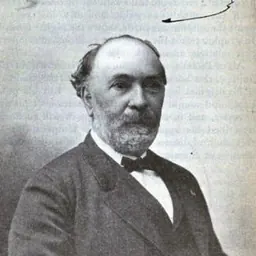
Lived 1872 – 1935 (aged 62). James MacKaye was an American philosopher, engineer and university teacher.
James Medbery MacKaye (April 8, 1872 – January 22, 1935) was an American engineer and philosopher.
Biography
MacKaye was born in New York City, the son of actor Steele MacKaye and Mary (Medbery) MacKaye, and brother of poet Percy MacKaye, theater professional and suffragist Hazel MacKaye and conservationist Benton MacKaye. He attended Grammar School No. 40 near Groton, Massachusetts and Packard's Business College in New York, and in 1895 obtained an SB degree from Harvard University.
In early 1890 MacKaye worked as a patent lawyer with the Census Bureau in Washington, and in April 1891 he became secretary to Nathaniel Southgate Shaler at the Harvard Geological Department, holding for a number of years various minor appointments in that institution. He joined the Boston firm Stone & Webster in 1899, where he worked as a research engineer. During the 28 years that he remained affiliated to that company he published several books on ethics, economics and politics, including Americanized Socialism, The Logic of Conduct and, most notably, The Economy of Happiness.
The Economy of Happiness
In this highly original but now largely forgotten work, MacKaye attempted to rescue the utilitarianism of Jeremy Bentham from the changes that this doctrine had subsequently undergone as a result of John Stuart Mill's moderating influence. MacKaye conceived human beings—and sentient beings generally—as mechanisms of transforming resources into happiness, which he argued was the only intrinsic good. The goal of a society was therefore viewed by MacKaye as the problem of finding that arrangement which would produce the highest output of happiness attainable given the inputs available. As he wrote,
MacKaye concluded that the form of social organization most conducive to that goal was a particular type of socialism which he dubbed "pantocracy".
The Dynamic Universe
In 1930 MacKaye startled the world after announcing an alternative to Albert Einstein's general theory of relativity. His theory of "radiation" was first presented at the twenty-ninth annual meeting of the American Philosophical Association held at Columbia University. Contrary to Einstein, MacKaye proposed a dynamic universe, assuming that all space was filled with radiation of super-frequency and super-penetration moving in all directions with the speed of light. As he claimed in the concluding paragraph of his paper, subsequently published in The Journal of Philosophy, "If the radiation theory is sound, [...] it is plain that Einstein has discovered nothing about time, space, motion or acceleration unknown to the Newtonians, or shown that what they have hitherto assumed about those magnitudes is contrary to any fact in nature." The theory was described as "magnificent" by William Pepperell Montague and appears to have been generally well received by the audience. He later expanded his views in the book, The Dynamic Universe, published in 1931.
MacKaye entered the academic profession only in 1931, when he became a lecturer at Rollins College. The following year he was appointed Professor of Philosophy at Dartmouth College. At the end of 1934 MacKaye was hospitalized at the Massachusetts General Hospital in Boston, where he had a gall bladder surgery. Although the doctors predicted recovery, he died a week later. A service was held on January 24 at the Memorial Church of Harvard University, where his remains were cremated.
Don’t just read it —
keep it.
Full-length biographies made to live with: read them, listen on the way to work, watch them tonight.
- E-book
- Audio
- Video
Instant download · yours to keep · every purchase keeps this site free
Important facts
People in James MacKaye's life
Named in this biography and alive at the same time




Related people
Same field, nearest in time



Contemporaries
People whose lives overlapped James MacKaye's

Frequently asked questions
Who was James MacKaye?
American writer (1872–1935)
When was James MacKaye born?
James MacKaye was born on 8 April 1872 in New York City.
When did James MacKaye die?
James MacKaye died on 22 January 1935 in Boston.
What was James MacKaye's occupation?
James MacKaye was a philosopher, engineer and university teacher.
What nationality was James MacKaye?
James MacKaye was American.
Sources & further reading
Cite this page
APA: Biography.guide. (2026). James MacKaye. https://biography.guide/james-mackaye/
MLA: "James MacKaye." Biography.guide, https://biography.guide/james-mackaye/.
Chicago: "James MacKaye." Biography.guide. https://biography.guide/james-mackaye/.
Data last updated: 2026-09-25 · Spot an error? Report a correction.
Page generated 2026-09-27 05:12 UTC