
About James Lingan
Lived 1751 – 1812 (aged 61). James Lingan was a military personnel.
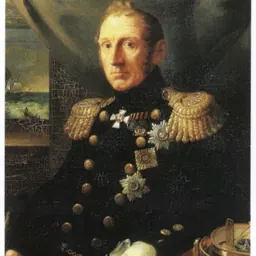
James McCubbin Lingan (May 15, 1751 – July 28, 1812) was an officer of the Continental Army during the American Revolutionary War and subsequently a senior officer in the Maryland State Militia. He was taken prisoner at Fort Washington early in the war and spent several years aboard a prison hulk. After independence, Lingan served as a government official in Georgetown. At the outbreak of the War of 1812, Lingan was an outspoken advocate of freedom of the press and was murdered by a mob while defending the offices of an anti-war newspaper in Baltimore.
Military service Lingan enlisted in the Continental Army on July 13, 1776, only nine days after the signing of the Declaration of Independence. He became a lieutenant in the Rawlings Additional Regiment, but was captured at Fort Washington on November 16, 1776. Imprisoned in the hulk HMS Jersey, Lingan was initially kept in a cell in which he could neither lie down nor stand up. Approached by distant cousin Samuel Hood and offered £10,000 and a commission in the British Army if he agreed to switch sides in the conflict, Lingan was reported to have replied "I'll rot first". Later in his captivity, Lingan gained the reputation as a defender of prisoners' rights. On one occasion, Lingan defended the body of a recently deceased prisoner from guards who wanted to behead the corpse to make it fit into a small coffin.
Personal life and death
Lingan married Janet Henderson (1765–1832) on March 4, 1791. Lingan built Prospect House, in Georgetown.
Throughout his life, Lingan was a strong advocate of the freedom of the press and, at the outbreak of the War of 1812, spoke out in opposition to those who favoured censorship. When the offices of the Baltimore Federal Republican were besieged and burnt by a mob angry at anti-war editorials run by the newspaper, Lingan protested at the act and sheltered the newspaper editor, Alexander Contee Hanson, in Georgetown. On July 17, 1812, Hanson resumed printing the newspaper at new offices in Baltimore and another mob formed within hours, again storming the building and destroying the presses. Hanson, with Lingan, Henry Lee III and others who had hastened from Washington to try to calm the crowd, were arrested by local militia and taken to Baltimore City Jail in an attempt to calm the situation.
The crowd, led by an athletic butcher named John Mumma, followed them to the prison and stormed the building. Lingan attempted to stop the mob by displaying a bayonet wound he had received in the Revolutionary War, but that only inflamed the crowd, and Hanson, Lingan and Lee were severely beaten and left for dead. Hanson and Lee survived although the latter was left partially blinded after hot wax was poured into his eyes. Lingan, however, died from his serious injuries.
Don’t just read it —
keep it.
Full-length biographies made to live with: read them, listen on the way to work, watch them tonight.
- E-book
- Audio
- Video
Instant download · yours to keep · every purchase keeps this site free
Important facts
People in James Lingan's life
Named in this biography and alive at the same time

Related people
Same field, nearest in time



Contemporaries
People whose lives overlapped James Lingan's





Frequently asked questions
Who was James Lingan?
Continental Army officer
When was James Lingan born?
James Lingan was born on 13 May 1751 in Maryland.
When did James Lingan die?
James Lingan died on 28 July 1812 in Baltimore.
What was James Lingan's occupation?
James Lingan was a military personnel.
Sources & further reading
Cite this page
APA: Biography.guide. (2026). James Lingan. https://biography.guide/james-lingan/
MLA: "James Lingan." Biography.guide, https://biography.guide/james-lingan/.
Chicago: "James Lingan." Biography.guide. https://biography.guide/james-lingan/.
Data last updated: 2026-09-26 · Spot an error? Report a correction.
Page generated 2026-09-27 05:16 UTC