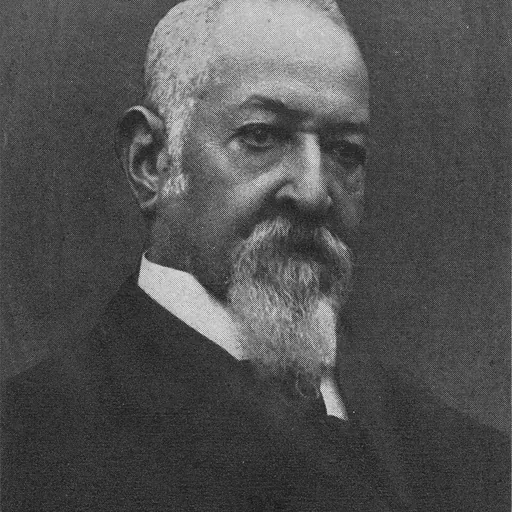
James Lewis
Louisiana politician
About James Lewis
Lived 1832 – 1914 (aged 81–82).
James Lewis (c. 1832 – July 11, 1914) was an African-American soldier and politician in Louisiana. Born into slavery and of mixed race, during the American Civil War he left a position as steward on a Confederate steamboat to move to New Orleans, which had been taken over by Union troops. There he helped organize the First Louisiana Volunteer Native Guards, becoming captain of Company K and serving until 1864. After the war he became politically active in the Republican Party during the Reconstruction era, where he was an ally of several other leading men of color in the city and state.
This was an especially violent time in Louisiana and New Orleans politics, but Lewis survived for decades as a political leader. He initially worked for the Freedmen's Bureau, where he was an agent to raise money and establish schools for freed slaves. He was appointed as a federal customs inspector for a short period, the first man of African descent to gain a federal civil position in the state. He was recalled for political reasons.
Lewis later entered the New Orleans Metropolitan Police force, but left in 1872 after more political machinations. He emerged from the immediate postwar period as a leader in the New Orleans Republican Party. For much of the 1870s, 1880s, 1890s, and 1900s, he held state and federal-level Republican-appointee government positions, usually in the United States Treasury Department. He also served for years under Republican administrations as the surveyor-general of Louisiana and Mississippi.
He was also a Freemason and a leader in the Grand Army of the Republic, a Civil War veterans organization.
Early life James Lewis was born into slavery in Wilkinson County, Mississippi in 1832. His father was a white planter, his master, and his mother was an enslaved woman of mixed race (mulatto). He was raised in Bayou Sara, Louisiana. Before the American Civil War (1861–1865), Lewis worked on steamboats on the Mississippi River, including the steamboat Ingomar, where he served and formed a friendship with Robert Reed Church; he also befriended Norris Wright Cuney by steamboat work. All three became political leaders after the Civil War.
In 1864, Lewis married Josephine Joubert of New Orleans, a free woman of color whose family had been slaveholders. For many years the couple lived in a fine house on Canal Street across from Straight University.
When the Freedmen's Bureau closed, Lewis was appointed by future Governor William Pitt Kellogg — then the collector of customs at the port of New Orleans — as a customs inspector, making him the first black man to have a civil position in the federal service in Louisiana. Lewis became sergeant of the Metropolitan Police in New Orleans. He was successful in this position and was promoted to captain of the police. In 1870, Governor Henry Clay Warmoth appointed Lewis as colonel of the Second Regiment of the State Militia. That year Lewis was also elected to a two-year term as administer of police.
Republican appointee In 1872, at the state Republican Party convention, Lewis was nominated for Congress and made chairman of the Louisiana delegation to the 1872 Republican National Convention in Philadelphia. When he returned to New Orleans, party divisions threatened unity. Lewis declined his congressional nomination in favor of P. B. S. Pinchback. He campaigned for William P. Kellogg for governor and was nominated and elected as administrator of public improvements in New Orleans. His opponents in that race were former Confederate General P. G. T. Beauregard and Major E. A. Burke. Lewis was well appreciated as a civil servant and noted for his economic efficiency.
In the mid-1870s, Lewis was the only Republican appointee in New Orleans city government. In 1876 he campaigned with then-Governor Packard and was elected by the state legislature to the United States Senate. But he did not take his seat as the state government was taken over by Democrats, and Lewis refused to press his claim.
At the 1880 Republican National Convention, Lewis was one of the old guard of "306" who supported Ulysses S. Grant until the final vote, which was won by eventual president, James A. Garfield. In January 1884, he was appointed by Secretary of the Treasury Charles J. Folger to superintendent of the United States bonded warehouse in New Orleans and continued to hold the position of surveyor-general of Louisiana.
In 1884, Lewis served as a commissioner and Chief of the Accommodation Bureau of the Colored People's Exhibit at the World Cotton Centennial, a World's Fair in New Orleans.
In October 1890 Lewis was one of the Committee of Fifty appointed by Mayor Joseph A. Shakspeare to investigate the murder that month of New Orleans Police Department Chief David Hennessy. Italian suspects were rounded up by police. Lewis was one of the signatories of a letter to the Italian community, urging people to inform the committee about the suspects, and threatening extrajudicial action. He was the only man of color on the committee. Nineteen men were arrested. Ultimately eleven Italians were lynched on March 14, 1891 by a mob of 10,000 that stormed the prison where the suspects were held. Some of the victims had already been acquitted at trial and others had not yet been tried.
In the 1890s and early 1900s, Lewis and Walter L. Cohen were the most important political allies in Louisiana of Booker T. Washington, president of Tuskegee Institute and a proponent of moderation in race issues. In 1898, Lewis actively supported black troops being included in the forces sent into the Spanish–American War. Lewis continued to be involved in politics, although the Republican Party was increasingly hampered in the state. By 1898, the political tides had shifted. Lewis supported the Warmoth wing in an atmosphere of Democrats conducting extreme vote suppression of African Americans.
Other activities In 1890, Lewis claimed that he was a member of a post of the Grand Army of the Republic (GAR) in 1865 and 1866 but that it broke up in the Mechanics Union riot in 1866. Lewis was a part of the push to get black members accepted into the GAR in 1890. He later was Department Commander of the GAR of Louisiana and Mississippi.
Lewis' son, James Lewis Jr. was active member of the New Orleans black elite. His daughter, Julia (Lewis) Nickerson (c. 1878 – December 7, 1908) was a violinist and cellist in her husband, William J. Nickerson's orchestra.
Lewis died in New Orleans on July 11, 1914.
Don’t just read it —
keep it.
Full-length biographies made to live with: read them, listen on the way to work, watch them tonight.
- E-book
- Audio
- Video
Instant download · yours to keep · every purchase keeps this site free
Important facts
People in James Lewis's life
Named in this biography and alive at the same time

Contemporaries
People whose lives overlapped James Lewis's

Frequently asked questions
Who was James Lewis?
Louisiana politician
When was James Lewis born?
James Lewis was born in 1832 in Wilkinson County.
When did James Lewis die?
James Lewis died on 11 July 1914 in New Orleans.
Sources & further reading
· DBpedia: James Lewis (Louisiana politician)
Cite this page
APA: Biography.guide. (2026). James Lewis. https://biography.guide/james-lewis-james-lewis-louisiana-politician-personfunction-1/
MLA: "James Lewis." Biography.guide, https://biography.guide/james-lewis-james-lewis-louisiana-politician-personfunction-1/.
Chicago: "James Lewis." Biography.guide. https://biography.guide/james-lewis-james-lewis-louisiana-politician-personfunction-1/.
Data last updated: 2026-09-26 · Spot an error? Report a correction.
Portrait: Wikimedia Commons · author & licence
Page generated 2026-10-04 10:50 UTC